

How to Tell if Coffee Beans Are Fresh
Table of Contents
- Why Fresh Coffee Beans Matter
- The Coffee Roast Date Importance
- How to Tell if Coffee Beans Are Fresh: The 5-Point Test
- How to Store Coffee Beans to Maintain Freshness
- Freshly Roasted vs. Peak Flavor: Understanding the Curve
- Common Mistakes That Ruin Fresh Coffee
- Final Thoughts on Choosing Fresh Beans
- Frequently Asked Questions
Last Updated: September 8, 2026
Why Fresh Coffee Beans Matter
Coffee begins to lose its character the moment it leaves the roaster. The volatile aromatic compounds that produce sweetness, florality, and fruit notes start dissipating immediately, while oxygen slowly degrades the oils that carry flavor. This is why knowing how to tell if coffee beans are fresh matters more than any brewing skill you can develop.
Fresh coffee is not a luxury preference; it is the foundation of a good cup. Stale beans produce flat, papery coffee no matter how precise your technique or expensive your grinder. At Crystal Coast Coffee Co., we roast to order specifically because the window between roasting and peak flavor is far shorter than most drinkers realize. If you have been blaming your brewing method for dull cups, the beans may be the real problem.
The good news is that you do not need lab equipment to evaluate your beans. A simple sensory checklist using your eyes, nose, and taste buds will tell you everything you need to know. Below, we will walk through the exact tests we use to judge roast freshness, from the first whiff of dry grounds to the bloom of a fresh pour.
The Coffee Roast Date Importance
A roast date is the single most reliable indicator of freshness, and its absence on a bag should raise immediate questions. Freshly roasted coffee should carry a clear date marking when it left the roaster, not just a "best by" stamp that can stretch a year into the future. But the roast date is not a universal timer, it is the start of a clock that runs at different speeds depending on what is inside the bag.
Coffee beans are at their best within a specific window after roasting. Immediately after roasting, beans release significant amounts of carbon dioxide, a process called degassing (peer-reviewed research). This gas protects the beans from oxygen during the first days after roasting, but it also means the coffee needs a resting period before extraction will taste balanced.
| Freshness Window | Bean State | Best Use |
|---|---|---|
| 1-4 days post-roast | Heavy degassing, bright but slightly gassy | Espresso, resting period |
| 5-14 days post-roast | Peak flavor development | Filter brewing, pour-over |
| 15-30 days post-roast | Flavor declining, still drinkable | Milk drinks, cold brew |
| 30+ days post-roast | Stale, flat, papery | Discard or use for cooking |
The density and processing method change this timeline. A washed coffee from a high-altitude farm in a region like Huila, Colombia, typically has a dense, hard bean that degasses slowly and holds its flavor peak for a full two weeks. A natural-processed coffee from a lower elevation, by contrast, often has a softer, more porous structure that degasses faster and peaks earlier, sometimes as soon as day four, then fades quickly into a flat, fermented-tasting shadow of itself. If you buy a natural-processed bag and treat it like a dense washed lot, you will miss its best days entirely.
The roast level also resets the clock. Light roasts retain more internal structure and degas more slowly, which is why they can taste vibrant even at day eighteen (sca.coffee). Dark roasts, having been pushed through first crack and beyond, are more porous and lose volatile aromatics faster; their flavor curve is a steep hill, not a plateau. A dark roast that is "fresh" by date may already taste baked and rubbery if it was roasted more than ten days ago.
The coffee roast date importance cannot be overstated when you are judging a bag at the store. If a roaster does not print the roast date, they are likely sitting on inventory rather than moving freshly roasted product. Specialty roasters almost always display this date prominently because freshness is their primary selling point. But once you know the date, the next question is not "Is this fresh?", it is "Is this bean at its peak right now, or do I need to wait or hurry?" A washed Kenya AA roasted six days ago is likely at its best. A natural Ethiopia roasted six days ago may already be past its prime. The date is the starting point; the bean's character tells you how to read it.
Roast date labeling standards and specialty coffee grading
How to Tell if Coffee Beans Are Fresh: The 5-Point Test
How to tell if coffee beans are fresh comes down to a five-part sensory evaluation that takes less than a minute to complete. This protocol examines aroma, appearance, bloom behavior, taste, and physical texture to give you a complete picture of bean condition.
Run these tests in order, starting with the dry beans before you grind them. Each test builds on the last, and together they reveal whether your beans are freshly roasted, at peak flavor, or past their useful life.
1. The Smell Test: Aroma and Fragrance
The aroma of freshly roasted coffee should hit you immediately when you open the bag. Fragrant, sweet, and complex notes fill the air, whether you smell dark chocolate, berries, or toasted nuts. Stale beans, by contrast, smell flat, dusty, or faintly papery with little aromatic intensity.
Crack the bag seal and take a deep inhale. Freshly roasted beans release a bold, almost intoxicating fragrance that lingers. If the aroma seems muted or you detect a sour, musty quality, oxidation has already taken its toll. The smell test is the fastest screening tool you have, and your nose rarely lies about coffee condition.
2. The Visual Test: Oils and Sheen
Look closely at the surface of whole beans under good light. Freshly roasted beans, depending on roast level, should show a dry, matte finish with a subtle sheen. Light roasts appear almost dull, while dark roasts develop a glossy surface as natural oils migrate outward.
The presence of an oily residue on beans is a double-edged signal. Some oil on dark roasts is normal and desirable. However, excessive oiliness combined with a sticky, tacky surface often indicates beans that have sat for weeks, as oils surface over time. If light roast beans look greasy, they are likely old, since light roasts typically retain oils internally when fresh.
3. The Coffee Bloom Test
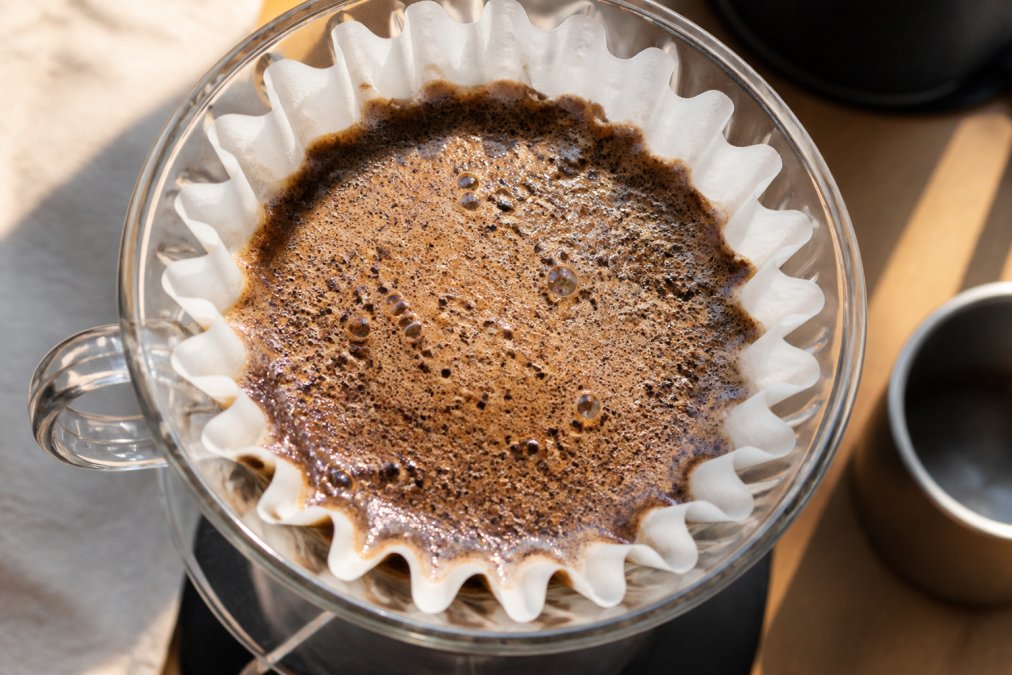
The coffee bloom test is the most dynamic freshness indicator because it shows you degassing in real time. When hot water first hits freshly ground coffee, trapped carbon dioxide escapes, causing the grounds to swell and bubble into a dome-like crust. A vigorous, foamy bloom signals healthy gas retention and thus freshness.
Grind your beans coarsely and add water just off the boil. Watch the surface for ten to fifteen seconds. Fresh beans will bloom dramatically, with bubbles rising and the crust expanding noticeably. Stale beans produce almost no reaction, and the water simply saturates the grounds without any swelling. A flat bloom is the clearest visual proof that your beans have lost their freshness.
4. The Taste Test: Flavor Profile Indicators
Brew a small cup and evaluate it honestly. Freshly roasted coffee delivers a bright, complex flavor profile with distinct notes, balanced acidity, and a pleasant body. The coffee should taste sweet and vibrant, with no off-putting or hollow qualities in the finish.
Stale coffee tastes noticeably different. Look for a papery, cardboard-like flavor or a hollow, empty finish where sweetness should be. Rancid beans add a sharp, bitter or sour note that no amount of cream can mask. If your cup tastes flat and lifeless with none of the flavor notes promised on the bag, the beans are past their prime.
5. The Feel Test: Density and Hardness
Freshly roasted beans feel dense and firm when you squeeze them between your fingers. They should resist pressure and break with a clean snap rather than crumbling. The bean density reflects retained moisture and internal structure, both of which decline as coffee ages.
Pinch a single bean and try to crush it. A fresh bean requires real effort and fractures cleanly. Older beans feel lighter, more brittle, and may crush into powder with little resistance. This tactile check is less precise than the bloom test, but it confirms what the other indicators suggest about overall bean condition.
How to Store Coffee Beans to Maintain Freshness
How to store coffee beans correctly is as important as buying them fresh, because improper storage accelerates the very staling you are trying to avoid. The enemies are oxygen, light, heat, and moisture, and your storage method should block all four.
An airtight container is the minimum requirement, preferably one with a one-way valve that lets carbon dioxide escape without letting oxygen in. Keep beans in a cool, dark cabinet away from the stove or any heat source. Never refrigerate or freeze beans for daily use, as condensation introduces moisture that ruins flavor.
Freshly Roasted vs. Peak Flavor: Understanding the Curve
Freshly roasted does not automatically mean ready to brew, and this distinction confuses many home drinkers. Beans need a resting period after roasting to allow excess carbon dioxide to escape. Brewing too early produces a sharp, acidic cup as the gas interferes with proper extraction.
The flavor curve rises after roasting, peaks around day five to fourteen, and then declines steadily. This means a bag roasted yesterday may actually taste worse than one roasted a week ago. The goal is not merely freshly roasted beans but beans at their flavor peak. This nuance is why we recommend checking the roast date and planning your brewing around it rather than assuming newer is always better.
Common Mistakes That Ruin Fresh Coffee
Several well-intentioned habits destroy coffee freshness faster than simple age. Buying pre-ground coffee tops the list, since grinding exposes vastly more surface area to oxygen. Whole beans stay fresh significantly longer than ground coffee, so grind only what you need immediately.
A second common mistake is inconsistent grind size, which leads to uneven extraction and muddy flavors that mask the quality of fresh beans. Even with freshly roasted beans, a poor grind produces a disappointing cup that makes you question the freshness. Match your grind consistency to your brewing method, from coarse for French press to fine for espresso.
Final Thoughts on Choosing Fresh Beans
Knowing how to tell if coffee beans are fresh transforms your daily cup from a gamble into a reliable ritual. Trust the roast date, run the five-point sensory test, and store your beans properly, and you will taste the difference immediately.
The coffee bloom test alone will reveal more about your beans than any other single check. A vigorous bloom means your beans are alive with carbon dioxide and ready to deliver their full flavor profile. A flat bloom means it is time to shop again.
For beans that clear every test on this list, look for a roaster that prioritizes freshness from roast to delivery. Crystal Coast Coffee Co. roasts to order and ships quickly so your beans arrive within their peak flavor window, not weeks after roasting. Our carefully sourced beans from trusted farms worldwide are roasted in small batches to preserve the aroma and character that make fresh coffee worth the effort.
Frequently Asked Questions
What is the 15-15-15 rule for coffee?
The 15-15-15 rule is a simple guideline for buying coffee beans. It suggests buying beans within 15 days of the roast date, grinding them within 15 minutes of brewing, and drinking the coffee within 15 minutes of it being brewed. This rule emphasizes that freshness is a timeline, and the coffee bloom test is a good way to confirm that your beans are still within their optimal window.
How long does coffee stay fresh after it's ground?
Whole coffee beans stay fresh for about 2 to 4 weeks after the roast date, but once ground, that window shrinks dramatically. Ground coffee can start losing its flavor within 15 to 20 minutes because grinding increases the surface area exposed to oxygen. This accelerates oxidation and staling. For the best flavor, grind your beans right before brewing.
Are 2-year-old coffee beans still safe to drink?
Yes, 2-year-old coffee beans are safe to drink; they won't make you sick. However, they will taste stale, papery, and hollow. The aromatic oils and compounds that create flavor degrade over time through oxidation. While the coffee won't be harmful, it will lack the vibrant aroma, complex notes, and pleasant acidity of freshly roasted beans.
Does the roast date on the bag really matter?
Yes, the roast date is the single most important indicator of coffee bean freshness. It tells you exactly when the coffee was roasted, which starts the degassing and staling process. Unlike a 'best by' date, which can be arbitrary, the roast date lets you know precisely how long the beans have been aging, helping you buy coffee at its peak flavor.
Fresh coffee is not complicated, but it does demand attention to a few key details. Start checking roast dates, run the sensory tests, and store your beans with care. When you consistently brew beans at their peak, you will wonder how you ever tolerated anything less. Get started with Crystal Coast Coffee Co. and taste what freshly roasted, properly handled coffee delivers in every cup.