

How to Tell If Coffee Beans Are Rancid
Table of Contents
- Rancid vs. Stale Coffee Beans: Why the Difference Matters
- How to Tell If Coffee Beans Are Rancid: A Step-by-Step Check
- Signs of Stale Coffee Beans You Should Know
- How Long Do Coffee Beans Stay Fresh?
- Proper Coffee Bean Storage Methods to Extend Freshness
- Safety vs. Quality: Can You Actually Drink Rancid Coffee?
- What to Do With Rancid Beans Instead of Tossing Them
- Frequently Asked Questions
Last Updated: September 1, 2026
Rancid vs. Stale Coffee Beans: Why the Difference Matters
Most guides treat stale and rancid coffee as the same problem. They're not, and conflating them leads to bad decisions about what to discard and what's safe to drink.
Stale coffee has lost its volatile aromatic compounds through oxidation and degassing. The flavor goes flat, acidity fades, and the cup tastes hollow. It's still safe to drink, just disappointing.
Rancid coffee occurs when lipids and oils in the bean undergo chemical breakdown, producing musty, sour, or paint-like compounds. The fats are vulnerable to oxygen, moisture, heat, and UV degradation. Rancid coffee is technically shelf-stable under normal dry storage but tastes genuinely unpleasant.
At Crystal Coast Coffee Co., we roast to order to prevent this. The closer a bean is to its roast date, the more vibrant its aromatics and the lower its rancidity risk. Understanding the difference helps you make better storage decisions and know when to move on from a bag.
Freshness is a spectrum, not a binary. Knowing where your beans fall lets you act accordingly.
How to Tell If Coffee Beans Are Rancid: A Step-by-Step Check
A four-step sensory evaluation takes under five minutes and targets different indicators of lipid breakdown and oxidation.
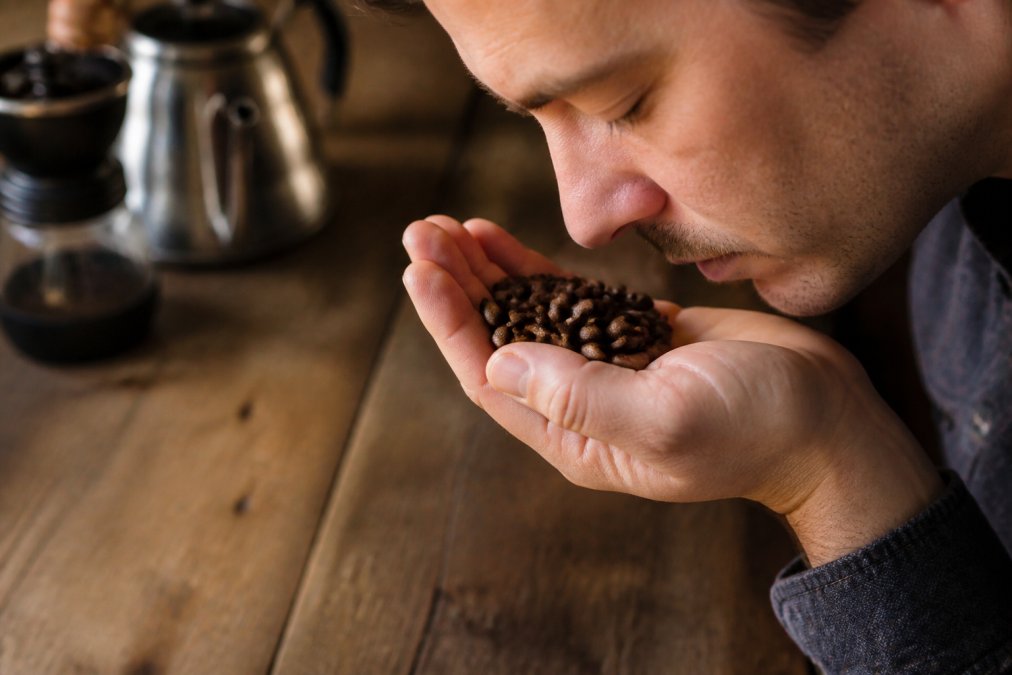
Step 1: The Smell Test
The smell test is the fastest and most reliable diagnostic. Fresh beans carry rich, complex aroma, roasted depth, fruit notes, and earthy sweetness depending on origin. Rancid beans smell musty, sour, or faintly chemical, like old cooking oil or wet cardboard.
Hold a small handful of beans close to your nose and inhale slowly. If your first instinct is to pull away, trust it. A dull smell means stale; off-notes like musty or acrid signal actual rancidity.
Step 2: Visual Inspection
Fresh beans have a subtle sheen indicating intact oils. Dark roasts show this more visibly than light roasts. Rancid beans often look dull and matte, sometimes with a grayish cast.
Check for white or powdery residue, which indicates moisture exposure and accelerates rancidity. If beans look chalky, cracked beyond normal roast fractures, or discolored, treat them as suspect.
Step 3: The Bloom Test
When you brew fresh coffee, dissolved carbon dioxide (CO2) trapped during roasting escapes on contact with hot water, creating a foamy bloom. This degassing directly signals recent roasting.
Place ground coffee in a pour-over or French press, pour just enough hot water to saturate the grounds, and wait 30 seconds. Fresh beans bloom visibly; stale or rancid beans produce little to no bloom because CO2 has already off-gassed.
Step 4: Taste Evaluation
If beans passed the smell and visual tests but you're uncertain, brew a small cup. Fresh coffee has brightness, complexity, and clean finish. Rancid coffee tastes flat, unpleasantly bitter, with a lingering aftertaste between old oil and stale water.
Rancid or very stale beans often under-extract, producing weak, watery cups even with standard grind and brew ratio.
Signs of Stale Coffee Beans You Should Know
Staleness and rancidity share some symptoms but have distinct signatures. The clearest sign of stale coffee is flat, one-dimensional aroma. Where fresh beans smell layered and complex, stale beans smell faint and generic.
Other reliable indicators include:
- No bloom on brewing, CO2 has fully off-gassed, typically within 4-6 weeks of roasting
- Dull, matte surface with no natural sheen
- Uniform bitterness without origin-specific flavor notes
- Weak extraction despite correct grind and water temperature
Stale coffee is a quality problem, not a safety issue. The beans are drinkable but not enjoyable. According to the Specialty Coffee Association's guidance on coffee freshness, flavor degradation accelerates significantly after the first few weeks post-roast, making roast date more meaningful than best-by date.
How Long Do Coffee Beans Stay Fresh?
How long coffee beans stay fresh depends on roast level, storage conditions, and whether the bag is opened.
| Storage Condition | Whole Beans (Unopened) | Whole Beans (Opened) | Ground Coffee |
|---|---|---|---|
| Room temp, airtight container | Up to 6 months | 2-4 weeks | 1-2 weeks |
| Freezer, vacuum-sealed | Up to 12 months | 3-4 months | Up to 1 month |
| Room temp, original bag | 3-4 months | 1-2 weeks | 3-5 days |
These are quality estimates, not safety thresholds. Watch the roasted date on the bag, it's more useful than best-by dates. Crystal Coast Coffee Co. prints the roast date directly on bags so you know exactly how fresh the coffee is when it arrives.
Roast Level Variance and Shelf Life
Roast level affects how quickly beans degrade. Light roasts are denser and retain more moisture, degassing slowly and staying vibrant for 4-6 weeks post-roast. Dark roasts are more porous and oily, peaking within the first week or two, then declining faster as surface oils oxidize quickly. Medium roasts sit between both.
Proper Coffee Bean Storage Methods to Extend Freshness
The biggest enemies of fresh coffee are oxygen exposure, followed by moisture, heat, and UV light. Proper storage addresses all four.
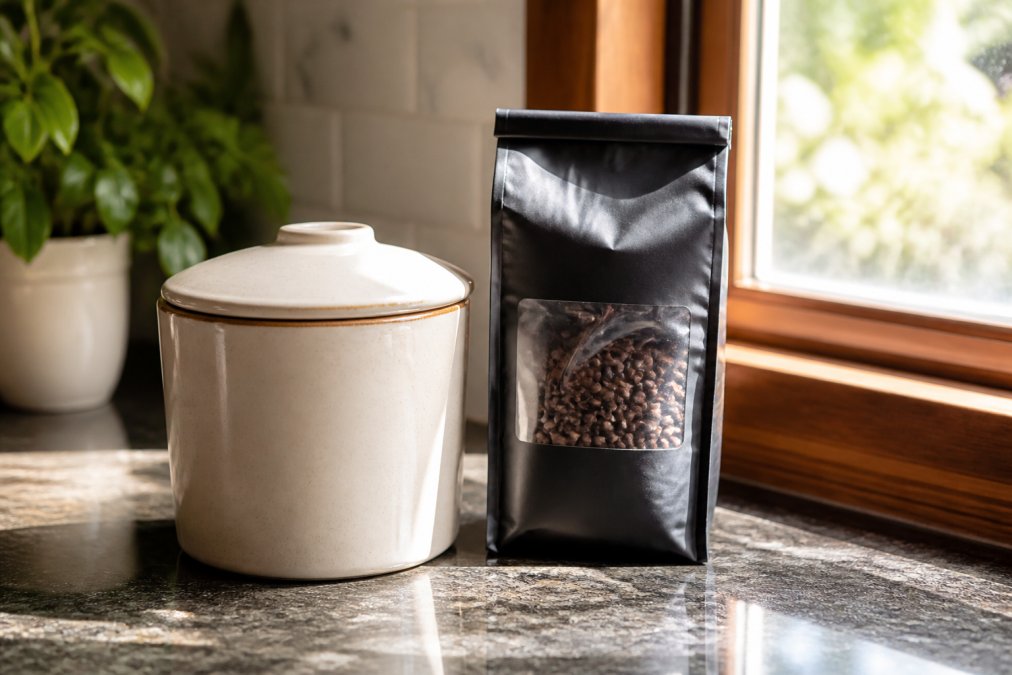
The best container is an opaque, airtight vessel with a one-way valve. The valve allows CO2 to escape during degassing without letting oxygen in, critical in the first week or two after roasting.
Key storage principles:
- Store in a cool, dark location, away from the stove
- Keep beans in their original bag if it has a one-way valve
- Avoid the refrigerator for everyday storage; it introduces moisture and food odors
- Freezing is acceptable for long-term storage only if vacuum-sealed in individual portions
- Buy in smaller quantities more frequently rather than stocking up, the single most effective freshness strategy
Safety vs. Quality: Can You Actually Drink Rancid Coffee?
Rancid coffee is generally not a health hazard for most healthy adults. The compounds produced by lipid oxidation are unpleasant but not toxic at concentrations found in a cup.
The real risk isn't rancidity itself but what accompanies it. Humid storage creates conditions for mold growth, and certain molds produce mycotoxins, a genuine health concern. the FDA's overview of mycotoxins in food outlines mycotoxin risk in food products, including coffee.
Practical rule: if beans smell musty or show visible mold, discard them. If they simply smell stale or oily-sour without visible mold, the safety risk is low, but the cup will be bad. No brewing technique rescues rancid beans.
What to Do With Rancid Beans Instead of Tossing Them
Before discarding rancid or very stale beans, consider a second life.
Garden use: Coffee grounds add nitrogen, improve drainage, and benefit acidic-loving plants like blueberries and roses. Brew first, then add spent grounds to compost or soil.
Odor absorption: Dry grounds in a bowl absorb ambient odors in refrigerators, cars, or closets.
Cleaning: Coarsely ground coffee works as an abrasive scrub for pots and pans without scratching.
Pest deterrent: Grounds scattered around plants deter slugs and certain insects.
Don't try to "fix" rancid beans by roasting again or adjusting brew method, lipid breakdown is irreversible.
The most reliable solution is sourcing coffee with a clear roast date and buying quantities you'll use within 3-4 weeks. Crystal Coast Coffee Co.'s sample packs, including the Best Sellers Sample Pack and Single Origin Favorites Sample Pack, offer 2oz quantities so you always work with fresh coffee. For guidance on sustainable food byproduct use, the USDA's resources on composting and food waste reduction provide useful references for home composters.


Knowing how to tell if coffee beans are rancid changes how you shop, store, and brew. The sensory evaluation is simple once you know what to look for, and storage principles are easy to implement. The harder part is sourcing coffee that gives you a real freshness window. Crystal Coast Coffee Co. roasts to order and ships promptly, so the roast date reflects beans actually roasted for you, not warehouse inventory. Start with a sample pack to find your roast, then build a routine around fresh, small-batch coffee that never sits long enough to go rancid.
Frequently Asked Questions
What does rancid coffee smell like?
Rancid coffee beans smell musty, sour, or like stale cooking oil rather than the rich, roasted aroma of fresh beans. The volatile aromatic compounds that give coffee its characteristic scent break down through oxidation over time, leaving behind a flat, unpleasant odor. Some describe it as cardboard or a faint chemical smell. If your beans smell dull or off rather than inviting, that is a reliable sign they have passed their prime.
Do coffee beans actually expire or just lose flavor?
Coffee beans do not expire the way perishable food does, but they do degrade significantly in flavor profile. Oxidation breaks down the oils and volatile compounds responsible for aroma and taste, leaving beans that brew a flat, bitter, or hollow cup. Whole beans stored in an airtight container are typically at peak quality within two to four weeks of the roast date. After that, quality drops steadily even if the beans are technically shelf-stable and safe to drink.
When should you throw out coffee beans?
Toss coffee beans when they fail the smell test (musty or sour odor), show no bloom when hot water hits the grounds, or brew a consistently bitter and hollow cup with no detectable acidity or sweetness. Beans older than three months past the roast date, or any beans stored improperly near moisture or light, are strong candidates for disposal or upcycling. Checking the roasted date rather than the best-by date gives you a much more accurate picture of freshness.
Can you drink rancid coffee?
Drinking rancid coffee beans is generally not a safety risk for healthy adults. Unlike rancid animal fats, oxidized coffee oils do not produce toxins at dangerous levels. The real issue is quality: rancid coffee beans brew a flat, bitter, or unpleasant cup with little of the aroma or flavor you expect. If beans show visible mold or smell aggressively sour and fermented, discard them. Otherwise, stale or rancid beans are an unpleasant experience, not a health hazard.
This article was written using GrandRanker