

How to Store Coffee Beans for Freshness
Table of Contents
- Why Freshness Matters for Coffee Flavor
- The Four Enemies of Coffee Freshness
- Best Coffee Storage Containers for Beans
- How to Tell if Coffee Beans Are Fresh
- Coffee Bean Shelf Life: Room Temperature vs. Freezer
- Whole Bean vs. Pre-Ground: Storage Differences
- Batch Management and Roast Level Considerations
- Frequently Asked Questions
Last Updated: September 2, 2026
Why Freshness Matters for Coffee Flavor
Within days of roasting, coffee begins losing the volatile compounds that create its distinctive aroma and flavor profile. At Crystal Coast Coffee Co., we roast beans to order specifically because freshness determines everything about your coffee experience. The moment beans are roasted, they start releasing carbon dioxide and losing the oils and aromatics that define their character. A bag stored carelessly loses its complexity within two weeks. The same bag sealed properly stays vibrant for six to eight weeks. That's the gap between a coffee that excites you and one that disappoints.
The Four Enemies of Coffee Freshness
Coffee faces four relentless threats once it leaves the roaster. Understanding these enemies helps you choose storage strategies that actually work.
Oxygen and Oxidation
Oxygen is the primary culprit in flavor degradation. When oxygen contacts coffee beans, it triggers oxidation, breaking down the compounds responsible for aroma and taste. The oils in the beans begin to go rancid, and volatile compounds dissipate into the air. This happens whether beans are whole or pre-ground, though ground coffee oxidizes dramatically faster due to increased surface area.
Even in sealed containers, some oxygen remains trapped. This is why one-way degassing valves exist on quality coffee bags, they allow carbon dioxide to escape while preventing oxygen from entering. When you transfer beans to storage, choosing an airtight container becomes non-negotiable if you want to preserve flavor beyond the first few weeks.

Light Exposure
Light, especially ultraviolet rays, accelerates the breakdown of coffee's flavor compounds through photodegradation. The beans' oils break down faster, and their chemical structure shifts in ways that flatten their taste profile.
This is why opaque containers matter. Clear glass or plastic containers look appealing on a shelf, but they're actively harming your coffee every hour it sits there. Professional roasters package beans in opaque bags or dark-tinted containers for this exact reason.
Heat and Temperature Fluctuations
Heat accelerates every chemical reaction that degrades coffee. Warm temperatures speed up oxidation, promote oil migration, and cause volatile aromatic compounds to evaporate faster. Temperature swings are equally problematic, when beans move between warm and cool environments, condensation forms inside the container, introducing moisture that promotes mold and accelerates staling.
A cool, stable environment is ideal. Room temperature storage works if your home stays consistently cool (below 70°F is best), but kitchens near stoves, sunny windowsills, or homes in warm climates present real challenges. Stability matters more than absolute temperature.
Moisture and Humidity
High humidity causes beans to absorb water, which promotes mold growth and speeds degradation. Even without visible mold, moisture triggers chemical reactions that flatten flavor and create off-tastes. The ideal range is 50-65% relative humidity (the FDA). An airtight container minimizes moisture exchange, but if you live in a particularly humid climate, store beans in a cool, dry location away from kitchen moisture.
Best Coffee Storage Containers for Beans
Your container choice determines how well you defend against these four enemies.
Airtight Containers with One-Way Valves
The gold standard for home coffee storage combines an airtight seal with a one-way degassing valve. These valves allow carbon dioxide, which the beans naturally release after roasting, to escape without letting oxygen back in. This matters most during the first week after roasting, when degassing is most active.
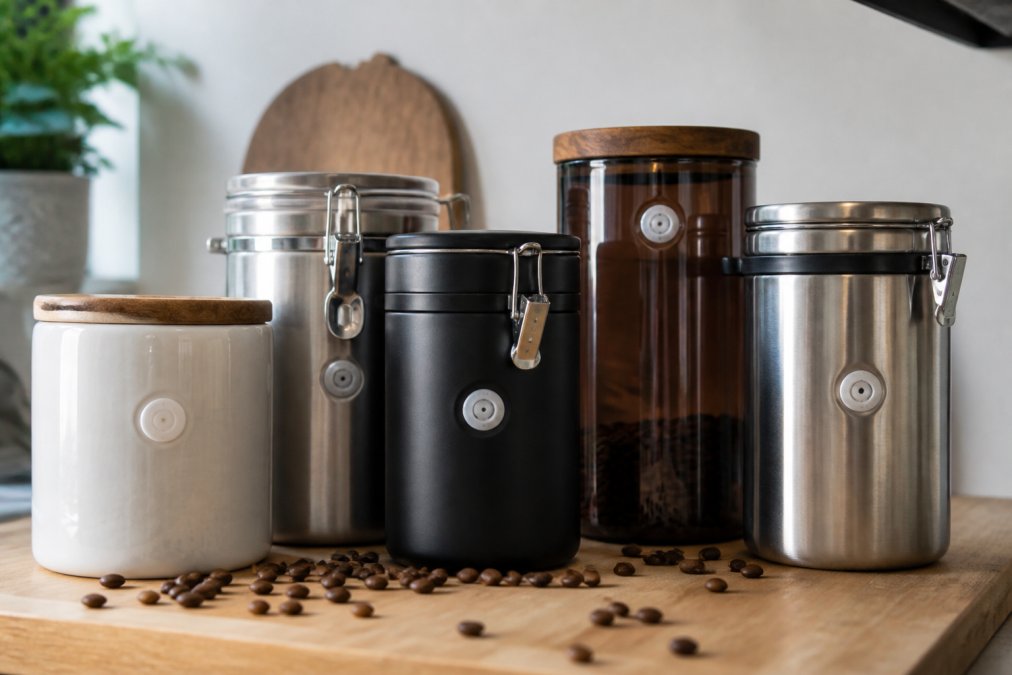
Look for containers specifically designed for coffee storage with a rubber gasket that creates an airtight seal when you press the lid down. The one-way valve sits on the lid or side, allowing gas to exit but blocking air from entering. The best containers are made from opaque ceramic, stainless steel, or dark-tinted glass. Ceramic and stainless steel offer superior oxygen barriers compared to plastic, which is slightly porous over extended periods.
Opaque vs. Clear Storage Vessels
This choice is straightforward: opaque always wins. Clear containers expose your beans to light every time you open your cabinet or kitchen lights turn on. Even ambient indoor light degrades flavor over weeks.
Opaque containers block light completely, protecting the beans from photodegradation. Ceramic and stainless steel are ideal because they're completely light-proof and offer excellent barrier properties against oxygen and moisture. If you prefer to see your beans, accept that you're trading visibility for freshness.
Vacuum Sealing: Pros and Cons
Vacuum sealing removes most oxygen before sealing, creating an extremely low-oxygen environment. This is excellent for long-term storage and works well if you buy in bulk and want to preserve beans for two to three months.
The downside: vacuum sealing can damage bean integrity and crack beans or force oils to the surface. Additionally, once you open a vacuum-sealed bag to remove beans, you lose the vacuum seal's protection. Vacuum sealing shines for long-term storage in the freezer or for buying large quantities and dividing them into smaller portions. For your daily-use container, a standard airtight container with a one-way valve is more practical and nearly as effective.
How to Tell if Coffee Beans Are Fresh
Freshness is measurable through multiple signals before you brew a single cup.
Check the Roast Date
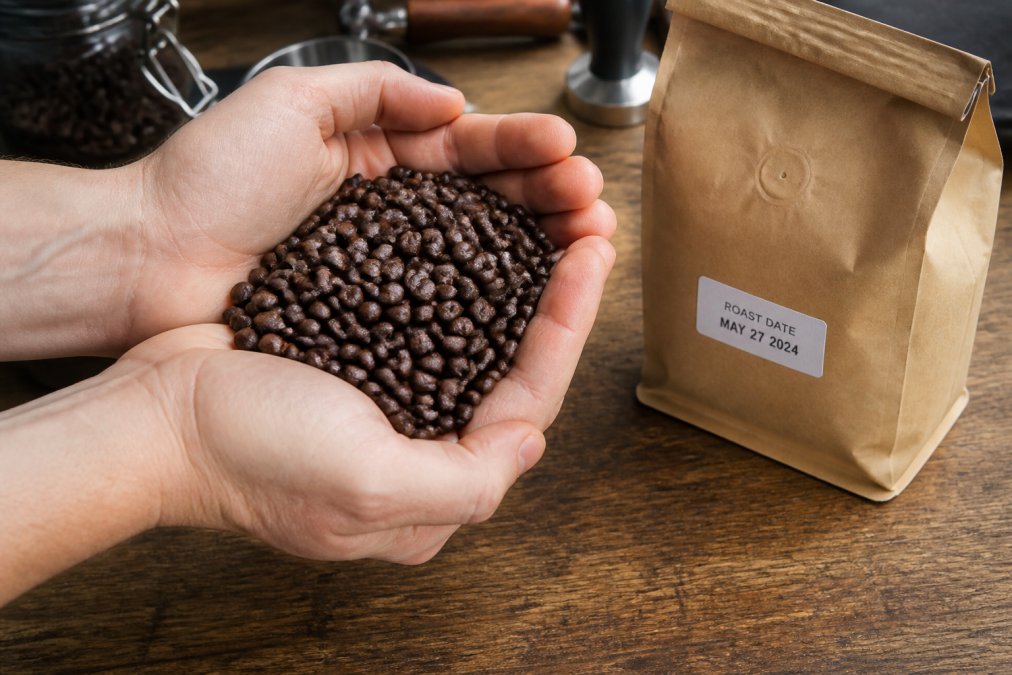
The roast date is your most reliable freshness indicator. Coffee is freshest between 5 and 30 days after roasting (peer-reviewed research). Within this window, the beans have completed their initial degassing while still retaining volatile aromatic compounds. After 30 days, flavor begins noticeably declining, though the coffee remains drinkable for another month or two.
Always buy beans with a visible roast date printed on the bag. Crystal Coast Coffee Co. includes the roast date on every bag because transparency about freshness matters. When you receive your order, note the roast date and plan to use the beans within four to six weeks for optimal flavor. Never rely on a "best by" date, the roast date is what counts.
Visual and Sensory Signs of Stale Beans
Fresh beans have a rich, deep color, usually dark brown with subtle variations depending on roast level. Stale beans appear dull and faded, sometimes with a grayish or ashen surface, indicating oil migration and oxidation.
Aroma is equally telling. Fresh beans smell vibrant and complex, fruity, floral, or chocolatey depending on the origin and roast. Stale beans smell flat, musty, or slightly rancid. When you grind fresh beans, the aroma should be intense and immediate. During brewing, fresh coffee produces a thick, fragrant crema. Stale coffee produces thin or no crema, and the brewed cup tastes thin and lifeless.
Coffee Bean Shelf Life: Room Temperature vs. Freezer
Storage location dramatically affects how long beans stay fresh.
Room Temperature Storage Duration
In an airtight container stored in a cool, dark place, whole beans stay fresh for six to eight weeks at room temperature (peer-reviewed research). This assumes your kitchen stays below 70°F and humidity is moderate. After eight weeks, beans don't suddenly become undrinkable, they simply lose complexity and taste flatter and less nuanced.
If you go through half a pound per week, room temperature storage is ideal. You'll finish beans well within their peak window. Room temperature storage also avoids condensation from moving beans between freezer and counter.
Does Freezing Coffee Beans Ruin Them?
Freezing doesn't ruin coffee beans if done correctly, but it's not necessary for most home enthusiasts. Freezing extends shelf life to three to four months, making it valuable if you buy in bulk or receive large shipments infrequently.
The key is preventing condensation. Store frozen beans in an airtight, moisture-proof container and keep them in the freezer continuously until you're ready to use them. Once thawed, don't refreeze, use the beans within a week. Freezing can slightly affect bean texture, but for practical purposes, freezing preserves freshness far better than leaving beans at room temperature for months.
Whole Bean vs. Pre-Ground: Storage Differences
Whole beans have minimal surface area exposed to oxygen and retain freshness for six to eight weeks at room temperature in an airtight container. Pre-ground coffee has exponentially more surface area, and oxygen attacks the grounds immediately. Ground coffee stays fresh for only one to two weeks, even in airtight containers.
This is why grinding your own beans matters. Grinding immediately before brewing captures the full aromatic complexity. If you must buy pre-ground coffee, buy smaller quantities and use them quickly. Crystal Coast Coffee Co. ships whole beans specifically so you control the grinding timing.
Batch Management and Roast Level Considerations
If you receive regular shipments or buy in bulk, divide larger quantities into smaller portions immediately upon arrival. Store one week's worth in your daily-use container on the counter, and keep the remainder sealed in airtight containers in a cool location. This minimizes how often you open your main supply, reducing oxygen exposure.
Roast level affects storage slightly. Light roasts have less oil on the bean surface and degrade slightly more slowly than dark roasts. The difference is modest, but if you're managing multiple roast levels, use light roasts first and dark roasts second to maximize freshness. During humid months, check your storage containers weekly for any signs of moisture.
Storing coffee beans for freshness isn't complicated, but it requires intention. The four enemies, oxygen, light, heat, and moisture, are always working against you. An airtight, opaque container in a cool location gives you six to eight weeks of excellent coffee. Freezing extends that window if you buy in bulk. Grinding whole beans immediately before brewing captures the full complexity that proper storage preserves.
Crystal Coast Coffee Co. roasts beans to order and ships them within days of roasting, giving you maximum freshness from the start. When your beans arrive, store them properly and you'll taste the difference that care makes. Get started with Crystal Coast Coffee Co. and experience how properly stored, freshly roasted beans transform your daily coffee ritual.
=== FAQ ANSWERS (audit these too, same rules) ===
[1] Q: Is it okay to store coffee beans in a Ziploc bag? A: Ziploc bags offer basic protection but fall short for long-term storage. While they create an airtight seal, they lack opacity to block light and don't include a one-way degassing valve to release carbon dioxide produced by fresh beans. For maximum freshness, upgrade to an opaque airtight container with a one-way valve, which preserves the coffee bean's volatile compounds and flavor profile far longer than a standard plastic bag.
[2] Q: How long do coffee beans stay fresh in a sealed bag? A: Properly sealed bags with one-way valves keep coffee beans at peak freshness for 2-4 weeks at room temperature. After that window, oxidation and volatile compound loss begin to noticeably degrade flavor and aroma. Roast date matters significantly, beans roasted within the past 2 weeks deliver the strongest sensory quality. For extended storage beyond 4 weeks, freezing in an airtight container can extend shelf life to 3-4 months while minimizing freezer burn risk.
[3] Q: Should you store coffee beans in the freezer or pantry? A: Room temperature storage in a cool, dark place is ideal for beans you'll use within 2-4 weeks, as it preserves the delicate flavor profile without condensation risk. Freezing works well for long-term storage beyond a month, but requires an airtight, opaque container to prevent freezer burn and moisture intrusion. Never refrigerate beans, the temperature fluctuations and humidity create condensation that accelerates rancidity and flavor loss. Choose based on your consumption rate and roast date.
[4] Q: What are the four enemies of coffee freshness? A: Oxygen, light, heat, and moisture are the primary threats to coffee bean integrity. Oxygen exposure triggers oxidation and accelerates volatile compound loss, degrading aroma and flavor. Light breaks down oils and causes photodegradation of the bean's sensory qualities. Heat speeds up chemical reactions that lead to staling. Humidity and condensation promote mold growth and rancidity. Airtight, opaque containers stored in a cool, dark place protect against all four, preserving peak freshness far longer than standard storage methods.
Frequently Asked Questions
Is it okay to store coffee beans in a Ziploc bag?
Ziploc bags offer basic protection but fall short for long-term storage. While they create an airtight seal, they lack opacity to block light and don't include a one-way degassing valve to release carbon dioxide produced by fresh beans. For maximum freshness, upgrade to an opaque airtight container with a one-way valve, which preserves the coffee bean's volatile compounds and flavor profile far longer than a standard plastic bag.
How long do coffee beans stay fresh in a sealed bag?
Properly sealed bags with one-way valves keep coffee beans at peak freshness for 2-4 weeks at room temperature. After that window, oxidation and volatile compound loss begin to noticeably degrade flavor and aroma. Roast date matters significantly, beans roasted within the past 2 weeks deliver the strongest sensory quality. For extended storage beyond 4 weeks, freezing in an airtight container can extend shelf life to 3-4 months while minimizing freezer burn risk.
Should you store coffee beans in the freezer or pantry?
Room temperature storage in a cool, dark place is ideal for beans you'll use within 2-4 weeks, as it preserves the delicate flavor profile without condensation risk. Freezing works well for long-term storage beyond a month, but requires an airtight, opaque container to prevent freezer burn and moisture intrusion. Never refrigerate beans, the temperature fluctuations and humidity create condensation that accelerates rancidity and flavor loss. Choose based on your consumption rate and roast date.
What are the four enemies of coffee freshness?
Oxygen, light, heat, and moisture are the primary threats to coffee bean integrity. Oxygen exposure triggers oxidation and accelerates volatile compound loss, degrading aroma and flavor. Light breaks down oils and causes photodegradation of the bean's sensory qualities. Heat speeds up chemical reactions that lead to staling. Humidity and condensation promote mold growth and rancidity. Airtight, opaque containers stored in a cool, dark place protect against all four, preserving peak freshness far longer than standard storage methods.
This article was written using GrandRanker