

How to Identify Specialty Grade Beans: A 2026 Guide
Table of Contents
- What Makes a Bean Specialty Grade?
- The SCA Coffee Grading Standards Explained
- The Specialty Coffee Cupping Score: 80 Points and Up
- How to Identify Specialty Grade Beans by Sight
- Roast Date, Origin, and Traceability: What the Label Tells You
- The Benefits of Small Batch Roasted Coffee for Quality
- Your Next Steps to Buying Specialty Grade Beans
- Frequently Asked Questions
Last Updated: September 4, 2026
Specialty grade beans represent the top tier of coffee quality, accounting for a small fraction of global production. This guide from Crystal Coast Coffee Co. breaks down the official standards, visual cues, and label details that signal true quality.
The term "specialty grade beans" is a formal classification, not a marketing slogan. It is a legal and commercial designation verified by trained professionals called Q-graders. Below, we'll show you how to spot these beans at the store, evaluate them at home, and understand why freshness and origin matter.
What Makes a Bean Specialty Grade?
Specialty grade beans are green coffee beans that score 80 points or higher on the Specialty Coffee Association's 100-point cupping scale and contain zero primary defects (sca.coffee). This definition is the industry's gold standard, and it governs everything from how beans are harvested to how they are traded.
A bean earns specialty status only when it is free of the most serious flaws, such as full black beans, full sour beans, or evidence of insect damage. It must also demonstrate flavor clarity, acidity, body, and balance that distinguish it from commercial grade coffee. The Specialty Coffee Association defines the cupping protocol used to measure these traits, and the process is rigorous. According to the Specialty Coffee Association's official grading standards, the evaluation covers fragrance, aroma, flavor, aftertaste, acidity, body, and balance.
The SCA Coffee Grading Standards Explained
The SCA coffee grading standards provide a systematic framework for evaluating green coffee. A certified Q-grader examines a 350-gram sample of green beans, counting defects that fall into two categories: primary defects and secondary defects.
For a coffee to be classified as specialty grade, it must have zero primary defects and no more than five secondary defects per sample. The grading scale also considers bean size, moisture content, and color uniformity. A common mistake is assuming a dark roast hides poor bean quality; roasting cannot fix a defective green bean, it only masks the flaws temporarily.

The Specialty Coffee Cupping Score: 80 Points and Up
Q-graders evaluate each sample across ten attributes, including fragrance, flavor, aftertaste, acidity, body, and balance, assigning up to ten points per category. A total score of 80 to 84.75 is considered specialty grade; 85 to 89.75 is excellent; and 90 or above is exceptional, often reserved for rare micro-lots.
Cupping is a standardized sensory analysis that removes variables like roast profile and brewing method, ensuring the score reflects the intrinsic quality of the bean. For consumers, a bag labeled with an SCA score above 80 signals verified quality, while a bag with no score or origin data offers no such assurance.
How to Identify Specialty Grade Beans by Sight
Visual inspection is the first filter for quality, and it's a skill you can practice at home with a bright light and a white sheet of paper. While a Q-grader's official defect count happens on 350 grams of green coffee, you can apply the same logic to a handful of beans before you buy.
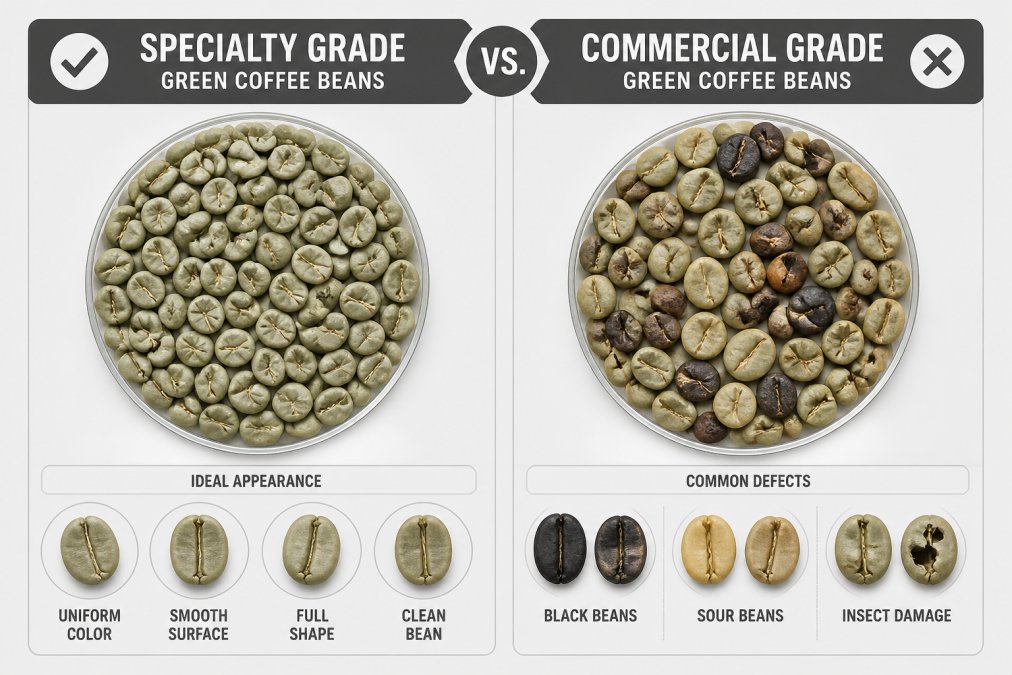
The Primary Defects That Disqualify a Batch
Finding just one primary defect in a 350-gram sample automatically drops the coffee below specialty grade. Here is what they look like:
- Full black beans: These beans are completely black, often wrinkled, and have a rotten or fermented odor. They result from over-fermentation or improper drying. In a roasted batch, they appear as noticeably darker, almost charcoal-colored beans that shatter differently than the rest.
- Full sour beans: These beans range from light brown to reddish-brown and smell sharply acidic or vinegary. They are caused by beans fermenting too long in their own pulp. In roasted form, they look mottled or have a dull, rusted appearance.
- Insect-damaged beans: Look for small, round holes about 1-2 millimeters wide, often surrounded by a darker ring. The coffee berry borer is the culprit, and even one damaged bean can ruin a cup with a bitter, woody flavor.
- Fungus-damaged beans: These show as powdery, yellowish, or grayish patches on the surface. They indicate mold growth during storage or transport.
Secondary Defects: The Quality Reducers
Secondary defects are less severe but still count against a coffee's score. A batch can have up to five secondary defects and remain specialty grade, but each one reduces the cupping score. Common ones include:
- Partial black beans: Less than half the bean is black, often showing a gradient from dark to normal color.
- Partial sour beans: Similar to full sour but only affecting part of the bean.
- Shells: These are hollow, cup-shaped fragments that break off during processing. They roast unevenly and can burn.
- Broken beans: Chipped or fractured beans that create inconsistent extraction.
- Immature beans: These are small, shriveled, and often have a silvery skin still attached. They taste grassy and astringent.
What Good Beans Look Like
Specialty grade green beans should be uniform in size, typically screen size 15-18, and have a bluish-green or yellowish-green color depending on the origin and processing method. The surface should be clean, with the silverskin (the thin parchment layer) mostly removed.
Roasted Bean Inspection
Once beans are roasted, visual inspection becomes trickier but still useful. A well-roasted batch of specialty beans will show uniform color across every bean. Look for these warning signs:
- Quakers: These are underdeveloped beans that stay pale and flat-colored after roasting. They taste like peanut shells or cardboard. In a light roast, they are easier to spot; in a dark roast, they hide.
- Scorching: Dark, burnt spots on the bean surface, usually from the bean sitting too long against the roasting drum. This creates a bitter, ashy flavor.
- Tip burning: Blackened tips on the beans, often from roasting too fast. This adds a smoky, harsh note.
The Home Inspection Method
Take 100 grams of green beans (about 3.5 ounces) and sort them under a bright light. If you find even one full black bean, one full sour bean, or one insect-damaged bean, that batch would not qualify as specialty grade under SCA rules. For roasted beans, the same test works, though defects are harder to see under a dark roast.

This visual check takes two minutes and tells you more about the bean's journey than any marketing copy. Combine it with the label checks in the next section to move from guessing to verifying.
Roast Date, Origin, and Traceability: What the Label Tells You
The label on a bag of specialty grade beans should tell a complete story. Look for three pieces of information: the roast date, the origin, and the processing method. A roast date is non-negotiable for freshness. Many roasters, including Crystal Coast Coffee Co., roast to order and print the date directly on the bag.
Origin transparency matters just as much. A bag that names a specific farm, cooperative, or region signals traceability, which is a hallmark of the specialty market. Single origin coffees, such as a washed process lot from a named Ethiopian farm, allow you to taste the terroir. The processing method, whether washed, natural, or honey, also shapes the flavor profile. According to the Specialty Coffee Association's guidance on green coffee traceability, direct trade relationships and harvest date documentation are markers of a transparent supply chain. If a bag lists only a vague origin like "blend" with no further detail, you are likely looking at commercial grade coffee.
The Benefits of Small Batch Roasted Coffee for Quality
Roasting in small batches allows the roaster to develop a precise roast profile for each origin, highlighting the bean's natural acidity, body, and sweetness. Large commercial roasters often prioritize shelf stability and volume, meaning beans may sit in silos for months. Small batch roasting is driven by order volume, so the coffee is roasted and shipped within days.
Coffee releases carbon dioxide for weeks after roasting, and the volatile compounds that carry aroma and flavor degrade steadily over time. A bag roasted ten days ago will taste noticeably livelier than one roasted three months ago. When you buy from a roaster that roasts to order, you receive coffee at its peak.
Your Next Steps to Buying Specialty Grade Beans
Buying specialty grade beans comes down to verifying claims rather than trusting labels. The term "specialty" appears on bags that have never been Q-graded, and "single origin" can mean anything from a single farm to a whole country. Here is a five-minute verification process that works online or in a store.
Step 1: Check for a Verifiable SCA Score
A genuine SCA score comes with a cupping certificate issued by a licensed Q-grader. If a roaster claims an 87-point coffee, ask to see the certificate or the lot number associated with that score. Many specialty roasters publish this information on their website. If the score is not backed by documentation, treat it as marketing.
Step 2: Trace the Lot Number
Specialty grade coffee is traded in lots, and each lot has a unique identifier tied to a specific farm, harvest date, and processing batch. When you find a lot number on a bag, you can often trace it back to the importer's or farm's website. Look for these traceability markers:
- Farm or cooperative name: A specific name like "Finca El Injerto" or "Kayon Mountain Farm" is a good sign. A vague "Central American blend" is not.
- Harvest year: Specialty coffee is seasonal. A bag that says "2025 harvest" in 2026 is old stock. The harvest year tells you the coffee is fresh from origin.
- Processing station details: Some farms list the specific washing station or mill where the coffee was processed. This level of detail signals a direct trade relationship.
Step 3: Use QR Codes and Traceability Platforms
Many specialty roasters now print QR codes on their bags that link directly to traceability information. Scan the code and look for:
- Producer profile: A named farmer or cooperative with photos and background information.
- Import documentation: Some platforms show the contract details between the roaster and the importer.
- Cupping scores: The actual score sheet from the Q-grader, not just a summary number.
If the QR code leads to a generic landing page or nothing at all, that is a red flag. Roasters who invest in transparency usually have a digital trail to show for it.
Step 4: Ask the Roaster Direct Questions
When buying online, use the contact form or chat feature to ask these three questions:
- "Who is the Q-grader that scored this coffee, and can I see the certificate?"
- "What is the exact farm or cooperative name and the harvest date?"
- "What is the defect count on the green coffee before roasting?"
A reputable specialty roaster will answer all three without hesitation. If you get vague responses or marketing language, move on.
Step 5: Perform a Home Cupping Test
The final verification is your own palate. Grind 10 grams of coffee coarsely and place it in a cup. Add 150 milliliters of water just off the boil (about 200°F). Wait four minutes, then break the crust with a spoon and smell the aroma. Let it cool for another five minutes, then taste it with a spoon. Evaluate these attributes:
- Fragrance and aroma: Does it smell clean and sweet, or earthy and musty?
- Acidity: Is it bright and lively like citrus, or flat and dull?
- Body: Does it feel syrupy and full, or thin and watery?
- Flavor: Is there clarity and complexity, or is it muddled and one-dimensional?
- Aftertaste: Does the flavor linger pleasantly, or does it disappear quickly?
The Five-Minute Verification Checklist
| Checkpoint | What to Look For | Red Flag |
|---|---|---|
| SCA score documentation | Certificate or lot number from a Q-grader | Score with no backing documentation |
| Lot number | Specific identifier on the bag | No lot number or vague origin |
| QR code traceability | Links to producer profile and import docs | QR code leads to generic page |
| Roaster response | Direct answers to farm and harvest questions | Vague or marketing-heavy responses |
| Home cupping | Clean, sweet, complex flavor | Bitter, sour, or flat taste |
When a roaster passes all five checks, you can buy with confidence. When they fail even one, the risk is yours to take.
Frequently Asked Questions
What is the difference between specialty grade and commercial grade coffee?
Specialty grade beans score 80 or higher on the SCA's 100-point scale and have zero primary defects and no more than five full secondary defects per 300 grams of green coffee. Commercial grade coffee falls below that score or carries more defects, which often translates to a flat or bitter taste. For a clear comparison, check the SCA coffee grading standards on the official Specialty Coffee Association website.
How do defects affect the grading of coffee beans?
Defects directly lower a coffee's grade. Primary defects like black beans, sour beans, or stones make the coffee taste foul or even pose a health risk. Secondary defects, such as broken beans or insect damage, create inconsistent flavor. A grader counts these defects in a 300-gram sample; too many defects push the coffee below the specialty grade threshold and reduce its specialty coffee cupping score.
Do specialty grade beans have to be organic?
No. The SCA grading system measures physical quality and cup character, not farming practices. A farm can grow beans without synthetic pesticides and still not meet the SCA's defect standards. Conversely, a certified organic farm could produce beans with defects that fail grading. Organic certification is a separate choice; specialty grade status is about the bean's measurable quality and taste.
What does the 15-15-15 rule for coffee mean?
The 15-15-15 rule is a simple freshness guideline: coffee is best within 15 days of roasting, tastes best 15 minutes after brewing, and ground beans should be used within 15 minutes of grinding. Roasters who print the roast date on the bag make this easy to follow. Small batch roasted coffee often arrives closer to its roast date, giving you a wider window of peak flavor.
How can I verify a roaster's claims about specialty grade beans?
Look for transparency. A reputable roaster will name the farm or cooperative, the region, the processing method, and the harvest date. Some will share the coffee's cupping score or a link to its green coffee profile. For example, our French Roast uses specialty grade coffee from Central America, a detail we publish openly on the product page: [French Roast](https://crystalcoastcoffeeco.shop/products/french-roast-1).
This article was written using GrandRanker