

Best Coffee Beans for Flavor Profile: 2026 Guide
Table of Contents
- How Roast Level Shapes Your Coffee Flavor Profile
- Single Origin vs Blend Coffee Flavor: Which Wins?
- Processing Methods and the Flavor Profile They Create
- Coffee Flavor Wheel Explained: A Practical Tasting Tool
- Terroir, Altitude, and Why Origin Matters for Flavor
- Brewing Method, Grind Size, and Water Chemistry
- How to Store Coffee Beans for Freshness and Peak Flavor
- Frequently Asked Questions
Last Updated: August 30, 2026
Finding the best coffee beans for flavor profile is harder than most guides suggest, not because options are overwhelming, but because flavor depends on roast level, processing method, origin, grind size, water chemistry, and bean freshness. At Crystal Coast Coffee Co., we roast to order precisely because every variable matters, and stale beans undermine all of them. This guide provides a practical framework for identifying which beans will deliver the cup you're looking for.
How Roast Level Shapes Your Coffee Flavor Profile
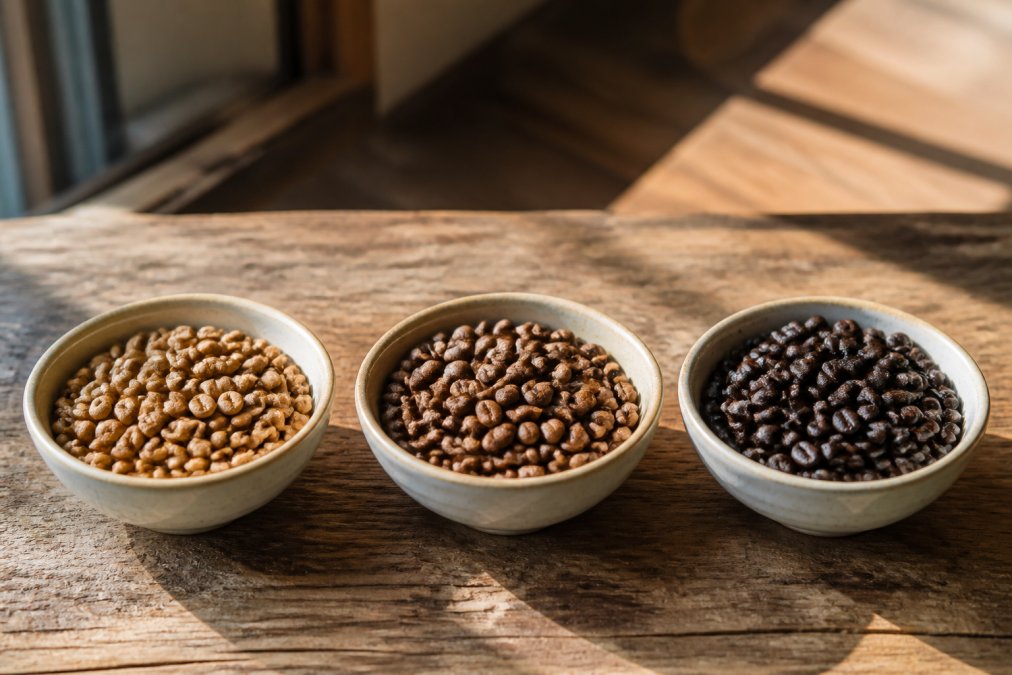
Roast level is the single biggest lever in coffee flavor, determining whether you taste the bean's origin character or the roaster's craft.
Light Roast: Bright Acidity and Delicate Tasting Notes
Light roast preserves the bean's natural sugars, acids, and aromatics. Expect bright acidity, floral aromas, and tasting notes ranging from citrus and stone fruit to delicate florals. The mouthfeel is lighter and more tea-like. Light roasts work best for pour-over, Chemex, and AeroPress brewing, where clean extraction highlights flavor clarity. A common mistake is dismissing light roasts as "weak", they're actually more complex, just differently so.
Medium Roast: Balance Between Origin and Roast Character
Medium roast balances origin character with roast development. Acidity softens, body fills out, and notes of caramel, nuts, and milk chocolate layer over the bean's fruit or floral character. This is the sweet spot for drinkers wanting complexity without sharp acidity. Specialty coffee blends often target this range because it performs well across brewing methods: drip machines, French press, and AeroPress all excel here.
Dark Roast: Bold Body and Roast-Forward Sweetness
Dark roast shifts flavor almost entirely to the roaster. Origin notes retreat; roast-forward flavors, dark chocolate, smokiness, toasted nuts, and bittersweet caramel, move forward. Body becomes full, acidity drops to near zero, and the aftertaste lingers longer. The Crystal Coast Coffee Co. French Roast exemplifies this: full-bodied, smoky, low acidity, and excellent for those with sensitive stomachs who find high-acid coffees uncomfortable.
| Roast Level | Acidity | Body | Primary Flavor Notes | Best Brewing Method |
|---|---|---|---|---|
| Light | High | Light | Citrus, floral, stone fruit, tea-like | Pour-over, Chemex, AeroPress |
| Medium | Medium | Medium | Caramel, chocolate, nuts, mild fruit | Drip, AeroPress, French press |
| Dark | Low | Full | Smoky, dark chocolate, toasted nuts | Espresso, French press, cold brew |
Single Origin vs Blend Coffee Flavor: Which Wins?
Neither wins outright; they serve different purposes.
Single origin coffee comes from one farm, region, or cooperative and expresses specific terroir, altitude, and processing. Single origin beans tend to be more expressive and complex, though more variable season to season. The Crystal Coast Coffee Co. Sumatra exemplifies this: heavy body, low acidity, earthy and woody notes that blends cannot replicate. A sample pack is a smart way to explore without committing to an unfamiliar full bag.
Blends are built for consistency and balance, combining beans from multiple origins to hit a target flavor profile across harvests. This is why espresso roasters favor blends, they need predictable results shot after shot.
The practical answer: start with single origin to explore and discover; choose a well-crafted blend for a reliable daily driver.
Processing Methods and the Flavor Profile They Create
Processing, what happens to the coffee cherry between harvest and the roaster, is one of the most underappreciated variables in flavor, explaining why two beans from the same altitude and country can taste dramatically different.
Washed Process: Clarity and Bright Acidity
The washed process removes fruit before drying, producing a clean, bright cup with high flavor clarity. Expect pronounced acidity, lighter body, and precise, well-defined tasting notes. Ethiopian washed coffees are the classic reference: floral, citrus-bright, and transparent in their clarity.
Natural Process: Fruity, Berry-Forward Complexity
Natural processing leaves fruit on the bean during drying. Sugars ferment and absorb into the bean, producing heavier body, lower acidity, and intensely fruity, berry-forward flavor. The trade-off is less consistency, as natural process coffees require careful monitoring to avoid fermentation defects.
Honey Process: Sweet Middle Ground
Honey process removes the outer skin but leaves some mucilage on the bean during drying. The result sits between washed and natural: more body and sweetness than washed, more clarity and structure than natural. Notes of stone fruit, caramel, and mild berries are common.
Coffee Flavor Wheel Explained: A Practical Tasting Tool
The coffee flavor wheel, developed by the Specialty Coffee Association, gives tasters a shared vocabulary for describing taste. According to the Specialty Coffee Association's flavor wheel resources, the wheel organizes flavors from broad categories at the center, fruity, floral, nutty, roasty, to increasingly specific descriptors at the outer edge, like "bergamot," "dried fig," or "dark chocolate."

Start at the center and work outward. Ask yourself: is this fruity or roasty? If fruity, is it citrus or berry? If citrus, is it lemon or orange? You're narrowing the description with each step. Most specialty coffee bags list tasting notes; the flavor wheel helps you verify whether you actually taste what the roaster describes, sharpening your palate over time.
Cupping is the formal sensory analysis practice used by roasters and buyers, involving multiple coffees brewed side by side in standardized conditions. You don't need to cup formally to benefit from the framework; even informal tasting with the flavor wheel as reference builds real skill quickly.
Terroir, Altitude, and Why Origin Matters for Flavor
Terroir is the complete environmental context in which a coffee plant grows: soil composition, rainfall, temperature variation, shade coverage, and altitude. Altitude is the most consequential single factor. Arabica coffee grown above 1,500 meters develops more slowly, producing denser beans with higher sugar content and more complex acids. The result is brighter acidity, more nuanced flavor, and a longer, cleaner aftertaste. Lower-altitude arabica tends toward milder, simpler profiles; robusta is higher in caffeine but delivers a harsher, more bitter cup.
As documented in USDA Agricultural Research Service coffee crop studies, growing conditions including altitude, temperature range, and soil type directly influence the chemical composition of coffee beans, determining flavor potential before roasting begins.
Regional generalizations hold up well as starting points:
- Ethiopia: Floral, citrus, bergamot, jasmine
- Colombia: Bright acidity, red fruit, caramel, balanced body
- Sumatra: Heavy body, earthy, woody, low acidity
- Central America (Guatemala, Costa Rica): Clean, chocolatey, mild acidity, approachable
Origin sets the ceiling; processing and roasting determine how close you get to it.
Brewing Method, Grind Size, and Water Chemistry
You can buy the best beans on the market and still produce a mediocre cup if extraction is off. Brewing method, grind size, and water chemistry determine whether the flavor potential in your beans reaches your cup.
Matching Beans to Your Brewing Method
- Espresso: Needs fine grind, high pressure, and short contact time. Blends with medium-to-dark roast levels perform best.
- Pour-over / Chemex: Rewards light-to-medium roasts with high flavor clarity, highlighting acidity and floral notes.
- French press: Full immersion amplifies body and oils. Medium-to-dark roasts shine; light roasts can taste thin.
- Cold brew: Long extraction at low temperature favors dark and medium roasts, naturally reducing perceived acidity.
Grind Size Calibration for Flavor Clarity
Grind size controls extraction rate. Too coarse, and water passes through too quickly, leaving the cup sour and weak. Too fine, and over-extraction pulls bitter compounds into the cup. If your coffee tastes sour or hollow, grind finer. If it tastes bitter and harsh, grind coarser. Adjust in small increments on a burr grinder, which produces uniform particles that extract evenly. Blade grinders produce uneven extraction and muddy flavor.
Water Chemistry and Its Effect on Extraction
Water is the solvent doing all the work. Its mineral content, specifically magnesium and calcium, directly affects extraction efficiency. According to the Specialty Coffee Association's water quality standards, ideal brewing water has total dissolved solids between 75 and 250 parts per million, with neutral to slightly alkaline pH.
Distilled water produces flat-tasting coffee; it lacks minerals needed to carry flavor. Very hard water over-extracts bitter compounds. Filtered tap water in most areas hits a reasonable middle ground. Temperature matters too: the standard brewing range is 195°F to 205°F (just off the boil). Cooler water under-extracts; water that's too hot can scorch delicate light roast compounds.
How to Store Coffee Beans for Freshness and Peak Flavor
Proper storage is the difference between a cup that delivers on its flavor promise and one that tastes flat or stale. Oxygen, light, heat, and moisture are the four enemies.
Store whole beans in an airtight, opaque container at room temperature, not in the refrigerator (condensation introduces moisture) and not in the freezer unless storing a large quantity you won't open for weeks. Buy whole bean and grind immediately before brewing. Ground coffee degrades noticeably within hours of grinding.
Roast Date, Degassing, and the Freshness Window
The roast date is more important than the "best by" date. Freshly roasted coffee releases CO₂, called degassing, for several days after roasting. Brewing too soon (within 24-48 hours) can produce uneven extraction. The ideal window is 4 to 14 days post-roast for espresso, and 3 to 10 days for filter brewing.
After roughly 3 to 4 weeks from the roast date, most whole bean coffees taste noticeably stale. This is why roast-to-order matters: a bag roasted and shipped the same week tastes fundamentally different from one sitting in a warehouse for months.
As noted by the National Coffee Association's coffee freshness guidance, coffee is best consumed within two weeks of the roast date for peak flavor.
Decaf flavor profiles deserve mention: modern Swiss Water Process and CO₂ decaffeination methods preserve far more of the bean's original flavor than older chemical processes. A well-sourced, freshly roasted decaf can deliver genuine complexity with only modest reduction in flavor intensity compared to its caffeinated counterpart.
A quick storage checklist:
- Use an airtight, opaque container
- Store at room temperature, away from heat and light
- Buy whole bean; grind immediately before brewing
- Check the roast date, not just the best-by date
- Aim to use within 3-4 weeks of the roast date
- Avoid refrigerating; freeze only in sealed, portioned batches
Choosing the best coffee beans for flavor profile comes down to understanding which variables you can control and which were decided before the bag reached you. Crystal Coast Coffee Co. roasts to order, sources from trusted farms worldwide, and ships fresh so that the flavor potential in every bean reaches your cup. Whether you're starting with a sample pack to map your palate or dialing in a daily driver like the French Roast, the freshness and sourcing are already handled. Get started with Crystal Coast Coffee Co. and taste the difference that roast date and real craft make.
=== FAQ ANSWERS (audit these too, same rules) ===
Frequently Asked Questions
Q: How does roast level affect the flavor profile of coffee?
A: Roast level is one of the biggest drivers of flavor. Light roasts preserve the bean's origin character, producing bright acidity and notes of citrus, stone fruit, or berries. Medium roasts balance origin sweetness with caramel and chocolate notes. Dark roasts shift flavor toward the roast itself: smoky, full-bodied, and lower in acidity. The further you roast, the more the bean's natural terroir recedes and the roast profile takes over.
Q: What is the difference between single-origin and blend flavor profiles?
A: Single-origin coffees come from one farm or region, so every cup reflects that specific terroir, altitude, and processing method. The flavor is distinct and traceable. Blends combine beans from multiple origins to create a consistent, balanced cup that holds up across seasons. Single origins reward adventurous palates; blends suit drinkers who want reliability. Neither is superior, the right choice depends on whether you prefer flavor clarity or predictable balance.
Q: What are the primary flavor notes found in specialty coffee?
A: Specialty coffee tasting notes span a wide sensory range. Common categories include fruit (notes of citrus, berries, stone fruit), sweetness (caramel, chocolate, honey), and savory or earthy tones (nuts, tobacco, cedar). Aroma, acidity, body, and aftertaste all contribute to the full picture. Processing method and roast profile shape which notes come forward. A naturally processed Ethiopian arabica, for example, often produces intense berry and floral notes that a washed coffee from the same region would not.
Q: Does the brewing method change the flavor profile of coffee beans?
A: Yes, significantly. Brewing method controls extraction rate, water contact time, and brew ratio, all of which alter how flavor compounds dissolve. A pour-over highlights acidity and flavor clarity, making it ideal for light roasts. Espresso concentrates body and sweetness, suiting medium to dark roasts. French press produces a full-bodied, mellow cup with more mouthfeel. The same whole bean can taste noticeably different depending on how you brew it, which is why matching beans to your method matters.
Q: How do I determine my preferred coffee flavor profile?
A: Start by identifying what you already enjoy: do you reach for bright, fruity flavors or prefer something mellow and chocolatey? Try a single-origin sample pack to taste distinct regional profiles side by side. Pay attention to acidity, body, and aftertaste rather than just overall strength. Using a flavor wheel during tasting helps you name what you're sensing. Over two or three sessions, patterns emerge that point clearly toward the roast level, origin, and processing method that suit your palate.
Q: What is the best way to store coffee beans to preserve flavor?
A: Keep whole beans in an airtight, opaque container at room temperature, away from heat, light, and moisture. Avoid the refrigerator, condensation degrades flavor quickly. Freezing is acceptable for long-term storage if beans are sealed in airtight portions and thawed only once. Always check the roast date: freshly roasted beans need 24 to 72 hours to degas before brewing, then taste best within two to four weeks of the roast date for peak flavor and aroma.
Q: Do decaf coffees have comparable flavor profiles to regular coffee?
A: Quality decaf can deliver a genuinely complex cup. The decaffeination process does affect flavor, but modern methods, particularly the Swiss Water Process, preserve more of the bean's original tasting notes than older techniques. A well-sourced, freshly roasted decaf arabica can still show notes of chocolate, caramel, and mild fruit. The key is starting with high-quality green beans and roasting to order. Decaf processed from low-grade robusta, by contrast, tends toward flat bitterness with little nuance.
This article was written using GrandRanker