

Airtight Containers for Coffee Beans: 2026 Guide
Table of Contents
- What to Look for in Airtight Containers for Coffee Beans
- How to Store Coffee Beans for Freshness
- How Long Do Coffee Beans Stay Fresh?
- Vacuum Coffee Canister: How Air Removal Works
- Coffee Storage Container with One-Way Valve: Degassing and Resealing
- Comparing Canisters, Jars, Tubes, and Bags
- Care, Cleaning, and Seal Maintenance
- Frequently Asked Questions
Last Updated: October 8, 2026
What to Look for in Airtight Containers for Coffee Beans
The best airtight containers for coffee beans block four enemies at once: oxygen, moisture, light, and heat. Get those under control, and whole beans hold their character for weeks instead of days.
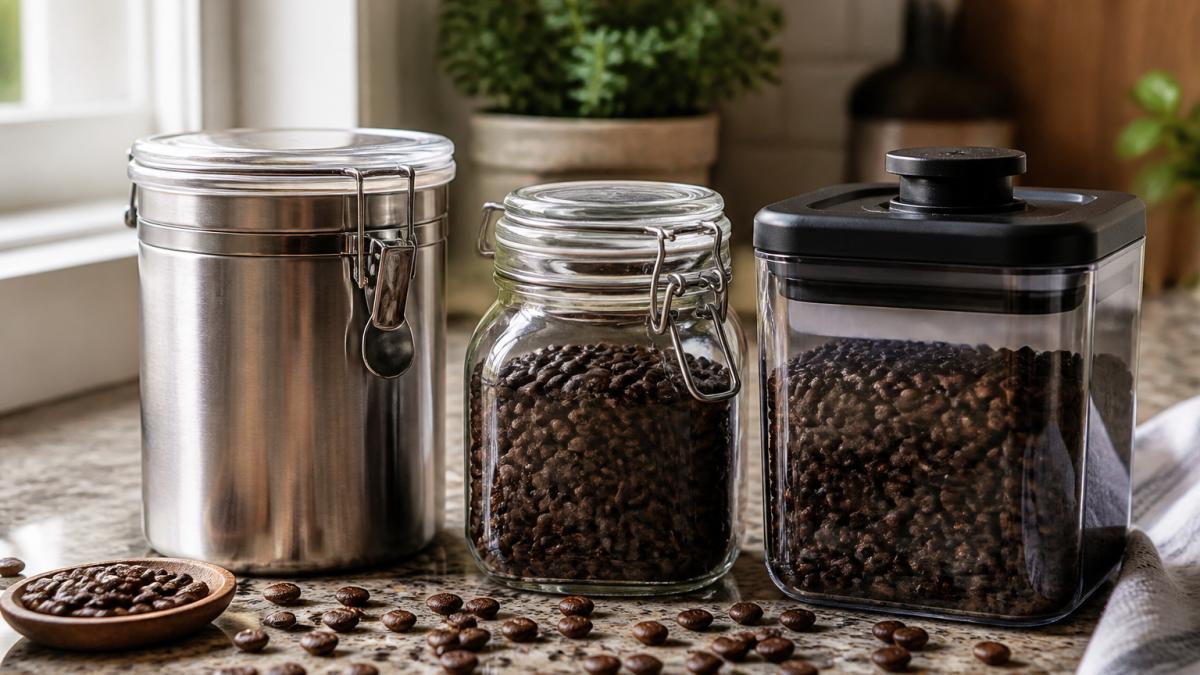
The 5 best airtight containers for coffee beans in 2026 are not the fanciest ones. They seal properly, match your household's pace, and stay out of your morning routine.
Capacity: One-Pound, Half-Pound, and Single-Dose Options
Capacity decides everything else. A one-pound capacity suits households that brew daily; a half-pound size fits solo drinkers who go through beans slower. Single-dose storage is the gold standard for freshness because every dose meets fresh air only once.
Match capacity to your routine, not shelf appeal. Too large leaves headspace full of oxygen; too small means constant opening and resealing, which speeds up aging.
Materials: Stainless Steel, Glass, and Opaque Plastics
Stainless steel is the safest default: it blocks light completely and does not hold odors. Glass lets you see the beans, but clear glass exposes them to light unless stored in a cabinet. Opaque plastic is the budget option; it blocks light, but cheaper plastics can retain oils over time.
A common mistake is leaving a clear jar on the counter beside a window. Light degrades the oils that carry aroma, and no gasket fixes that.
How to Store Coffee Beans for Freshness
Learning how to store coffee beans for freshness comes down to one rule: limit oxygen, moisture, light, and heat, in that order. Oxygen drives oxidation, turning bright, sweet flavors flat and papery.
Here is the routine we recommend:
- Transfer beans out of the original bag only if it is not resealable
- Fill the container to reduce headspace, leaving room for degassing
- Store in a cool, dark cabinet, not above the coffee maker
U.S. Food and Drug Administration guidance on food storage and shelf life covers general food safety principles, and the same logic of limiting moisture and temperature swings applies to coffee.
Limiting Oxygen, Moisture, Light, and Heat
Air agitation is the quiet killer. Every scoop pushes fresh oxygen through the whole batch. Pour-out designs, where beans flow from the bottom, reduce that disturbance. If you use a scoop, take from the top and close the lid fast.
Heat is why the cabinet above the espresso machine is a bad home. Warm air rises, pushing oils toward rancidity faster.
How Long Do Coffee Beans Stay Fresh?
Roasted coffee beans hold peak flavor for roughly two to four weeks in a proper airtight container, then decline gradually. Whole beans outlast ground coffee by a wide margin because grinding multiplies the surface area exposed to oxygen. But "two to four weeks" is a range, not a rule, and the variables that move you inside it are the ones most storage guides skip.
Roast Date Beats Every "Best By" Label
A roast date tells you how much of the freshness window is already spent. A bag roasted last week beats one roasted two months ago regardless of container quality. Look for the roast date printed on the bag, not a best-by date, which is often set for retail rotation rather than flavor. If a roaster ships to order, the clock starts when the bag leaves the roaster.
Degassing: Why the First Few Days Are Different
Freshly roasted beans release carbon dioxide for several days after roasting, a process called degassing. That CO2 is why a just-roasted bag puffs up, and why a hard vacuum pulled too early fights back as pressure builds. Beans are still settling in the first three to seven days, so storage during that window should let gas escape rather than trap it.
Realistic Storage Duration by Method
| Storage Method | Typical Peak-Flavor Window | Notes |
|---|---|---|
| Original resealable bag, rolled tight | 1-2 weeks | Fine short-term; bag degrades with repeated opening |
| Airtight canister, cool dark cabinet | 2-4 weeks | The everyday standard for whole beans |
| Vacuum canister, sealed after degassing | 3-5 weeks | Best when you buy in bulk and portion out |
| Single-dose portions, sealed individually | 4-6 weeks | Each dose meets air only once |
| Freezer, vacuum-sealed, unopened | 1-2 months | Only if sealed before freezing and thawed once, unopened |
These windows assume whole beans, a cool dark spot, and a container that actually seals. Push any of those and the timeline shortens.
What Actually Ends Freshness
Three things end a bag early, and none is the calendar alone:
- Repeated opening. Every lid-off moment exchanges the CO2 blanket inside for fresh oxygen. A container opened twice a day ages faster than the same beans opened twice a week.
- Heat swings. A cabinet above the espresso machine or beside the oven warms the oils and speeds rancidity. A steady cool spot beats a warm convenient one.
- Moisture. Condensation from temperature swings adds water that dulls flavor and can encourage mold. This is why the fridge is a trap unless beans go in vacuum-sealed and stay sealed until fully thawed.
Matching Storage Duration to How You Buy
If you finish a bag in under two weeks, a simple airtight canister in a dark cabinet is enough. If you buy two pounds at a time or roast in bulk, split the supply: keep a one-week working portion in a countertop canister and vacuum-seal the rest in single-dose or half-pound portions for the freezer. The beans you brew this week never sit through the whole bag's aging curve.
U.S. Food and Drug Administration guidance on food storage and shelf life covers general food safety principles around moisture and temperature control, and the same logic of limiting moisture and temperature swings applies to coffee.
Vacuum Coffee Canister: How Air Removal Works
A vacuum coffee canister pulls air out of the sealed space, slowing oxidation dramatically.
The trade-off: you cannot vacuum-seal beans the day they are roasted. Freshly roasted coffee releases carbon dioxide for several days, a process called degassing.
Wait a few days after the roast date before pulling a hard vacuum. After that, vacuum storage is one of the most effective methods for freshness retention.
Coffee Storage Container with One-Way Valve: Degassing and Resealing
A coffee storage container with one-way valve solves the degassing problem elegantly. The valve lets carbon dioxide escape while blocking outside air.
For containers, a one-way valve means you can seal beans immediately after roasting without pressure building. The beans breathe out, the seal holds, and oxygen stays out.
Look for a gasket and a screw-top or clamp lid that compresses the seal evenly.
Comparing Canisters, Jars, Tubes, and Bags
Most storage guides describe container types in the abstract. What helps is a side-by-side view of what each format costs, how much it holds, and which routine it fits. The table below compares five formats on the specs that matter: capacity, material, seal type, light blocking, portability, and typical price band. Prices are typical U.S. retail ranges for the format, not a single product, and shift with sales and brand.
| Format | Typical Capacity | Common Materials | Seal Type | Light Blocking | Portability | Typical Price Band |
|---|---|---|---|---|---|---|
| Stainless steel canister | 12-22 oz (about 0.75-1.4 lb) | 304 stainless steel | Silicone gasket + clamp or screw lid | Full | Low | $20-$45 |
| Glass jar with clamp lid | 16-34 oz | Borosilicate or soda-lime glass | Rubber gasket + wire bail | None (clear) | Low | $8-$25 |
| Vacuum canister | 10-24 oz | Stainless steel or plastic body | Pump or twist vacuum seal | Varies by body | Low | $25-$70 |
| Tube or compact container | 2-8 oz (single or few doses) | Plastic or aluminum | Screw lid + gasket | Varies | High | $8-$20 |
| Original resealable bag | 12 oz-2 lb | Multi-layer foil with valve | Zipper or fold + clip | Full | High | Included with beans |
Cost Per Serving, Not Just Sticker Price
Sticker price hides the real cost. A $40 stainless canister that lasts years and holds a pound costs a few cents per cup across its life; a $10 plastic container that warps or loses its seal in a year costs more per cup once replaced. Divide the price by the brews the container will realistically serve before the seal fails, and weigh that against the freshness it preserves.
Match the Container to Your Household and Brewing Routine
- Daily drinkers (one to two pots a day): a 1-pound stainless steel canister with a clamp lid. It blocks light, holds a week or two of beans, and the wide mouth makes scooping easy.
- Occasional brewers (a few cups a week): a half-pound container or a glass jar kept inside a cabinet. Smaller capacity means less headspace and less oxygen over the beans between uses.
- Bulk buyers (two pounds or more at a time): a vacuum canister for the working portion plus single-dose tubes or vacuum bags for the rest, frozen or stored sealed. This is where vacuum storage earns its price.
Single-Dose vs. Bulk Storage
Single-dose storage wins on freshness because each portion meets air exactly once. The trade-off is prep time and more containers to track. Bulk storage is simpler and cheaper, and works well when you finish the batch within a few weeks and keep the lid closed between uses. A common middle path: a bulk container for the week's beans plus single-dose portions for the rest of the bag.
Travel-Friendly and Compact Containers
For travel, a compact container with a screw-top lid and a tight gasket beats a bulky canister. Look for one that fits a carry-on and holds a few doses. A reusable container also beats disposable bags on the road. If you are camping or hiking, portion beans ahead of time so you are not opening a large container in humid outdoor air.
Care, Cleaning, and Seal Maintenance
Seals fail quietly, and a failed seal undoes everything else.
Check the gasket every few weeks. If it feels stiff, cracked, or loose, replace it.
Store empty containers with the lid off so they air out between batches.
U.S. Department of Agriculture food storage and safety resources offers broader guidance on keeping stored foods clean and dry, and the same habits protect your beans.
Fresh beans deserve a container that keeps up with them, and the beans themselves deserve a roaster that ships them at their peak.
Frequently Asked Questions
Do airtight containers keep coffee beans fresh?
Yes, an airtight container is the single most effective tool for preserving coffee freshness at home. It blocks oxygen, which causes oxidation and stale flavors, and keeps out moisture that can degrade beans. For best results, choose an opaque container that also blocks light, and store it in a cool, dark cabinet away from the stove. Even the best airtight containers cannot reverse staleness, so always start with freshly roasted beans and reseal the lid immediately after each use.
Are vacuum-sealed containers better for coffee beans?
Vacuum containers remove more air than standard airtight canisters, which slows oxidation and can extend peak freshness by several days to a week. However, they are not automatically better for every situation. If you open the container daily, the vacuum is broken and re-created each time, adding wear to the seal. For beans you use within two weeks, a quality airtight container with a one-way valve is often sufficient. For longer storage or beans you access less often, a vacuum coffee canister offers a real advantage.
Should coffee beans be stored in the refrigerator or freezer?
The freezer works well for long-term storage of whole beans, especially if you portion them into single-dose bags or small airtight containers so you only thaw what you need. The refrigerator is a poor choice because beans absorb odors and moisture every time the door opens. If you freeze beans, let them come to room temperature before grinding to prevent condensation. For daily-use beans, a countertop airtight container is simpler and avoids repeated temperature swings.
How long do coffee beans stay fresh in an airtight container?
Whole roasted beans typically hold peak flavor for two to four weeks after the roast date when stored in an airtight container at room temperature. After that, they are still safe to drink but lose aroma and complexity. In the freezer, that window extends to several months. Always check the roast date on the bag, not the best-by date, and buy only as much as you will use within that window. Grinding right before brewing makes the biggest difference in the cup.