

Why Specialty Coffee Costs More: A Transparent Breakdown
Table of Contents
- What Is Specialty Grade Coffee
- The Real Cost Difference: Specialty vs. Commodity Coffee
- Quality Control and Rigorous Grading Processes
- Fair Wages and Labor Costs in Specialty Coffee Production
- Benefits of Small Batch Roasted Coffee
- How to Store Fresh Roasted Coffee for Maximum Flavor
- The Economics Behind Every Cup
- Conclusion
- Frequently Asked Questions
Last Updated: September 20, 2026
What Is Specialty Grade Coffee
Specialty grade coffee is coffee that scores 80 points or higher on a 100-point scale during rigorous cupping evaluations by certified Q-graders. This classification represents the top tier of coffee quality, distinguished by distinct flavor profiles, careful sourcing, and meticulous processing. Unlike commodity coffee, which is graded solely on defect count and moisture content, specialty coffee demands excellence across every stage of production, from seed to cup.
Specialty-grade beans come from specific microclimates and altitudes that produce complex, desirable characteristics. Single-origin coffees are prized because terroir, the environmental factors that shape flavor, becomes a key selling point. When you buy specialty coffee, you're buying a story: the elevation where it grew, the processing method used, the farmer who harvested it.
The Real Cost Difference: Specialty vs. Commodity Coffee
The price gap between specialty coffee and grocery store commodity coffee reflects fundamental differences in how each is produced and valued. Specialty coffee typically costs between two to three times more per pound than commodity alternatives, and that premium isn't arbitrary, it's earned through labor-intensive processes and uncompromising quality standards.
Commodity coffee trades on the C-Price, a global benchmark that often doesn't cover sustainable production costs. Specialty coffee operates differently: roasters pay direct-trade premiums that reward quality and sustainability, giving farmers substantially more per pound and incentive for better farming practices.
Where Your Dollar Goes: A Transparent Breakdown
Understanding specialty coffee's cost requires tracing how the retail price is divided across the value chain. When you purchase a pound of specialty coffee, here's a realistic allocation:
- Farmer & harvesting labor: $5-7 per pound (22-32%). This includes fair-wage premiums, selective hand-picking, and farm sustainability investments. Commodity coffee allocates only $1-2 per pound to the farmer.
- Exporting, importing & logistics: $2-3 per pound (9-14%). Specialty coffee requires climate-controlled shipping, documentation, and traceability systems. Commodity coffee uses bulk shipping at lower cost.
- Roasting & equipment amortization: $3-4 per pound (14-18%). Small-batch roasting requires precision equipment, quality control testing, and cupping evaluations. Industrial roasting spreads costs across hundreds of pounds, lowering per-unit expense.
- Roaster overhead & labor: $2-3 per pound (9-14%). This covers staff wages, facility costs, inventory management, and customer service infrastructure.
- Retail markup & cafe overhead: $4-6 per pound (18-27%). Retailers and cafes cover rent, utilities, barista wages, and profit margin.
Commodity coffee at $10 per pound allocates roughly $1-2 to the farmer (10-20% of retail price), compared to 22-32% in specialty coffee.
This breakdown reveals why specialty coffee isn't simply "expensive", it's a different economic model where more of your payment reaches the farmer, quality control systems, and supply chain transparency.
Supply chain transparency also costs more: specialty coffee requires documentation and verification of farm origin, altitude, and processing method. When you purchase from a roaster with direct farmer relationships, you're paying for that traceability.
Quality Control and Rigorous Grading Processes
Every batch of specialty-grade beans undergoes cupping, a formal tasting process where trained Q-graders evaluate aroma, flavor, acidity, body, and aftertaste against a standardized protocol, analytical work requiring certification and ongoing education.
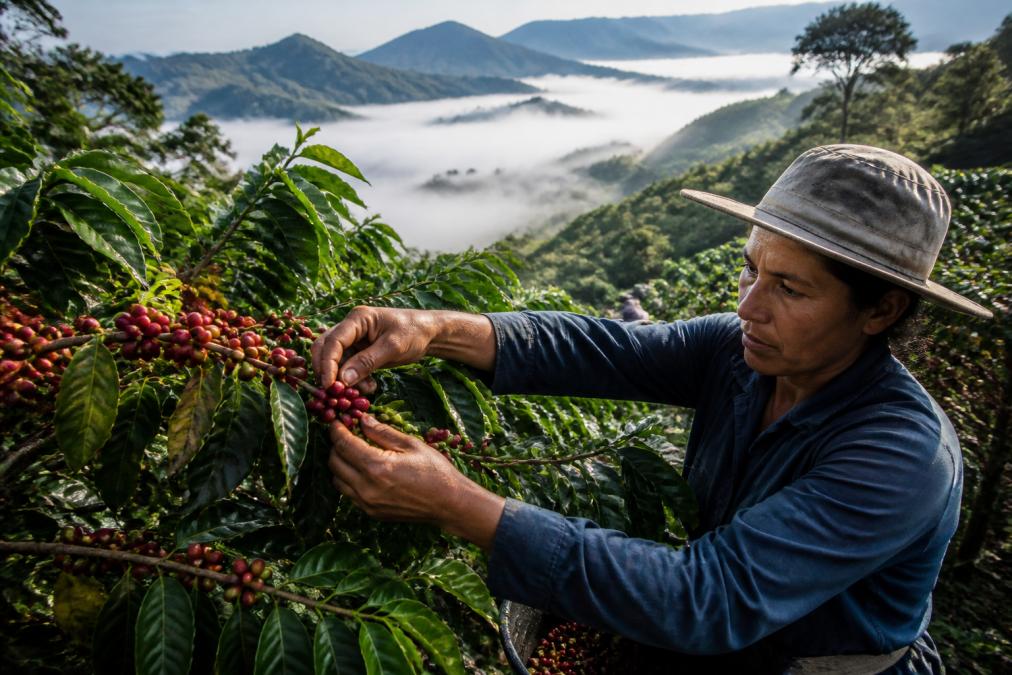
During harvest, specialty producers conduct selective picking of ripe cherries only, while commodity operations use strip-picking that harvests everything at once. This labor-intensive approach costs more but eliminates unripe or overripe beans that would lower the final grade.
Post-harvest processing is equally rigorous, requiring precise control of fermentation, drying, and milling. A single mistake in fermentation temperature or drying duration can ruin an entire batch. Commodity producers use standardized, faster methods that prioritize volume over nuance.
Fair Wages and Labor Costs in Specialty Coffee Production
Labor is one of the largest cost drivers in specialty coffee production. Specialty coffee's premium price reflects commitment to paying farmers 50% to 100% more per pound than commodity rates.
Fair-wage specialty coffee is built on direct relationships between roasters and farmers. Crystal Coast Coffee Co. sources from trusted farms worldwide, ensuring more of the purchase price reaches the people who grew and harvested the beans.
Specialty coffee production is inherently labor-intensive. A single coffee plant produces only enough beans for about 40 cups of coffee annually, so the labor-to-yield ratio is steep. Fair wages mean roasters must pay more, and those costs are passed to consumers who value ethical sourcing.
Benefits of Small Batch Roasted Coffee
Small batch roasting is a cornerstone of specialty coffee quality. When coffee is roasted in small quantities (typically 5-25 pounds), the roaster can control every variable with precision that industrial roasting cannot match.
Large-scale commodity roasting uses massive drums that process hundreds of pounds simultaneously, creating inevitable temperature fluctuations and uneven airflow. Small batch roasting allows real-time adjustments that produce more even roasts and unlock unique flavor characteristics.
Coffee with Mushrooms Dark Roast →
The Hidden Cost of Quality: Roasting Failures and Batch Testing
What most consumers don't see is the financial impact of quality control in small-batch roasting. Specialty roasters intentionally reject batches that don't meet standards, and this "cost of failure" is substantial and rarely discussed.
When a specialty roaster receives a new lot of green beans, they conduct 3-5 test roasts to develop the optimal roast profile. Each test roast consumes 1-2 pounds of premium beans that cannot be sold, costing $4-12 in material per lot, plus labor and equipment time.
During production roasting, if a batch develops unevenly or doesn't meet cupping standards, the entire batch is rejected. Specialty roasters typically reject 5-15% of roasted batches to maintain consistency, compared to far fewer rejections by commodity roasters.
This rejection rate is built into specialty coffee pricing. A 10% rejection rate requires roughly a 10% markup to cover quality control losses across dozens of lots per month.
Roasted-to-order coffee maximizes freshness and flavor while reducing waste. Your beans are roasted days before arrival, not weeks or months before purchase. Roasting to order also means the roaster produces only what will be sold, eliminating inventory that loses quality over time.
Small batch roasting also means roasters can experiment with different roast profiles for the same bean. A single-origin specialty bean might be roasted light to highlight floral and fruity notes, or darker to emphasize chocolate and body. This flexibility allows specialty roasters to showcase the bean's potential rather than forcing it into a one-size-fits-all roast profile. Commodity roasters use standardized profiles applied to all beans, which maximizes speed and minimizes labor but sacrifices the nuance that specialty coffee demands.
The precision equipment required for small-batch roasting also carries significant capital cost. A quality specialty roaster (a machine, not the person) costs $15,000-$50,000 depending on size and automation. These machines require regular maintenance, calibration, and eventual replacement. A small roastery might operate 2-4 roasters to maintain production capacity while allowing time for cleaning, maintenance, and test roasting. Commodity roasting facilities use industrial equipment that costs $100,000+, but that cost is amortized across vastly higher production volumes, lowering per-pound impact.
How to Store Fresh Roasted Coffee for Maximum Flavor
Proper storage is essential to protecting your investment in specialty coffee. Once roasted, coffee begins a slow oxidation process that gradually diminishes flavor and aroma. How you store fresh roasted coffee directly impacts how long it maintains peak quality.
Store coffee in an airtight container away from light, heat, and moisture.
The Economics Behind Every Cup
Understanding why specialty coffee costs more becomes clearer when you trace the economics through the entire value chain. A single cup of specialty coffee represents investment at every stage: farming, harvesting, processing, importing, roasting, and brewing.
Conclusion
Specialty coffee costs more because it represents genuine quality, ethical sourcing, and meticulous craftsmanship from farm to cup. The premium price reflects fair wages for farmers, rigorous quality control, and roasting precision that commodity coffee simply cannot match. When you choose specialty coffee, you're investing in flavor, freshness, and a supply chain built on direct relationships and transparency.
| Aspect | Specialty Coffee | Commodity Coffee |
|---|---|---|
| Grading Standard | 80+ points on 100-point scale | Graded by defect count only |
| Farmer Wages | $4-6+ per pound (fair trade) | $1-2 per pound |
| Processing | Selective hand-picking, controlled fermentation | Strip-picking, standardized methods |
| Roasting | Small batch, precise control | Industrial bulk roasting |
| Freshness | Roasted to order, 3-4 week peak flavor | Months old by retail |
| Traceability | Farm-to-cup documented | Anonymous commodity market |
Frequently Asked Questions
What is the difference between regular coffee and specialty coffee?
Specialty coffee meets strict quality standards, scoring 80 points or higher on a 100-point cupping scale. Regular commodity coffee has no such grading requirements. Specialty beans come from specific origins with documented traceability, undergo rigorous quality control, and are roasted with precision to highlight unique flavor profiles. Commodity coffee prioritizes volume and cost, often blending beans from multiple sources without attention to individual characteristics or freshness.
Why does small-batch roasting cost more than mass-produced coffee?
Small-batch roasting requires specialized equipment, skilled roasters, and roasting to order rather than in bulk. Each batch is monitored for precise temperature and timing to develop the ideal roast profile, which takes expertise and time. Mass producers roast large volumes with standardized profiles, reducing per-unit labor costs. Small-batch operations also source higher-grade beans and maintain stricter quality control, both of which increase costs. The freshness benefit, roasting only when you order, adds value that mass production cannot match.
How does the freshness of roasted coffee affect its value?
Freshly roasted coffee retains complex flavors and aromatic compounds that degrade over weeks and months. Coffee roasted to order, like specialty coffee from small roasters, peaks in flavor within 2-4 weeks of roasting. Grocery store coffee often sits in distribution for months, losing vibrancy and developing stale or flat notes. Specialty roasters charge more because they guarantee peak freshness by roasting shortly before shipment. This freshness directly impacts the cup quality, making the premium pricing reflect a tangible difference in taste and experience.
Are specialty coffee prices reflective of fair wages for farmers?
Specialty coffee typically includes direct-trade or fair-trade practices that ensure farmers receive higher prices than commodity coffee markets offer. While commodity coffee prices fluctuate with global markets (the C-Price), specialty roasters often pay farmers 2-3 times the commodity rate to ensure sustainable farming practices and fair compensation. This premium supports farmer livelihoods, enables investment in quality improvement, and promotes environmental stewardship. The higher price you pay for specialty coffee reflects a commitment to ethical sourcing and supporting farming communities worldwide.