

How to Brew Better Coffee at Home: A 2026 Guide
Table of Contents
- The Best Water-to-Coffee Ratio for Your Brew
- Why Fresh Beans Matter More Than You Think
- Coffee Grind Size Chart and How to Get It Right
- Water Temperature and Extraction: The Science That Changes Your Cup
- Brewing Methods That Actually Deliver Results
- How to Store Coffee Beans for Maximum Freshness
- Common Brewing Mistakes to Avoid
- Frequently Asked Questions
Last Updated: September 3, 2026
The Best Water-to-Coffee Ratio for Your Brew
The foundation of great coffee starts with the right water-to-coffee ratio. The standard ratio across the specialty coffee industry is 1:16, one part coffee to 16 parts water by weight (sca.coffee). If you're brewing 25 grams of coffee, you'd use 400 grams of water.
A 1:15 ratio produces stronger, more concentrated coffee. A 1:17 ratio yields something lighter and more delicate. Start with 1:16, brew, taste, and adjust based on preference. If your coffee tastes thin or watery, reduce the water. If it tastes bitter or over-extracted, increase it.
Using a kitchen scale transforms this from guesswork into precision. A basic digital scale under $15 eliminates inconsistency from scoops and eyeballing. Crystal Coast Coffee Co. recommends weighing both your coffee and water for repeatable results. The ratio matters more than absolute volume, whether you're making 8 ounces or 32 ounces, maintaining that 1:16 proportion keeps extraction consistent.
Why Fresh Beans Matter More Than You Think
Freshness is the difference between coffee that tastes alive and coffee that tastes stale. Roasted coffee begins losing its peak flavor within days. By two weeks, it's noticeably different. By four weeks, the oils that carry flavor have oxidized, leaving a flat, muted cup (peer-reviewed research).
The roasted-on date is your most important piece of information, not the best-by date. Coffee roasted on September 1st is fresher on September 10th than coffee roasted on August 20th, even if both are within their "best by" window. Specialty roasters like Crystal Coast Coffee Co. print the roasted-on date prominently because freshness is non-negotiable.
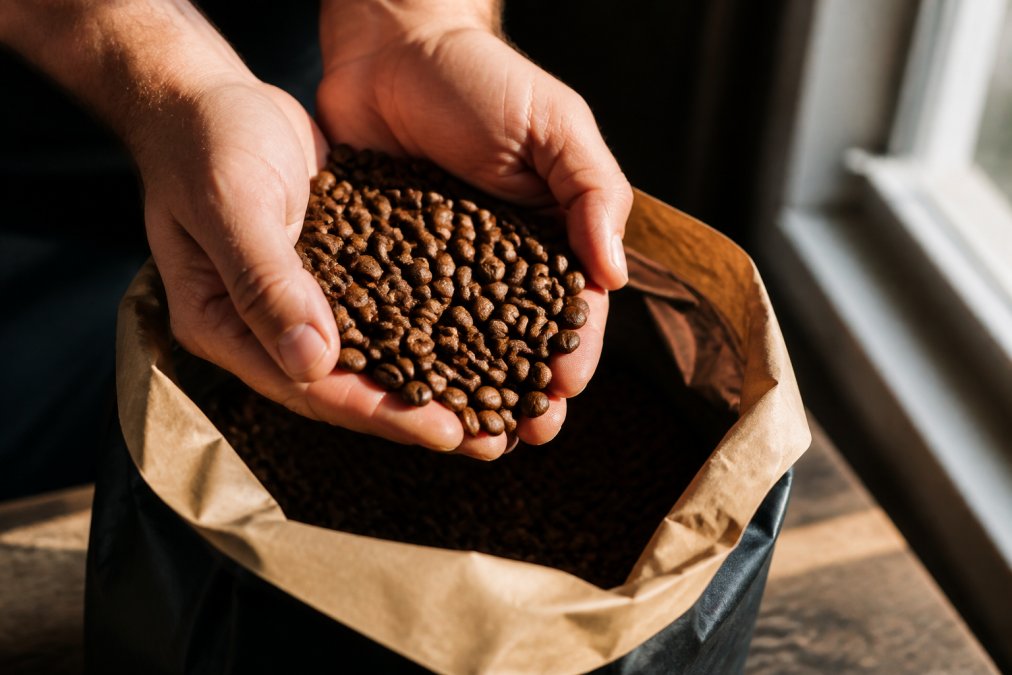
When beans are roasted to order and shipped immediately, you get coffee at its peak. The flavor compounds, acidity, body, and tasting notes are at their strongest. A bag that arrives within 3-5 days of roasting tastes dramatically different from grocery store coffee that's been sitting in a warehouse for months.
Fresh beans also bloom differently. During the first 24-48 hours after roasting, CO₂ is still being released. This bloom phase is crucial for extraction. Older beans bloom less vigorously, which changes how water moves through the grounds and affects how your coffee tastes.
Coffee Grind Size Chart and How to Get It Right
Grind size determines how quickly water extracts flavor from the beans. Finer grinds expose more surface area, speeding up extraction. Coarser grinds slow it down. Get this wrong, and you'll either under-extract (sour, thin coffee) or over-extract (bitter, muddy coffee).
| Brewing Method | Grind Size | Texture | Extraction Time |
|---|---|---|---|
| French Press | Coarse | Like breadcrumbs | 4 minutes |
| Drip Coffee Machine | Medium | Like sand | 4-6 minutes |
| Pour-Over | Medium-Fine | Slightly finer than sand | 2-4 minutes |
| Espresso | Fine | Powdery but not flour | 25-30 seconds |
| Cold Brew | Very Coarse | Chunky pieces | 12-24 hours |
Water needs time to extract good flavors while avoiding bad ones. A French press steeps for four minutes, requiring a coarse grind to slow extraction. An espresso machine forces water through grounds in 25 seconds, requiring a fine grind to maximize contact.

Consistency matters as much as size. A burr grinder produces uniform particles. A blade grinder produces chaotic mixes of sizes, some powder, some chunks. With inconsistent grinds, some particles over-extract while others under-extract, creating a muddled cup.
Invest in a burr grinder for better home coffee. Flat burr grinders are affordable and reliable. Conical burrs are slightly more forgiving. Either beats a blade grinder significantly. Start with the grind size recommended for your brewing method, brew a cup, and taste it. If it's sour, go finer. If it's bitter, go coarser.
Water Temperature and Extraction: The Science That Changes Your Cup
Water temperature controls extraction speed. Hotter water extracts faster. Cooler water extracts slower. The specialty coffee standard is 195-205°F (90-96°C), balancing extraction speed with the risk of scorching grounds (sca.coffee).
Below 195°F, extraction slows dramatically, producing sour, under-extracted coffee. Above 205°F, you risk over-extraction, pulling too much including bitter compounds that make coffee taste harsh.
The relationship between temperature and grind size is crucial. A finer grind needs slightly cooler water because it already speeds up extraction. A coarser grind can handle hotter water because extraction is naturally slower. Most electric kettles have temperature settings. If yours doesn't, a simple probe thermometer under $10 takes the guesswork out. Pour your water and let it sit 30 seconds after boiling to reach the ideal range.
Filtered water works well for most home brewers. Minerals in water affect how efficiently extraction happens. Distilled water can actually slow extraction because it lacks minerals that facilitate the process. If your tap water is very hard or soft, filtered water from a pitcher filter is a practical middle ground.
Temperature consistency across your brew is harder to achieve than most realize. Manual pouring means the first pour is hotter than the last. The slurry cools as you brew. Immersion brewing methods like French press are forgiving because water temperature stays relatively stable throughout the steep.
Brewing Methods That Actually Deliver Results
Different brewing methods produce different flavor profiles because they extract differently.
Pour-Over Brewing
Pour-over is a percolation method where water flows through grounds and a filter into your cup. The filter removes oils and fine particles, producing a clean, bright cup. Extraction happens quickly in 2-4 minutes, so pour-over works best with medium to medium-fine grinds.
Pour-over requires attention. You control water flow rate by pouring technique, actively managing extraction. Start by pouring just enough water to saturate the grounds (the bloom phase). Wait 30-45 seconds, then pour in a slow, circular motion. Total brew time should be around three minutes.
Pour-over rewards consistency. Too fast pouring under-extracts. Too slow over-extracts. A gooseneck kettle helps control the pour but isn't essential if you're careful. The real advantage is the clean cup the paper filter produces, removing oils and sediment for clarity and brightness.
French Press Immersion
French press is an immersion method where grounds steep in hot water for four minutes, then you press down a metal filter to separate liquid from solids. The metal filter lets coffee oils pass through, producing a full-bodied, rich cup.
French press is forgiving because extraction time is fixed. You steep for four minutes, press, and pour. There's no pouring technique to master, making it ideal for people wanting consistency without fussiness. The coarse grind also means you're less likely to over-extract.
The downside is sediment. Some fine particles slip through the metal filter into your cup. Some people like the texture and flavor this adds. Others find it gritty.
Drip Coffee Machine
Automatic drip machines handle the variables for you. You add grounds and water, press a button, and the machine controls temperature, water flow, and timing. The result is consistent, predictable coffee.
The trade-off is control. You can't adjust extraction in real-time the way you can with pour-over. Modern drip machines have improved significantly. Look for machines that maintain water temperature in the 195-205°F range and have a spray head that distributes water evenly.
How to Store Coffee Beans for Maximum Freshness
Storage determines how long your coffee stays fresh. The enemies are air, light, heat, and moisture. Oxygen causes the oils in coffee to oxidize, dulling flavor. Light accelerates this. Heat speeds up degradation. Moisture can cause mold.
The best storage method is an airtight container in a cool, dark place. A pantry or cabinet works well. Avoid the refrigerator, condensation forms when you open the container, introducing moisture. The freezer can work with an airtight container if you minimize opening it, but it's usually unnecessary for beans you'll use within weeks.
Buy coffee in quantities you'll use within 2-3 weeks. Smaller, more frequent purchases keep your coffee fresher than buying a month's supply at once. Coffee is at its peak 3-10 days after roasting and remains good through about three weeks. After four weeks, you're drinking noticeably stale coffee.
Whole beans stay fresh longer than ground coffee. If you grind your beans, use them within 24 hours. Ground coffee has vastly more surface area exposed to air, so oxidation happens much faster. This is why investing in a grinder pays off, you grind as needed, keeping your coffee fresher longer.
Common Brewing Mistakes to Avoid
Most home brewers make the same mistakes repeatedly.
Using old beans. Grocery store coffee is often months old by the time you buy it. Switch to fresh beans from a specialty roaster and you'll immediately notice the difference.
Inconsistent water temperature. If you're boiling water and pouring immediately, you're likely too hot. If you're using lukewarm water, you're too cold. Get a thermometer or let your kettle cool for 30 seconds after boiling.
Wrong grind size. Sour coffee means your grind is too coarse. Bitter coffee means your grind is too fine. Adjust one step at a time and taste the difference.
Not weighing your coffee. Scoops are inconsistent. A $12 scale eliminates this variable and makes your coffee repeatable.
Brewing with old equipment. Coffee oils build up inside machines over time, becoming rancid and tainting fresh coffee. Clean your equipment weekly. Descale machines monthly.
Ignoring water quality. If your tap water tastes bad, your coffee will taste bad. Filtered water from a pitcher is inexpensive and solves this.
Brewing too fast or too slow. Pour-over should take 2-4 minutes. French press should take 4 minutes. If your brew is faster or slower, adjust your grind size.
Getting better at how to brew better coffee at home doesn't require expensive equipment or complicated techniques. It requires paying attention to the fundamentals: fresh beans, the right ratio, proper grind size, correct water temperature, and consistent technique.
Start by dialing in one variable at a time. Get your ratio right first. Then dial in your grind size. Then focus on water temperature. Each adjustment builds on the previous one. Within a few weeks of deliberate practice, you'll be brewing coffee that rivals what specialty cafes produce.
Crystal Coast Coffee Co. delivers freshly roasted beans to your door, removing the biggest variable from the equation. When your beans are roasted to order and shipped within days, you're starting with the foundation that makes everything else possible. From there, the techniques in this guide take over, and that's where the real improvement happens.
Frequently Asked Questions
What is the best water-to-coffee ratio for home brewing?
The standard ratio is 1:16 (one part coffee to 16 parts water by weight). For a stronger cup, use 1:15; for lighter coffee, try 1:17. Using a scale to measure both coffee and water ensures consistency. This ratio works across most brewing methods, pour-over, French press, and drip machines, and produces balanced extraction with proper acidity and body. Adjust based on your grind size and personal taste preference.
Why should I grind my coffee beans right before brewing?
Grinding exposes the beans' interior surface to oxygen, which begins breaking down flavor compounds immediately. Whole beans stay fresh for weeks after roasting, but ground coffee loses quality within 15 minutes. Pre-ground coffee sitting in your pantry or in a bag for days tastes flat and bitter because the volatile oils and aromatics have oxidized. Grinding just before brewing locks in the fresh, complex flavors, acidity, body, and tasting notes, that make specialty coffee worth the investment.
How do I know if my water is affecting my coffee's taste?
Water chemistry matters more than most home brewers realize. Mineral content (total dissolved solids) affects extraction, water that's too soft under-extracts, producing sour, thin coffee; water that's too hard over-extracts, causing bitterness. If your tap water tastes off or your coffee tastes consistently bitter or sour regardless of method, try filtered water. Many coffee enthusiasts use filtered water to remove chlorine and balance mineral content. If you notice a dramatic flavor shift when using different water sources, water quality is likely the culprit.
How long can I keep roasted coffee beans fresh at home?
Roasted coffee stays freshest for 2-4 weeks after the roast date. Check the bag for the roasted-on date, this matters more than the expiration date. Store beans in an airtight container away from heat, light, and moisture. Avoid the freezer (condensation damages flavor) and the refrigerator (absorbs odors). Whole beans last longer than ground coffee. For best results, buy smaller quantities more often rather than stockpiling. Crystal Coast Coffee Co. roasts to order, so your beans arrive at peak freshness with the roast date clearly marked.
This article was written using GrandRanker