

Best Manual Coffee Brewing Methods for Beginners 2026
Table of Contents
- Best Coffee Brewing Methods for Beginners: Quick Comparison
- How We Evaluated These Manual Coffee Brewing Methods
- Pour-Over Coffee for Beginners: V60, Chemex, and Kalita Wave
- French Press Coffee Ratio and Immersion Brewing Basics
- AeroPress and Moka Pot: Fast Manual Brewing Methods
- Coffee Grind Size for Brewing Methods: A Beginner's Chart
- Water Temperature, Ratios, and Total Cost of Ownership
- Common Beginner Mistakes and Troubleshooting
- Frequently Asked Questions
Last Updated: October 5, 2026
Best Coffee Brewing Methods for Beginners: Quick Comparison
Manual coffee brewing means making coffee by hand, controlling the water, grind, and timing yourself instead of pressing a button.
The trade-off: manual brewing rewards attention.
Below, we compare the four beginner-friendly methods side by side, with a starter recipe for each and the mistakes that trip up nearly everyone in the first month.
| Method | Brew Time | Grind Size | Best For | Cleanup |
|---|---|---|---|---|
| Pour-over (V60, Chemex, Kalita Wave) | 3-4 min | Medium-fine | Clean, bright cups | Moderate |
| French press | 4-5 min | Coarse | Rich, full body | Easy |
| AeroPress | 2-3 min | Medium-fine | Fast single cups | Easy |
| Moka pot | 5-6 min | Fine | Strong, espresso-like | Moderate |
How We Evaluated These Manual Coffee Brewing Methods
We judged each method on five things a beginner feels: ease of learning, gear required, consistency, cleanup time, and startup cost.
Our picks lean toward methods with wide margins for error.
We also weighted repeatability. A method you can reproduce on a rushed Tuesday morning beats one that shines only when you have twenty quiet minutes.
Specialty Coffee Association brewing standards publishes the ratios and water standards that most of these recommendations follow, and they are worth reading once you are comfortable with the basics.
Pour-Over Coffee for Beginners: V60, Chemex, and Kalita Wave
Pour-over is the best starting point if you care most about flavor clarity. Water passes through the grounds in a paper filter once, producing a clean cup that shows off a bean's origin character.
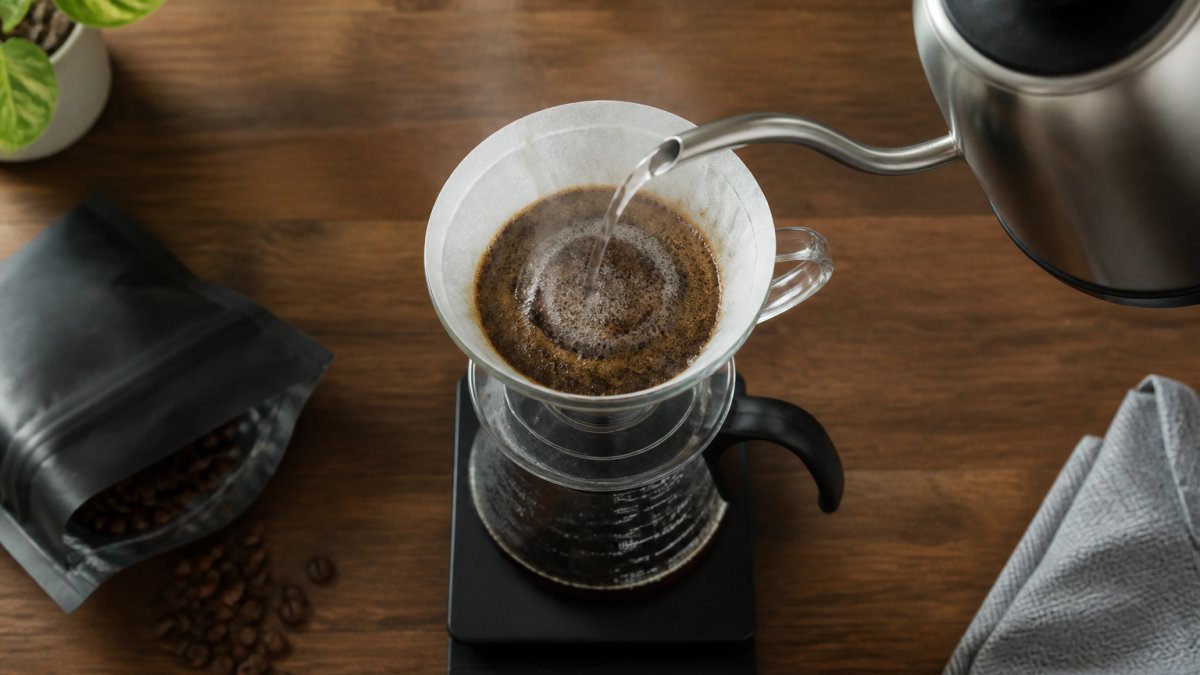
The three drippers beginners hear about most, the V60, Chemex, and Kalita Wave, are not interchangeable. Each changes how water moves through the bed, and that changes how forgiving the brew is.
How the Three Drippers Actually Differ
- V60: A large single hole at the bottom and angled walls. Water drains fast, so the grind and your pour speed control the contact time. It rewards a steady hand and punishes a sloppy one. Best for one or two cups.
- Chemex: A thick bonded paper filter and a wide cone. The heavy filter slows the flow and strips more oils, giving the cleanest, lightest cup of the three. It brews larger batches well, which suits households pouring two to four cups at once. The filters cost more per brew than standard cone filters.
- Kalita Wave: A flat bed with three small holes. The flat bed keeps the water level even across the grounds, so it extracts more uniformly and forgives an uneven pour. This is the dripper to choose if you want consistency without practicing a technique.
What most guides miss: the dripper matters less than the pour. A cheap dripper with a controlled pour beats an expensive one with a sloppy pour. If you own one piece of pour-over gear beyond the dripper, make it a gooseneck kettle, a wide spout dumps water in bursts that dig craters in the bed.
Starter Pour-Over Recipe
- Coffee: 20 g medium-fine grind
- Water: 320 g at 200°F
- Ratio: 1:16
- Total time: 3 to 4 minutes
- Rinse the paper filter with hot water, then discard the rinse water. This warms the vessel and removes paper taste.
- Add the grounds and pour 40 g of water over them. Wait 30 seconds for the bloom. Fresh coffee will bubble and expand as it releases gas.
- Pour in slow circles to 160 g, then pause.
- Pour to 320 g, keeping the water level steady.
- Let it drain fully. The bed should look flat, not cratered.
Expected result: A cup with clear sweetness and a light body. If it tastes sour, grind finer. If it tastes bitter, grind coarser.
Which Dripper Should You Buy First?
For the easiest path to a repeatable cup, start with the Kalita Wave. For the cleanest cup and larger batches, the Chemex earns its counter space. If you enjoy the ritual and want a technique to refine for years, the V60 is the one people keep coming back to. None is a mistake; they just ask different things of you.
French Press Coffee Ratio and Immersion Brewing Basics
The French press coffee ratio to start with is 1:15, or about 30 g of coarse grounds to 450 g of water.
The French press is the most forgiving manual method for beginners: no pour technique to master, no risk of a channeled bed. You add water, wait, and press.
Its one real drawback is sediment: fines slip past the mesh, so the last sip can be gritty. Pour slowly and stop before the very bottom.
Starter French Press Recipe
- Coffee: 30 g coarse grind
- Water: 450 g at 200°F
- Ratio: 1:15
- Total time: 4 to 5 minutes
- Add the coarse grounds to the carafe.
- Pour all 450 g of water and stir once.
- Place the lid on with the plunger up and steep for 4 minutes.
- Press the plunger down slowly, about 20 seconds.
- Pour immediately into your cup to stop extraction.
Expected result: A full-bodied, smooth cup. If it tastes muddy, your grind is too fine.
AeroPress and Moka Pot: Fast Manual Brewing Methods
AeroPress and Moka pot are the two fastest routes to a strong cup, suiting beginners who want speed over ceremony.
The AeroPress is more flexible: brew it hot or cold, strong or mild, and cleanup takes seconds because the grounds come out as a puck.
The Moka pot makes a concentrated, espresso-like brew, but it punishes inattention. Leave it on the heat too long and the coffee turns bitter and metallic.
Our pick for a beginner who wants one fast method: the AeroPress. It is more forgiving and far easier to clean.

Coffee Grind Size for Brewing Methods: A Beginner's Chart
Coffee grind size for brewing methods is the single biggest variable you control, and it changes with every method. Grind sets how much surface area the water touches and how fast it flows through the bed. Too fine over-extracts into bitterness; too coarse under-extracts into sour, watery coffee.
Here is the range from fine to coarse, with a household comparison so you can judge by feel when you have no reference photo:
- Moka pot: Fine, like table salt
- AeroPress: Medium-fine, like fine sand
- Pour-over: Medium-fine to medium, like table salt to sand
- French press: Coarse, like sea salt or breadcrumbs
Why Grind Matters More Than Almost Anything Else
A burr grinder gives consistent particles, which makes a recipe repeatable. Blade grinders chop unevenly, so some grounds over-extract while others stay raw, and the same recipe tastes different every morning. If you change one piece of gear this year, change the grinder before the brewer.
Most hand burr grinders and electric burr grinders ship with a numbered dial, and the numbers are not standardized between brands. Treat the ranges below as starting points and adjust from there:
- French press: the coarsest setting on most dials
- Pour-over: a few clicks finer than French press
- AeroPress: slightly finer than pour-over
- Moka pot: the finest setting you can use without clogging the basket
A One-Cup Adjustment Method
You do not need a chart to dial in a new bag. Brew one cup with your usual recipe, taste, and change only the grind:
- If the cup tastes sour, thin, or salty, grind finer and brew again.
- If the cup tastes bitter, dry, or harsh, grind coarser and brew again.
- Change nothing else until the cup tastes balanced, then adjust ratio or temperature for fine-tuning.
This mirrors the troubleshooting table later in this guide, applied one variable at a time, the fastest way to learn what your grinder is actually doing.
If you buy pre-ground coffee, buy it matched to your method. Most roasters label grind by brew type for exactly this reason, and pre-ground coffee stales faster than whole bean, so buy in smaller amounts and use it quickly.
Water Temperature, Ratios, and Total Cost of Ownership
Aim for water between 195°F and 205°F. Boiling water scalds the grounds and pushes bitterness forward.
On ratios, 1:15 to 1:17 covers most methods. That means 1 gram of coffee to 15 to 17 grams of water.
On cost, gear is a one-time purchase and beans are the ongoing one.
That is where we come in.
If you are not sure which you prefer, the Best Sellers Sample Pack lets you try six coffees in 2 oz packs before committing to a full bag.
Common Beginner Mistakes and Troubleshooting
Most beginner problems come down to four things: stale beans, uneven grind, wrong water temperature, and a recipe you never measure.
FDA guidance on food storage and freshness explains why oxygen degrades food quality over time, and coffee is no exception.
Use this table to diagnose a bad cup:
| Problem | Likely Cause | Fix |
|---|---|---|
| Sour, thin taste | Under-extracted | Grind finer or raise water temp |
| Bitter, harsh taste | Over-extracted | Grind coarser or shorten brew time |
| Weak despite correct ratio | Stale beans | Buy fresher, whole-bean coffee |
| Inconsistent cup to cup | Blade grinder | Switch to a burr grinder |
| Gritty French press | Pouring the bottom | Stop pouring before the sediment |
The mistake we see most often is changing three variables at once. Change one thing, taste, then adjust again.
Frequently Asked Questions
What is the most effective manual coffee brewing method for beginners?
The French press is the most forgiving starting point because it needs no paper filter and works with a coarse grind, so small mistakes in technique rarely ruin the cup. Pour-over methods like the V60 or Kalita Wave give you more control over clarity and flavor, but they demand a steady pour and a scale. AeroPress sits in the middle: fast, portable, and hard to get wrong. Start with whichever matches how much time you have each morning.
What equipment do you need to brew coffee manually at home?
At minimum you need a burr grinder, a scale that reads in grams, a kettle, and your chosen brewer. A gooseneck kettle helps with pour-over control but is not required for French press or AeroPress. Fresh whole beans matter more than any single tool, since pre-ground coffee loses aroma quickly once the bag is open. Crystal Coast Coffee Co. roasts to order, so bags arrive close to their roast date.
What is the 15-15-15 rule for coffee?
The 15-15-15 rule is a memory aid for pour-over brewing: a 1:15 coffee-to-water ratio, a 15-gram dose per cup, and roughly a 15-minute window to drink the brew at its best. It is a starting point, not a law. Adjust the ratio toward 1:16 for a lighter, cleaner cup or 1:14 for more body, then change one variable at a time so you can taste what actually shifted.
Which manual brewing method makes the least bitter coffee?
Paper-filtered pour-over tends to produce the least bitterness because the filter traps oils and fine particles that carry harsh, bitter compounds. Cold brew also lands low on bitterness since cold water extracts fewer of the acids and bitter notes. If your current cup is bitter, the cause is usually grind too fine, water too hot, or a steep that ran too long, not the brewer itself.
How do you choose the right grind size for a manual coffee maker?
Match grind to contact time: coarse for French press, medium-coarse for Chemex, medium for Kalita Wave and AeroPress, medium-fine for V60, and fine for Moka pot. A burr grinder gives you consistent particle size, which is what makes a recipe repeatable. If the brew drains too fast and tastes weak, grind finer; if it stalls and tastes bitter, grind coarser.
Manual brewing has a learning curve, and the fastest way past it is starting with coffee worth the effort. Crystal Coast Coffee Co. roasts to order so every bag arrives at peak freshness, offers single origins and blends matched to different brew styles, and delivers straight to your door with simple ordering. Get started with Crystal Coast Coffee Co. and taste what a fresh roast does for your morning pour-over.