

Alternatives to Paper Coffee Filters for Better Flavor
Table of Contents
- Why Swap Paper Coffee Filters? Flavor, Oils, and Sediment
- Metal Coffee Filter vs Paper: Flavor, Body, and Brew Time
- Cloth Coffee Filter: The Middle Ground for Richness and Clarity
- Reusable Coffee Filters: Long-Term Cost and Waste Trade-Offs
- How to Clean a Reusable Coffee Filter (and Keep Flavor Consistent)
- Emergency Paper Coffee Filter Substitutes: Paper Towels, Napkins, and Sieves
- Frequently Asked Questions
Last Updated: October 12, 2026
Why Swap Paper Coffee Filters? Flavor, Oils, and Sediment
A paper coffee filter traps the compounds that give coffee its texture and aroma. Switch to metal, cloth, or another reusable option, and you keep more of those oils in the cup. That single change explains why so many drinkers describe drip coffee as thin and flat while pour-over from a cloth filter tastes rounder and sweeter.
Here at Crystal Coast Coffee Co., we roast beans to order for customers across Eastern North Carolina, and the filter question comes up constantly. It matters because the filter decides what actually reaches your mug.
Paper coffee filters are designed for a clean cup. They hold back fine particles and most of the oils, which is why paper-brewed coffee tastes crisp and consistent. The trade-off is body and aroma: you lose some of both.
What Paper Traps That Metal and Cloth Let Through
Paper filters catch two things: fine sediment and coffee oils. Metal mesh and cloth let most of the oils through and pass a small amount of sediment along with them.
Those oils carry much of the aroma and the syrupy mouthfeel drinkers associate with a rich cup. Sediment adds weight too, though too much turns the cup gritty. The goal is balance, not maximum sludge.
Metal Coffee Filter vs Paper: Flavor, Body, and Brew Time
Metal coffee filters produce a heavier, oilier cup than paper, and they brew faster because water moves through the mesh more freely. Expect more sediment in the bottom of the mug and a fuller mouthfeel with every sip.
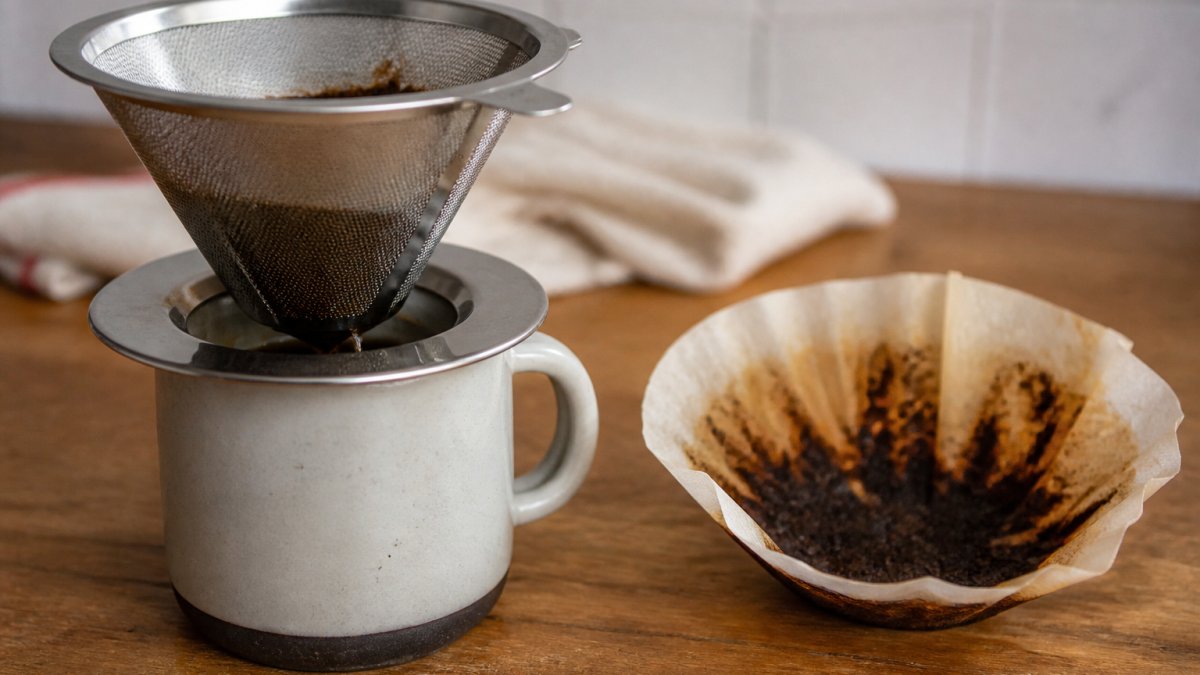
The metal coffee filter vs paper comparison comes down to three things: flavor, body, and brew time. Metal wins on body and speed. Paper wins on clarity and consistency.
A stainless-steel filter also lasts for years with basic rinsing, which is why so many pour-over setups ship with one. The catch is that mesh holes vary in size, and a coarse mesh lets noticeably more grit through than a fine one.
Cloth Coffee Filter: The Middle Ground for Richness and Clarity
A cloth coffee filter sits between paper and metal: it holds back most sediment while letting oils and aroma through. The result is a cup with more richness than paper but far less grit than a coarse metal mesh.
Cloth filters, often made from cotton or linen, are the traditional choice in many brewing cultures. They need more care than metal. Rinse them thoroughly after every brew, and store a damp cloth filter in cold water in the refrigerator to keep it from going sour.
The one drawback is maintenance. Cloth can hold onto flavors and odors if you neglect it, and it wears out over time. Treat it well and a good cloth filter delivers some of the best flavor balance you can get from any filter material.
Reusable Coffee Filters: Long-Term Cost and Waste Trade-Offs
Most guides tell you reusable filters are cheaper and greener and stop there. That framing hides the variables that actually decide the outcome: how often you brew, how you clean the filter, how long it lasts, and what you replace it with. Run the math honestly and the answer changes by household.
The cost side, broken down by what drives it
A reusable filter is a one-time purchase, but the ongoing cost is not zero. It is paid in cleaning supplies, hot water, and replacement cycles rather than in a box at the store. The relevant comparison is cost per brewed cup over the filter's life, not sticker price.
- Metal mesh: The longest-lived option. A stainless-steel cone or basket typically lasts for years with rinsing and an occasional deep clean. Ongoing cost is essentially water and a drop of dish soap. The failure mode is bent mesh or a clogged weave, not normal wear.
- Cloth: Shorter lifespan than metal. Cotton and linen filters gradually load up with oils, stain, and weaken at the seams. Many brewers replace them on a schedule of months rather than years, and the replacement cost recurs. Two filters in rotation roughly doubles the upfront outlay but halves the wear per filter.
- Paper: The recurring cost is the filter itself, plus the fact that you buy it forever. Per-cup cost is low but never reaches zero, and it scales directly with how much you brew.
A common pattern is that a heavy daily brewer reaches break-even on a metal filter quickly, while an occasional brewer may never brew enough cups to justify the upfront spend before the filter is lost, bent, or forgotten. That is the honest trade-off, and it depends on your volume.
The waste side is not automatically green
Reusable does not mean zero impact. It means the impact moves from the trash can to the sink and the landfill-at-end-of-life.
- Water and energy: Every reusable filter gets rinsed after each brew and deep-cleaned periodically. That is hot water and, for cloth, sometimes a soak. In a household that already runs a full dishwasher load, the marginal cost is small. In a household hand-washing a single filter under running hot water three times a day, the resource use adds up.
- Soap and cleaning products: Metal gets scrubbed with dish soap; cloth gets deep-cleaned to strip oils. Those inputs have their own footprint.
- End of life: Metal mesh is recyclable in many municipal programs, though small cones and baskets are sometimes too small for single-stream sorting. Cloth filters are textiles; they wear out and go in the trash unless a textile recycling option exists locally. Neither is a permanent object.
- Paper's counterpoint: Paper filters are disposable by design, but many are compostable and some are made from unbleached or responsibly sourced fiber. For a low-volume brewer, the waste stream from paper may be smaller in total than the water and soap used to keep a reusable filter clean.
How to decide for your own kitchen
The useful question is not "which is greener" but "which trade-off fits how I actually brew."
- Brew daily, want the lowest long-run cost: Metal mesh. Rinse, deep-clean occasionally, replace rarely.
- Brew daily, want the richest cup and will maintain it: Cloth, with two filters in rotation so one is always clean and dry.
- Brew a few cups a week: Paper may be the lower-impact and lower-hassle choice, because you are not paying the cleaning tax on a filter you barely use.
- Care about waste specifically: Check whether your paper filters are compostable and whether your metal filter is accepted in local recycling, rather than assuming reusable wins by default.
How to Clean a Reusable Coffee Filter (and Keep Flavor Consistent)
Learning how to clean a reusable coffee filter properly is what keeps flavor consistent from cup to cup. Rinse it immediately after brewing, then deep-clean on a regular schedule.
How to clean a reusable coffee filter, step by step:
- Dump the grounds and rinse the filter under warm water right away.
- For metal mesh, scrub gently with a soft brush and a little dish soap.
- For cloth, rinse thoroughly and store damp in a jar of cold water in the fridge.
- Once a week, deep-clean cloth in hot water to remove built-up oils.
- Rinse everything well before your next brew so no soap residue reaches the cup.
- Replace cloth filters when they stain heavily or start to smell.
A clean filter tastes neutral. A dirty one tastes like yesterday's coffee, and no bean can overcome that.
Emergency Paper Coffee Filter Substitutes: Paper Towels, Napkins, and Sieves
A paper towel, a cloth napkin, or a fine-mesh sieve can stand in when you run out of paper filters, but treat them as emergencies, not upgrades. Each substitute changes the brew in its own way.
- Paper towel: line a cone or strainer, but use an unbleached, unscented towel. Thin towels tear and let grounds through.
- Cloth napkin: a clean cotton napkin works like a cloth filter. Rinse it first to remove lint.
- Fine-mesh sieve: strains most grounds but lets oils and fine sediment through, giving a heavier cup.
- Tea bag: only for a single serving, and it holds very little coffee, so expect a weak brew.
None of these match a purpose-built filter for flavor or reliability. They get you through the morning, then you order the real thing.
That said, an emergency substitute is a completely different tool from a flavor upgrade. A paper towel keeps you caffeinated; a metal or cloth filter makes the coffee taste better. Don't confuse the two goals.
Frequently Asked Questions
What can I use instead of a paper coffee filter in a pinch?
A clean paper towel or cloth napkin folded into a cone shape can work as a paper coffee filter substitute for one brew. A fine-mesh sieve lined with a coffee filter or a tea bag also works for small batches. These are emergency options, not daily drivers; they can tear, collapse, or leave sediment. For consistent flavor, switch to a reusable metal or cloth filter designed for your brewer.
Do metal coffee filters change the flavor of coffee?
Yes, metal coffee filters let more coffee oils and fine particles through than paper, which often means a fuller body and richer mouthfeel. The trade-off is sediment at the bottom of the cup. In a metal coffee filter vs paper comparison, metal usually produces a heavier cup while paper gives a cleaner, brighter taste. Grind size matters: a coarser grind reduces clogging and sediment with metal filters.
Are cloth coffee filters better than paper filters?
Cloth coffee filters sit between paper and metal: they trap more sediment than metal but let more oils through than paper, so you get a cup with more body than paper without the grit of metal. Cloth requires more maintenance, including rinsing after every use and a deeper clean periodically. If you want a middle ground between clarity and richness, cloth is worth trying.
How do you clean a reusable coffee filter?
For metal filters, rinse under hot water after each brew and scrub with a soft brush weekly to remove oils. For cloth filters, rinse thoroughly, then simmer in water with a little baking soda monthly to remove buildup. Always let filters dry completely before storing to prevent mold. A clean reusable coffee filter keeps flavors consistent and extends the filter's life, which supports the long-term cost and waste benefits of reusables.
The right filter comes down to what you value most in the cup, and the beans matter just as much as the hardware. At Crystal Coast Coffee Co., we roast to order so every batch arrives at peak flavor and aroma, sourced from trusted farms and delivered fresh to your door. Our simple ordering and reliable delivery make it easy to keep great coffee on hand. Get started with Crystal Coast Coffee Co. and taste the difference fresh roasting makes in every brew.