

Why Is Specialty Coffee More Expensive? 2026 Guide
Table of Contents
- What Is Specialty Coffee and Why Does It Cost More?
- Specialty Coffee vs Regular Coffee: Key Differences That Drive Price
- The Real Cost Breakdown: From Farm Gate to Your Door
- How Premiums Reach Farmers and Why It Matters
- Is Specialty Coffee Worth It? A Practical Cost-Per-Cup Analysis
- When Specialty Coffee Isn't Worth the Premium (And What to Buy Instead)
- How to Buy Specialty Coffee Affordably Without Sacrificing Quality
- Frequently Asked Questions
Last Updated: October 7, 2026
What Is Specialty Coffee and Why Does It Cost More?
Specialty coffee scores 80 points or higher on a 100-point scale by licensed graders, and that threshold is the biggest reason it costs more than the bag you grab at the grocery store. At Crystal Coast Coffee Co., we roast to order precisely because that score only means something if the beans reach you fresh. The short answer to why is specialty coffee more expensive: you are paying for selective harvesting, small lots, careful processing, and traceability, not just a nicer label.
The 80-Point Cupping Score Threshold
The Specialty Coffee Association sets the benchmark. Licensed Q graders evaluate fragrance, flavor, acidity, body, balance, and aftertaste, then deduct for defects. A coffee must reach 80 points to carry the specialty label. Commercial coffee typically lands in the 60s and 70s.
That scoring process is labor itself. Grading happens in small batches, by trained palates, often multiple times along the supply chain.
From Seed to Cup: Where Costs Accumulate
Every stage adds cost. Farming, selective harvesting, processing, export, roasting, packaging, and shipping each take a cut, and a single-origin lot might pass through six or more sets of hands before it reaches your grinder.
Specialty Coffee vs Regular Coffee: Key Differences That Drive Price
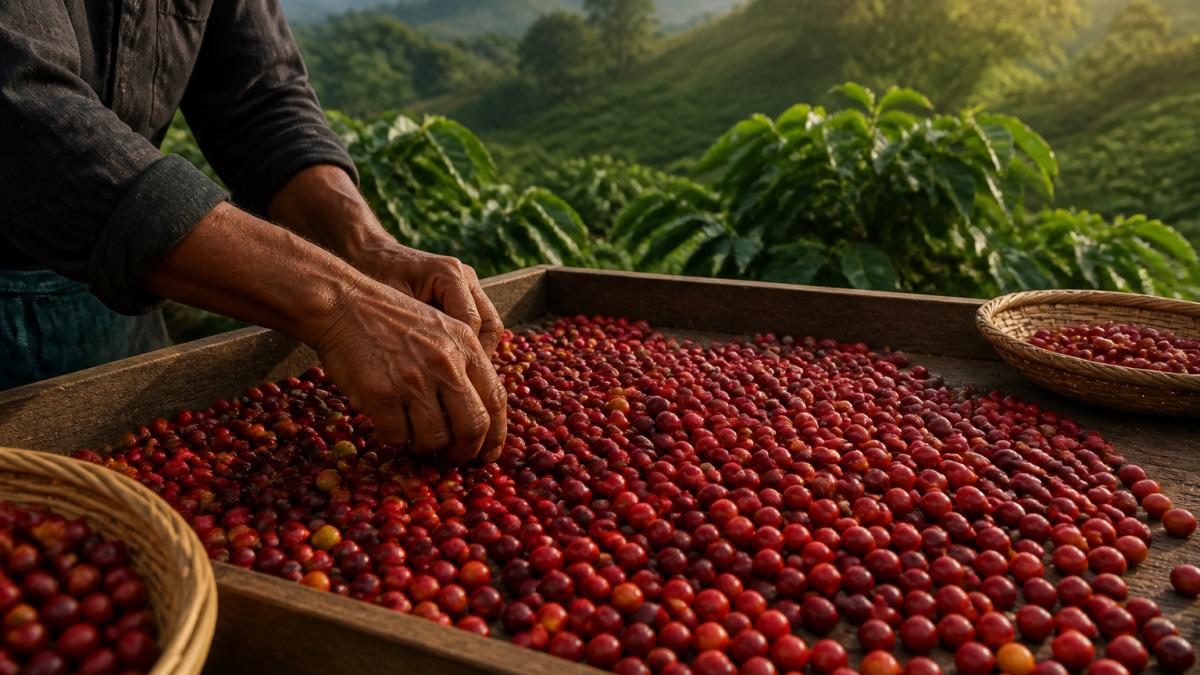
The clearest difference between specialty coffee and regular coffee is selectivity. Commercial coffee is strip-picked, ripe and unripe cherries together, while specialty coffee is hand-picked, often in multiple passes over the same trees, so only ripe cherries make the lot. That single practice can multiply harvest labor several times over.
Grading, Defect Counts, and What You're Actually Paying For
Defect counts separate the tiers. Green coffee is sorted for broken beans, insect damage, black beans, and foreign matter. Specialty-grade green coffee allows very few defects per sample, while commercial grades tolerate far more, and sorting by hand and machine both cost money.
What you are paying for is consistency. A specialty lot tastes the way it tasted when it was graded, because the producer, importer, and roaster all protect that quality through processing, storage, and roast date.
The Real Cost Breakdown: From Farm Gate to Your Door
Most articles answer "why is specialty coffee more expensive" with a list of good practices. That is only half the answer.
The Farm-Gate Layer: What the Producer Is Paid
The farm-gate price is what a producer receives for green coffee before it leaves the farm, the smallest line item in the chain, and the one most sensitive to how the coffee was grown and picked.
- Commodity baseline. Coffee trades on global markets as a commodity, and that benchmark price moves with weather, harvest size, currency, and speculation. A producer selling into that market takes whatever the day's price offers.
- Quality premium. Specialty buyers pay above that baseline for cup quality, variety, altitude, and lot consistency. The premium is negotiated, not automatic, and it varies widely by origin and buyer.
- Relationship premium. Direct-trade and long-term contracts often add a further margin on top of the quality premium, plus terms like pre-financing, multi-year commitments, or coverage of certification costs.
The important distinction: a higher retail price does not prove a higher farm-gate price. Those are two different numbers, set by two different parties.
The Middle Layers: Milling, Export, Shipping, Import
Once green coffee leaves the farm, each handler in the sequence takes a cut:
- Dry milling and sorting, removing parchment, screening for defects, bagging for export.
- Export logistics, inland transport, customs paperwork, port fees, container loading.
- Ocean freight, priced per container and highly volatile; rates can swing sharply with fuel costs, port congestion, and global shipping capacity.
Each handoff adds labor, insurance, and quality control, and small lots pay a disproportionate share, because a 30-bag lot and a 300-bag lot cost roughly the same to move through a port.
The Roasting Layer: Why Small Batches Cost More Per Pound
Roasting is where the specialty model diverges most sharply from the commercial one.
- Batch size. A commercial roaster might run a 60-kilo drum continuously; a specialty roaster working in 5- to 15-kilo batches produces far less coffee per hour of labor and per unit of energy.
- Roast-to-order. Roasting on demand means holding green inventory, absorbing the risk of unsold roasted coffee, and no amortizing setup across a massive run.
- Profile development. Dialing in a roast profile for a new lot takes sample roasts, cupping, and adjustment, unpaid work a commodity roaster never does.
The Packaging and Retail Layer
- Packaging. One-way degassing valves, barrier films, roast-date printing, and origin labeling all cost more than a plain foil bag.
- Freshness window. Specialty coffee peaks within weeks after roast, forcing smaller production runs and more frequent shipping.
- Retail overhead. Café rent, equipment, labor, and waste are baked into every bag sold at a counter; a bag bought directly from a roaster carries less of that overhead.
Labor, Harvesting, and Processing Expenses
Hand-picking is slow: a skilled picker might fill a basket in an hour, and a farm may need dozens of pickers during harvest. Washed, honey, and natural processing each demand different labor and drying infrastructure, and small lots never benefit from the economies of scale commodity coffee relies on.
Roasting, Packaging, and Freshness Premiums
Roasting to order is a cost decision, not a marketing one: small batches mean the roaster carries inventory risk and cannot spread costs across massive runs. Packaging with one-way degassing valves, roast dates, and origin details adds cost too.
How Premiums Reach Farmers and Why It Matters
Premiums reach farmers through direct trade relationships, farm-level programs, and long-term contracts that pay above commodity market prices.
Traceability is what makes this verifiable. If a bag names the farm, the region, and the lot, the money likely flowed along that same path.
Commodity markets complicate the picture. Coffee prices swing with weather, climate pressure, and global supply.
Is Specialty Coffee Worth It? A Practical Cost-Per-Cup Analysis
Bag price is the worst way to compare coffee. A $20 bag and a $9 bag tell you nothing until you know how many cups each brews. Cost per brewed cup puts specialty, supermarket, and café coffee on the same footing, and once you run it, the gap is usually smaller than the sticker price suggests.
How to Calculate Your Cost Per Cup
The formula is simple:
Cost per cup = (bag price ÷ grams per bag) × grams per cup
Two variables drive the result: your dose (how many grams of coffee you use per cup) and your method's efficiency.
- Dose. A typical drip or pour-over dose runs about 15-18 grams per cup. A double espresso uses roughly 18-20 grams. A cold brew concentrate can use far more per finished serving.
- Yield. A 12-ounce bag holds about 340 grams. At 16 grams per cup, that is roughly 21 cups. At 20 grams per cup, it drops to about 17 cups.
Run the math on a $20 specialty bag at 16 grams per cup and you land near $0.95 per cup. Run it on a $9 supermarket bag at the same dose and you land near $0.43 per cup.
Like-for-Like: Home Brew vs. Café Drink
A café latte or cappuccino typically runs $5-$7, and a plain drip often $2.50-$4. That price includes rent, labor, equipment, milk, cups, and waste, none of which you pay when you brew at home.
- Home specialty drip: roughly $0.50-$1.00 per cup
- Home supermarket drip: roughly $0.25-$0.50 per cup
- Café drip: roughly $2.50-$4.00 per cup
The honest comparison is not specialty versus supermarket. It is home-brewed specialty versus the café drink you would otherwise buy. At that comparison, a $20 bag of specialty beans is often the cheapest good coffee you can drink.
What the Score Does and Does Not Guarantee
A cupping score of 80+ is a quality floor, not a promise. It tells you the coffee was free of major defects and showed distinct character when graded.
A 90-point coffee brewed with stale pre-ground coffee and tap water can taste worse than an 82-point coffee brewed carefully. The score is a starting point, not a verdict.
When the Premium Pays Off, and When It Doesn't
The premium pays off when you drink coffee black or with minimal additions, brew with a capable grinder and fresh water, and actually notice flavor differences.
If you want a middle path, blends let a roaster balance quality and cost. Flavored options like our Dubai Chocolate or the mushroom-infused Coffee with Mushrooms Dark Roast sit in a different category entirely, where the flavor experience, not the cupping score, is the point.


When Specialty Coffee Isn't Worth the Premium (And What to Buy Instead)
Specialty coffee is not worth the premium when you drown it in flavored syrup, drink it purely for caffeine, or brew it in a machine that scorches it, a solid commercial coffee will serve you just as well. Flavored options like our Dubai Chocolate or the mushroom-infused Coffee with Mushrooms Dark Roast sit in a different category entirely, where the flavor experience, not the cupping score, is the point.
How to Buy Specialty Coffee Affordably Without Sacrificing Quality
You can buy specialty coffee affordably by focusing on freshness, dose control, and format.
- Buy whole bean and grind right before brewing
- Weigh your dose so you are not over-brewing each cup
- Choose blends over rare single-origin lots for daily drinking
A common mistake is buying a large bag of an expensive single-origin coffee and letting it sit for two months. If you want a single-origin treat, our Whiskey Barrel Aged is a 30-day bourbon-barrel-aged Guatemalan lot roasted to order, which is exactly the kind of coffee to buy in a smaller quantity and drink soon.

Frequently Asked Questions
What is the difference between regular coffee and specialty coffee?
Regular coffee typically scores below 80 points on the Specialty Coffee Association cupping scale and may contain more defects. Specialty coffee must score 80 or above, which means it has distinct flavor notes, aroma, and clarity. Regular coffee is often a blend of lower-grade beans, while specialty coffee is usually traceable to specific farms or regions. This quality difference, plus selective harvesting and careful processing, explains much of the price gap.
Is specialty coffee worth the extra cost?
It depends on how you drink it. If you brew at home, a $20 bag yielding 16 cups works out to about $1.25 per cup, still far less than a café latte. The flavor difference is noticeable: specialty coffee offers clearer tasting notes, better aroma, and less bitterness. For daily drinkers who appreciate craft, the premium often pays off. If you add heavy cream and sugar, regular coffee may suit you fine.
Why is coffee so expensive all of a sudden?
Several factors converged. Climate change has reduced harvests in key regions like Brazil and Colombia, tightening supply. Shipping and labor costs rose sharply after 2020. The commodity coffee price (the C-price) has been volatile, and specialty producers face higher input costs for fertilizer and labor. Additionally, more roasters pay direct trade premiums, which raises farm-gate prices but supports farmer livelihoods.
Does buying directly from a roaster make specialty coffee cheaper?
Often yes, because you cut out retail markups. Roasters who sell online or through subscriptions typically charge less per pound than grocery stores or cafés. For example, a 12-ounce bag from a local roaster might cost $20.99 to $22.99, while a comparable café pour-over could be $4 to $5 per cup. Buying whole bean and brewing at home maximizes value. Look for roasters that roast to order, like Crystal Coast Coffee Co., to ensure freshness.
Specialty coffee costs more because every step from farm to cup is done with more care, and that care has a price. If you want that quality without the guesswork, Crystal Coast Coffee Co. roasts to order so your beans arrive fresh, sources from trusted farms worldwide, and delivers straight to your door. Get started with Crystal Coast Coffee Co. and taste what fresh-roasted specialty coffee actually delivers.