

How to Find Local Coffee Roasters: A 2026 Guide
Table of Contents
- Why Freshness Matters: The Case for Local Coffee Roasters
- Step 1: How to Search for Local Coffee Roasters Online
- Step 2: How to Evaluate Coffee Roast Dates and Bean Freshness
- Step 3: Sensory Evaluation: Tasting Notes, Aroma, and Flavor Profile
- Step 4: Benefits of Buying from Independent Coffee Roasters
- Step 5: Wholesale Coffee Roaster Requirements and Subscription Models
- Step 6: Matching Roaster Beans to Your Home Brewing Method
- Step 7: Connecting with the Local Coffee Community
- Frequently Asked Questions
Last Updated: September 26, 2026
Why Freshness Matters: The Case for Local Coffee Roasters
Coffee starts losing its best qualities the day it is roasted: oils fade, aromas escape, and bright flavors go flat within weeks. That short window is the biggest reason to buy from local coffee roasters instead of a grocery shelf.
The Difference Between Freshly Roasted and Grocery Store Beans
Freshly roasted beans peak roughly a few days to two weeks after roasting. After that, the coffee still works but tastes flatter.
How Local Roasters Support the Local Economy
Money spent at a local roaster stays in your community, paying local wages and often funding local events and cafes.
Step 1: How to Search for Local Coffee Roasters Online
Start with a simple map search. Type "coffee roaster" into a maps app and look for businesses with "roastery" in the name, not just "cafe." A true roaster makes coffee on site.
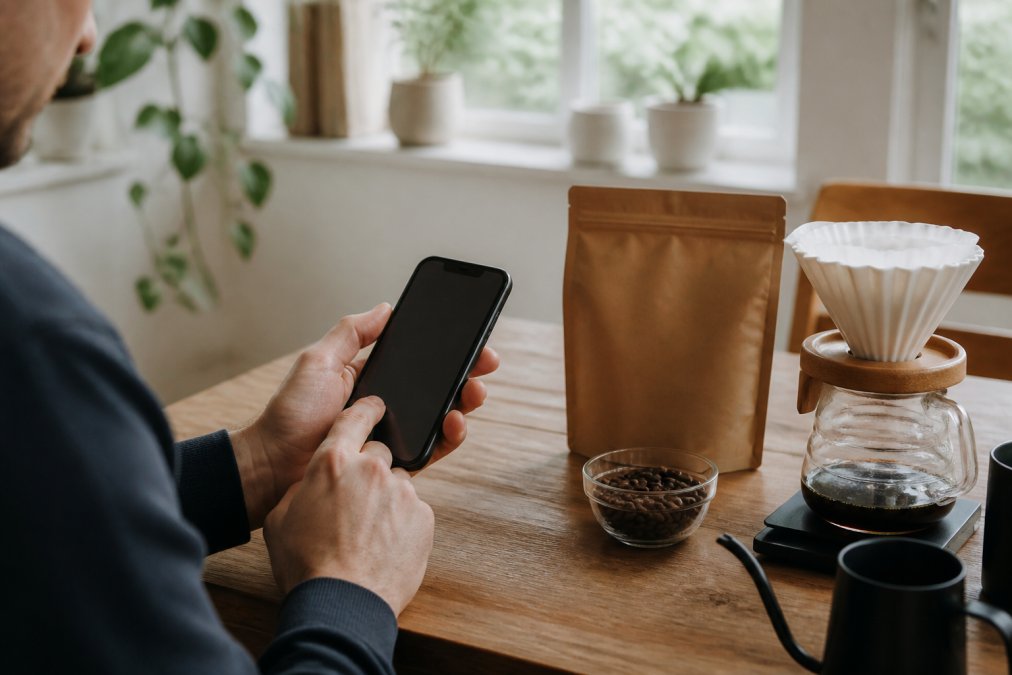
Using Maps, Directories, and Social Media
Three tools do most of the work:
- Maps apps: Search "coffee roastery near me" and check photos for roasting machines.
- Directories: Sites like the Specialty Coffee Association member directory list verified roasters.
- Social media: Follow local roasters on Instagram to see roast days and new drops.
A Repeatable Map-Search Method That Excludes Resellers
Most people type "coffee near me" and get a wall of cafes. Use this sequence instead to cut the noise fast.
- Run three queries, not one. Search "coffee roaster," "coffee roastery," and "coffee roasting company." Map listings are indexed by owners' profile words, so a shop that roasts but never uses "roaster" in its name may surface under only one.
- Read the category tag in list view. Map apps label businesses "Coffee shop," "Coffee roastery," or "Coffee wholesaler." Filter to roastery and wholesaler first; a cafe tag moves to the bottom until you confirm roasting on site.
- Verify with photos before you drive. Look for a drum or fluid-bed roasting machine, green coffee in burlap or grain-pro bags, and a scale or bagging station. A shop with only espresso machines and pastry cases is a cafe, even if it sells beans.
- Mine the reviews for "roast." Search reviews for "roast," "roasted," and "roastery." Reviewers mention roast dates and the smell of roasting when a business actually roasts; if those words never appear, treat the listing as unverified.
- Check the About page for a roast schedule. A real roaster publishes roast days, a production address, or a wholesale form. A reseller's site talks sourcing and flavor but never says where or when the coffee is roasted.
Save your shortlist as a map list or favorites folder. Roasters open, close, and move production spaces often, and a saved list is faster to re-check than a fresh search every time.
How to Tell if a Roaster Is Truly Local
A real roaster roasts beans themselves; a reseller just labels someone else's coffee.
Ask two questions:
- "Where do you roast?" A true roaster names a local facility.
- "When was this roasted?" A real roaster knows the date instantly.
Red Flags in a Listing
- No production address anywhere. A roastery has a physical production space, even if the storefront is separate.
- Every bag is labeled with the same roast date. That pattern points to a single bulk roast rather than roasted-to-order or frequent small batches.
- Beans sold only in unmarked kraft bags with a sticker. Not automatically bad, but combined with no roast date it usually means the seller is not the roaster.
- A menu that lists dozens of unrelated origins with no rotation. Real roasters cycle through offerings as green coffee arrives and sells out.
Run the five-step search once and you'll have a shortlist of genuine roasters to visit, question, and buy from with confidence.
Step 2: How to Evaluate Coffee Roast Dates and Bean Freshness
The roast date is the most important number on any bag. It tells you exactly how old the coffee is. A "best by" date does not.
Reading Roast Dates and Best-By Labels
Here is how to tell them apart:
- Roast date: "Roasted on" plus a specific day. This is what you want.
- Best-by date: A future date with no roast info. Usually a guess.
- No date: Skip it. You have no idea how old the coffee is.
Why Roasted-to-Order Beats Sitting Inventory
Roasted-to-order coffee ships within days of roasting, so the bag arrives near its peak.
Step 3: Sensory Evaluation: Tasting Notes, Aroma, and Flavor Profile
Cupping is the professional way to taste coffee: smell the grounds, pour hot water over them, and slurp from a spoon to spread the coffee across your tongue.
- Smell the dry grounds first. Note the aroma.
- Add hot water and smell again.
- Slurp a small sip and let it coat your mouth.
- Note the acidity (bright or mellow), body (light or heavy), and finish.
A Bean-Level Checklist for Judging Roast Quality
Most guides tell you where to find roasters, not how to judge one before spending money. Use your eyes and nose on the bag itself.
Look at the beans.
- Even color across the batch. A well-roasted batch is uniform. Scattered very dark beans mixed with pale ones signal an uneven roast, often from too large a batch for the machine.
- No oily sheen on a light or medium roast. Surface oil on a light roast usually means the beans were pushed too far or sat too long. Oil on a dark roast is expected.
- No chipped or scorched tips. Blackened, cratered ends point to too much heat too fast.
- Intact seams. The center cut of the bean should be clean, not split wide open.
Smell the bag as soon as you open it.
- Sweet, layered, and alive. Good coffee smells like something, not just "coffee." You should be able to name a note or two.
- Flat or papery. Cardboard, hay, and stale bread aromas mean the coffee is old or was stored poorly.
- Sharp and acrid. A burnt, ashy smell that overpowers everything else usually means an over-roasted batch.
- Chemical or rubbery. This is a defect aroma. Walk away.
Taste with a purpose.
- Sweetness first. Good coffee tastes sweet before it tastes bitter. If bitterness arrives first and stays, the roast is off.
- Acidity that feels clean. Brightness should read as fruit or citrus, not as sourness or vinegar.
- A finish that fades, not one that lingers harshly. A long, pleasant aftertaste is a good sign. A dry, chalky, or metallic finish is not.
- Balance across the cup. No single note should shout over the others.
You do not need a score sheet to judge a roaster. Even color, a sweet aroma, and a clean finish will separate a careful roaster from a careless one on the first bag.
What the Roast Level Tells You About the Roaster
Roast level is a choice, not a quality grade, but how a roaster talks about it is revealing.
- Light roasts preserve origin character. They are harder to roast well, so a roaster who offers a consistent light roast is usually skilled.
- Medium roasts are the most forgiving and the most common. They should still taste sweet and balanced.
- Dark roasts can hide defects behind smoke and char. A dark roast that still tastes sweet and complex is a good sign; one that tastes only burnt is not.
How to Compare Two Roasters Side by Side
Pick one coffee both roasters offer, ideally the same origin and process, and brew both the same way, same day, same ratio and grind. Taste them back to back.
- Note which one smells sweeter dry.
- Note which one tastes more balanced.
- Note which finish you prefer.
Step 4: Benefits of Buying from Independent Coffee Roasters
Independent roasters give you quality you can trace. Many publish the farm, region, and harvest for each coffee. That transparency is rare in mass-market brands.
Quality, Traceability, and Direct Trade Relationships
Direct trade means a roaster buys straight from a farm, often above market rates. Fair trade is a certification with set standards. Both aim to treat farmers better.
Sustainability and Ethical Sourcing Verification
Look for clear claims, not vague ones. A roaster that names its sourcing partners is easier to trust than one that just says "sustainable."
Check for:
- Named farms or cooperatives
- Certifications like Fair Trade or organic
- Published sourcing reports or farm visits
Step 5: Wholesale Coffee Roaster Requirements and Subscription Models
Wholesale coffee roaster requirements vary. Most want a minimum order, often by the pound, and some ask for a business license or resale certificate. If you run a cafe or office, ask about minimums and delivery schedules before committing.
When to Consider Wholesale vs. Retail Purchasing
| Buyer | Best Option | Why |
|---|---|---|
| Home drinker | Retail or subscription | Small amounts, fresh delivery |
| Small office | Subscription | Steady supply, no minimums |
| Cafe or restaurant | Wholesale | Bulk pricing, regular delivery |
| Pop-up or event | Wholesale | One-time bulk order |
Subscription Models for Local Roasters
A good subscription sends fresh beans on your schedule, with flexible plans you can pause or cancel anytime.
Step 6: Matching Roaster Beans to Your Home Brewing Method
The right grind depends on your brewing method. Buy whole beans and grind just before brewing for the best flavor.
Here is a quick guide:
- Pour-over: Medium grind, bright and clean cup
- Espresso: Fine grind, rich and concentrated
- French press: Coarse grind, full body
- Drip: Medium grind, easy and consistent
Step 7: Connecting with the Local Coffee Community
Local coffee is a community, not just a product. Visit farmers markets, join a cupping session, and talk to the people behind the beans.
Frequently Asked Questions
What should I look for when choosing a local coffee roaster?
Look for a clear roast date on the bag, not just a best-by date. Check whether the roaster lists the origin, farm, or cooperative and the processing method. A roaster who roasts to order will ship within a day or two of roasting. Visit the roastery or farmers market stall if you can, and ask about their sourcing relationships. Transparency about green coffee supply and roast profile is the strongest signal of quality.
How can I tell if a coffee roaster is truly local?
Check the address on their website and confirm it matches a physical roastery you can visit. Look for local pickup options or a presence at area farmers markets. If the company only has a warehouse address and no production facility, they may be a reseller. Ask where the beans are roasted, and if the answer is vague, that roaster is likely not roasting in-house.
How do I evaluate coffee roast dates to ensure freshness?
Find the roast date printed on the bag, not the expiration date. For most brewing methods, coffee tastes best between 4 and 21 days after roasting. Beans roasted more than 6 weeks ago have lost much of their aroma and flavor. If a bag has no roast date at all, that is a red flag. Roasters who roast to order will always print the date.
What are the benefits of buying from independent coffee roasters?
Independent roasters typically roast in small batches, which means fresher beans and more control over roast profile. They often build direct trade relationships with farms, so you can trace your coffee back to a specific origin. Many also offer subscription models and wholesale options for regular buyers. Supporting them keeps money in the local economy and strengthens the specialty coffee community.
Finding great coffee comes down to freshness, a real roast date, and a roaster you can trust. Crystal Coast Coffee Co. roasts to order for maximum flavor and aroma, sources beans from trusted farms worldwide, and delivers fresh coffee right to your door. Our simple ordering and reliable delivery make it easy to keep your pantry stocked with coffee at its peak. Get started with Crystal Coast Coffee Co. and taste the coastal soul in every brew.