

Craft Coffee Alternative: Best Caffeine-Free Substitutes
Table of Contents
- Why Look for a Craft Coffee Alternative?
- Best Caffeine-Free Coffee Substitutes for Craft Flavor
- How to Brew Coffee Alternatives Like a Pro
- Equipment Compatibility: What Works Best
- Sensory Mapping: Matching Flavor Profiles
- Cost-Per-Cup and Dietary Considerations
- Make the Switch to a Craft Coffee Alternative
- Frequently Asked Questions
Last Updated: September 5, 2026
Why Look for a Craft Coffee Alternative?
The search for a craft coffee alternative often begins with a simple problem: you love the ritual of coffee, but caffeine has started to cost you sleep, focus, or calm. A true coffee alternative is a roasted botanical or grain-based brew that mimics the depth, body, and aroma of coffee without the jitters or the crash.
Most commercial substitutes fail because they are treated like tea bags: steeped quickly and forgotten. When you apply coffee-brewing logic, the flavor profile transforms entirely.
Roasted roots, toasted grains, and adaptogenic blends now deliver genuine mouthfeel and complexity. Below, we'll show you which substitutes hold up to craft standards and how to brew them so they taste intentional, not like a compromise.
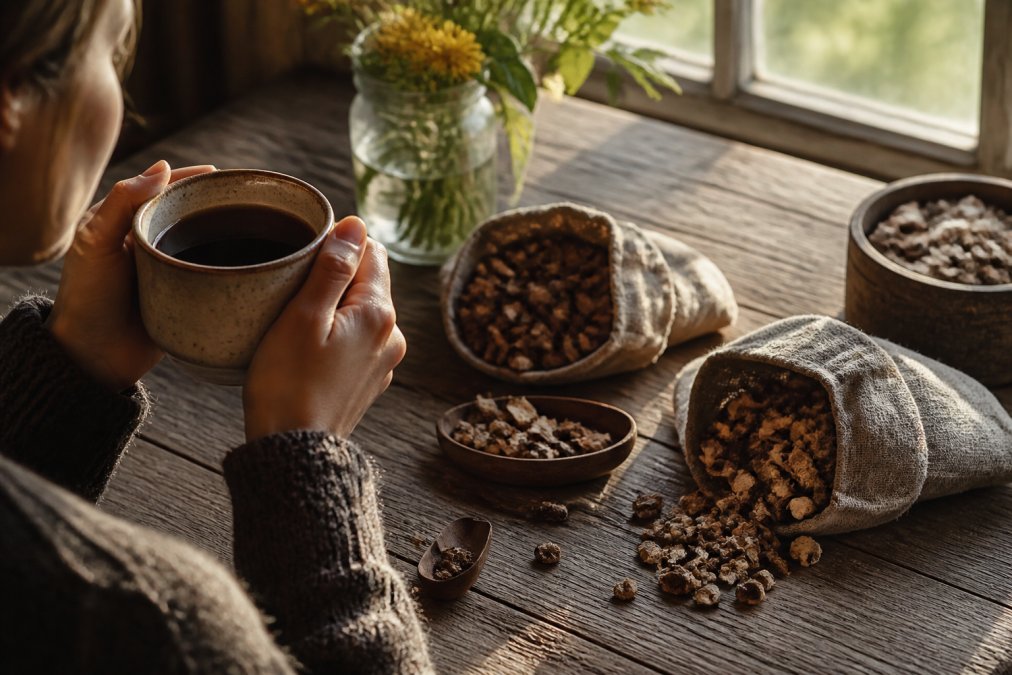
Best Caffeine-Free Coffee Substitutes for Craft Flavor
The best caffeine-free coffee substitutes share three traits: a dark roast profile, a full body, and the ability to extract like coffee rather than steep like tea. But a craft approach goes deeper than naming ingredients. Here is the technical breakdown of the four main categories.

Roasted Roots: Chicory and Dandelion
Chicory root (Cichorium intybus) is the closest direct coffee stand-in. For craft-level results, source whole, dried chicory root cut into uniform pieces, not powdered. In a home oven, spread the pieces on a baking sheet and roast at 350°F, stirring every 5 minutes, until the color shifts from pale tan to deep mahogany, typically 25-30 minutes. The internal temperature should reach around 400°F to trigger the Maillard reaction that produces its signature bittersweet, smoky notes. Under-roasted chicory tastes vegetal; over-roasted, it turns acrid. Stop the roast when the pieces are uniformly dark but not blackened, then cool them immediately.
Dandelion root (Taraxacum officinale) requires a different approach. Its root is denser and contains more inulin, a soluble fiber that caramelizes during roasting. Roast it at a lower temperature, around 325°F, for roughly 35-40 minutes, until the pieces are brittle and a deep chestnut brown. This slower roast develops its nutty, earthy character and a naturally sweet finish. Avoid buying pre-ground root powder and treating it like instant coffee; whole dried roots, roasted and ground fresh, produce a richer cup because grinding releases aromatic volatile compounds that pre-ground versions have lost.
Grain-Based Brews: Barley and Mesquite
Roasted barley (Hordeum vulgare) is the most accessible grain alternative. The craft distinction lies in the roast level: most commercial barley beverages are lightly roasted, producing a thin, cereal-like cup. To achieve a coffee-like body, you need a dark roast approaching the second crack stage seen with coffee beans, where the starches dextrinize, creating a fuller mouthfeel and a malt-forward, almost chocolatey depth. Home-roasting is straightforward: spread whole barley groats on a sheet pan and roast at 400°F for 15-20 minutes, shaking frequently, until deeply browned and fragrant.
Mesquite pod flour comes from the ground pods of the mesquite tree, not the seeds. It is naturally sweet, with a molasses-like profile and a fine, powdery texture. Unlike roots or barley, mesquite flour contains soluble starches that dissolve and create a muddy, sediment-heavy cup if brewed like coffee. The correct method is a decoction: whisk the flour into cold water, bring it to a boil, then simmer for 5 minutes. This hydrates the starches and allows you to strain out the insoluble fiber, resulting in a smooth, naturally sweet brew with a silky body.
Botanical and Adaptogen Blends
Adaptogen blends combine roasted roots, herbs, and functional mushrooms to target calm energy rather than stimulation. Ingredients like Lion's Mane, Cordyceps, and Reishi are common additions, valued for their traditional association with focus, stamina, and balance. The craft consideration is twofold. First, check the ingredient list for the base: many commercial blends use a cheap, lightly roasted barley or maltodextrin as a filler. Look for blends that list a roasted root (chicory or dandelion) as the first ingredient. Second, understand that mushroom extracts are typically water-soluble but not fat-soluble. To fully extract their beneficial compounds, brew these blends with a small amount of a fat source, such as a teaspoon of coconut oil or a splash of oat milk, added directly to the brewing vessel.
How to Brew Coffee Alternatives Like a Pro
Brewing a coffee alternative well means abandoning tea logic and adopting coffee logic. The core principle is extraction: dissolving soluble compounds from roasted plant material into water. The variables you control are grind size, water temperature, brew time, and the coffee-to-water ratio.
The Extraction Fundamentals
Start with a ratio of 1:15 by weight, that is 20 grams of ground alternative per 300 grams of water (about 10 ounces). This is denser than the 1:16 or 1:17 ratio you might use for coffee because roasted roots and grains have a lower extraction yield. They contain less soluble material than coffee beans, so you need more material to achieve the same strength.
Water temperature matters more than most guides admit. For coffee, you typically brew at 195-205°F. For roasted roots and grains, you want water just off the boil, around 205-212°F, because the cell walls of roots and grains are tougher than coffee bean cell walls and require more thermal energy to release their soluble starches and sugars.
Method-Specific Adjustments
French Press: This is the most forgiving method for alternatives. Use a medium-coarse grind (similar to sea salt). Add your grounds, pour in the hot water, and stir immediately to saturate all particles. Steep for 4 minutes for roots, 5 minutes for grains; the longer steep for grains is safe because they lack the chlorogenic acids that cause coffee to become astringent when over-extracted. Press the plunger down slowly and pour immediately.
Pour-Over (V60 or Chemex): This method requires more attention. Use a medium grind (like table salt). The key difference from coffee is that you need to pour more aggressively: root and grain particles are less dense than coffee grounds and can channel, allowing water to rush through without extracting. Pour in three stages: a 30-second bloom with twice the weight of water as grounds, then two additional pours at 45-second intervals. Total brew time should be 3-3.5 minutes.
Moka Pot: This is the best method for creating a concentrated, espresso-style base from alternatives. Use a fine grind (like powdered sugar) and fill the basket without tamping, tamping will restrict flow and cause sputtering. Use water heated to just below boiling in the bottom chamber. The key difference from coffee is that you must remove the pot from heat as soon as the brew starts to flow, not when it finishes, because alternatives lack coffee's natural oils to lubricate the flow and can scorch quickly.
Drip Machine: Most standard drip machines work, but with a caveat. The spray head on many machines does not distribute water evenly over a bed of low-density root particles. To compensate, use a paper filter (which forces more even flow) and a slightly finer grind than for a French press.
Troubleshooting Common Problems
| Problem | Likely Cause | Fix |
|---|---|---|
| Weak, watery cup | Water too cool or grind too coarse | Increase water temp to 212°F; grind finer |
| Muddy, gritty cup | Grind too fine or paper filter not used | Grind coarser; use a paper filter |
| Sour, acidic taste | Under-extraction from short steep | Increase steep time by 1-2 minutes |
| Bitter, harsh taste | Over-extraction from fine grind or long steep | Grind coarser; reduce steep time |
| Thin mouthfeel | Not enough material | Increase ratio to 1:13 or 1:14 |
Equipment Compatibility: What Works Best
Most home brewing equipment works fine with coffee alternatives, but a few tools shine brighter than others. A burr grinder is essential if you buy whole roasted roots, since blade grinders produces uneven particles that extract inconsistently. A French press with a fine mesh filter captures sediment better than a paper filter, preserving the oils that contribute to mouthfeel.
Espresso machines are the one notable exception. Coffee alternatives lack the natural sugars and oils needed to build crema under pressure, so pulling a shot of chicory alone produces a thin, watery result. If you want an espresso-style drink, brew a strong concentrate in a moka pot and dilute it with hot water or milk.
Sensory Mapping: Matching Flavor Profiles
The fastest way to find a coffee alternative you love is to map it against your current coffee preferences. If you drink a dark, smoky roast, roasted chicory root is your closest match. If you prefer a medium roast with nutty undertones and low acidity, dandelion root or roasted barley will feel more familiar.

The table below maps common coffee preferences to their best alternative match:
| If You Enjoy This Coffee | Look For This Alternative | Why It Works |
|---|---|---|
| Bold dark roast, smoky | Chicory root | Bittersweet, full body, low acidity |
| Smooth medium roast, nutty | Dandelion root | Earthy, sweet, gentle on the stomach |
| Light breakfast blend, toasty | Roasted barley | Malt-forward, light, clean finish |
| Sweet, low-acid cold brew | Mesquite | Naturally sweet, smooth mouthfeel |
Cost-Per-Cup and Dietary Considerations
Whole roasted roots and grains are generally less expensive per pound than specialty coffee, but they weigh less and require more volume per cup. A practical way to compare is cost per serving rather than cost per bag. For a precise breakdown of what you are actually paying per cup, the USDA's FoodData Central database provides nutritional and weight data for roasted roots and grains.
Allergen and dietary warnings matter here. Roasted barley contains gluten, so those with celiac disease or gluten sensitivity should avoid grain-based brews. Chicory root is high in inulin, a type of fiber that can cause digestive discomfort in large amounts. Dandelion root is generally well tolerated but may interact with certain medications, so check with a healthcare provider if you take prescription drugs.
For a balanced cup that keeps the ritual intact, many coffee drinkers blend a small portion of their regular beans with a caffeine-free alternative. This stretches the coffee, softens the caffeine hit, and introduces new flavor dimensions. Guidance on caffeine intake and its effects from the FDA notes that sensitivity varies widely, which is why a half-and-half blend works well for many people transitioning away from full-caffeine mornings.
Make the Switch to a Craft Coffee Alternative
Switching to a craft coffee alternative does not mean giving up the ritual. It means expanding it. The same attention to roast date, grind size, and brewing method that makes a great cup of coffee also makes a great cup of roasted dandelion or chicory.
At Crystal Coast Coffee Co., we apply that same roasting-to-order discipline to everything we offer. If you want to ease into alternatives without abandoning coffee entirely, our Coffee with Mushrooms Medium Roast blends specialty-grade beans with Lion's Mane, Cordyceps, and Reishi, offering a balanced cup with a smooth finish at $20.99. For a completely caffeine-free moment that still feels like a crafted beverage, our Hojicha is a roasted green tea powder with comforting notes of toasted cereal and balanced umami, prepared with the same care as a fine pour-over.

The honest truth is that no single substitute perfectly replicates coffee, and pretending otherwise sets you up for disappointment. Instead, treat each alternative as its own craft: a roasted root with a distinct voice, a grain with a gentle character, a botanical blend with a purpose. When brewed with intention, these drinks earn their place in your morning rotation. The Smithsonian's overview of the history and cultural use of coffee substitutes shows that people have been perfecting these brews for centuries, long before the modern wellness trend.
Frequently Asked Questions
What is the best coffee alternative that tastes like coffee?
Roasted chicory root and dandelion root come closest to mimicking coffee's bitter, roasty character. When brewed strong and served with milk, the flavor profile is strikingly similar to a dark roast. Grain-based options like roasted barley and mesquite add nutty undertones and body. For a more complex cup, try blends that combine roasted roots with chicory, barley, or fig. Start with a ratio of one tablespoon of grounds per six ounces of water, then adjust to match your preferred strength.
How do I brew coffee alternatives with my existing equipment?
Most coffee alternatives work with standard brewing gear. Use a medium-fine grind, similar to drip coffee, for pour-over and automatic drip machines. For a French press, use a coarser grind and steep for four to five minutes. Roasted roots and grains respond well to a longer extraction, so a French press or cold brew method can draw out more body and sweetness. Always check the manufacturer's guidance, since some alternatives grind finer and can clog paper filters.
Are caffeine-free coffee substitutes actually good for you?
Many plant-based substitutes offer distinct benefits. Dandelion root acts as a mild diuretic and supports digestion, while chicory root contains inulin, a fiber that feeds gut bacteria. Adaptogenic mushroom blends, like those with Lion's Mane or Reishi, are valued for focus and calm. These drinks are naturally free of caffeine, making them a smart choice for anyone sensitive to jitters or afternoon crashes. As with any dietary change, introduce new botanicals gradually to see how your body responds.
What should I look for in a high-quality coffee alternative?
Check the ingredient list for whole, roasted components rather than artificial flavorings. Look for a roast date or a note about when the roots or grains were roasted, since freshness affects aroma and taste, just as it does with coffee beans. A single-origin or small-batch source often signals more careful roasting. For a craft experience, choose options that list specific flavor notes, such as earthy tones or nutty undertones, so you know what to expect in the cup.
Finding the right coffee alternative is a matter of matching your palate, your brewing gear, and your dietary needs to the right roasted root or grain. The options above give you a solid starting point, but the real discovery happens when you dial in your own grind and steep time. Get started with Crystal Coast Coffee Co. and explore how a roasted-to-order approach elevates everything you brew, coffee or otherwise.
This article was written using GrandRanker