

Coffee Degassing vs Resting: What's the Difference
Table of Contents
- What Is Coffee Degassing and Resting?
- Why Freshly Roasted Coffee Beans Release Gas
- How Long to Rest Coffee After Roasting
- When to Brew Freshly Roasted Coffee
- Coffee Resting Period for Espresso
- How to Store Freshly Roasted Coffee Beans
- Practical Readiness Tests for Brewing
- Frequently Asked Questions
Last Updated: October 10, 2026
What Is Coffee Degassing and Resting?
Understanding degassing vs resting is essential for brewing fresh coffee. Many enthusiasts confuse these two distinct processes, leading to brewing decisions that undermine flavor. While both involve freshly roasted coffee beans, they describe different chemical and physical changes.
Degassing: Carbon Dioxide Release After Roasting
Degassing is the physical release of carbon dioxide that accumulates inside coffee beans during the roasting process. When beans are roasted, heat breaks down sugars and chlorogenic acids, creating CO2 as a byproduct. This gas becomes trapped inside the bean's cellular structure. Once roasting stops and beans cool, the CO2 begins escaping into the surrounding air.
A freshly roasted bean releases gas for 24 to 48 hours after roasting, with the most intense degassing in the first 12 hours. You'll notice the distinctive smell and slight "off-gassing" sensation when you open the bag, that's CO2 escaping. Darker roasts release gas faster because higher heat creates more CO2 within the bean structure.
Resting: Flavor Settling and Development
Resting occurs after degassing slows. Once CO2 has escaped, volatile aromatic compounds stabilize, oils redistribute, and the flavor profile becomes balanced and nuanced.
Resting typically takes 5 to 14 days depending on roast level. Light and medium roasts benefit from 5-7 days, while dark roasts need 7-14 days for flavors to mature. Sweetness emerges, bright flavors become pronounced, and the cup develops smoothness.
The difference between degassing and resting comes down to what's happening chemically. Degassing is gas escaping. Resting is flavor maturing.
Why Freshly Roasted Coffee Beans Release Gas
Heat causes the bean to expand, creating tiny fractures and channels. As sugars caramelize and proteins break down, chemical reactions produce carbon dioxide as a byproduct.
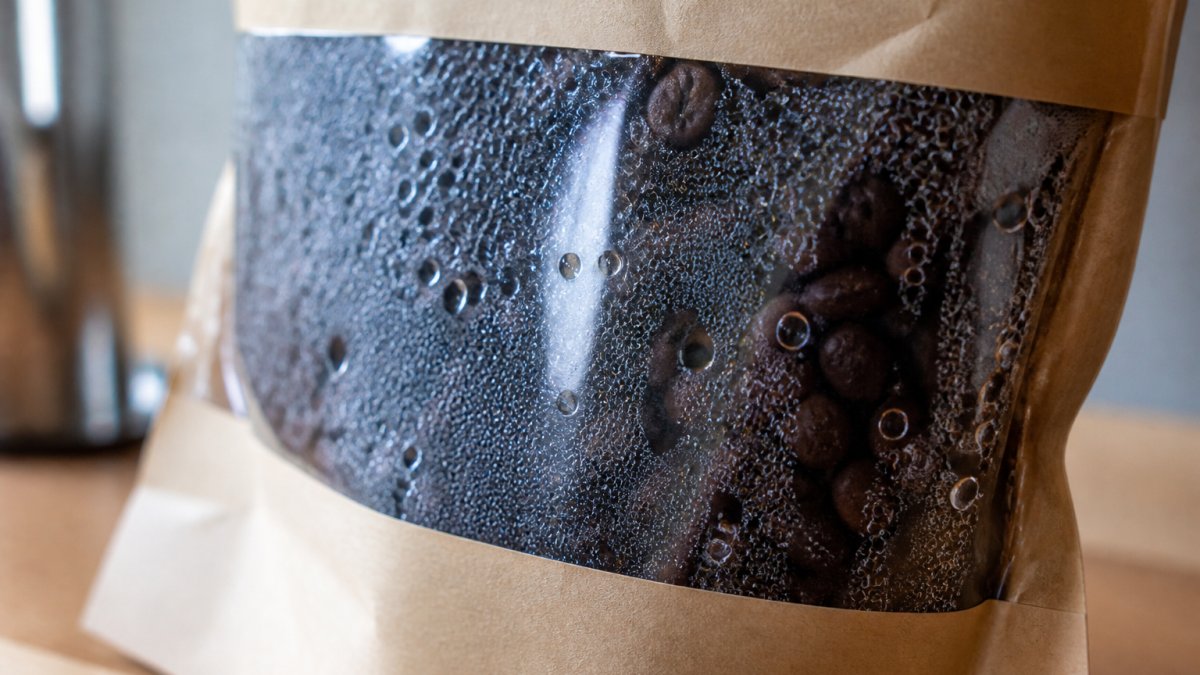
This CO2 gets trapped in the bean's porous structure, pressurized like a carbonated beverage. Once cooled and exposed to lower pressure, the gas seeks equilibrium with surrounding air.
This is why specialty roasters use one-way valves on their bags. These valves let CO2 escape without allowing oxygen in, which would stale the coffee faster.
How Long to Rest Coffee After Roasting
The ideal resting period depends on roast level and brewing method. Different brewing techniques interact with residual CO2 differently. This is where degassing vs resting becomes practical: you need to wait long enough for most CO2 to escape, but the timeline shifts based on how your brewing method handles gas.
Light and Medium Roasts
Light roasts benefit from 5 to 7 days of resting. These beans release CO2 more slowly and retain bright, fruity flavors longer. Brewing too soon (within 24 hours) creates excessive CO2, uneven extraction, and sour, thin flavor.
Medium roasts follow a similar timeline: 5 to 7 days is optimal. Waiting a full week lets cocoa and fruit notes emerge without sharp edges from residual CO2.
Dark Roasts
Dark roasts need 7 to 14 days of resting. Brewing too early results in a flat, bitter cup. After 7 to 10 days, dark roasts develop smoothness and body ideal for espresso or immersion brewing.
Brewing-Method-Specific Rest Windows
Within these roast-level guidelines, your brewing method determines where in the window you should aim:
Pour-over and drip brewing (Chemex, V60, Melitta, automatic drip): Most sensitive to residual CO2 because water flows through grounds. Excess gas creates uneven channeling and weak extraction. Aim for day 5-7 for light and medium roasts, day 8-10 for dark roasts.
French press and immersion methods (cupping, cold brew, Turkish): Tolerate CO2 better because coffee steeps in contact with water. Brew light and medium roasts as early as day 3-4, dark roasts by day 5-6. Very fresh coffee (day 1-2) may taste aggressive or peppery but is drinkable.
Espresso: Excess CO2 creates channeling and uneven extraction under 9 bars of pressure. Aim for day 8-10 for light roasts, day 9-12 for medium roasts, day 10-14 for dark roasts. Properly rested shots have rich crema and balanced extraction. Too early tastes thin and sour; too late tastes flat.
Moka pot and stovetop brewing: Aim for day 5-7 for light and medium roasts, day 7-10 for dark roasts. Residual gas still affects extraction noticeably.
When to Brew Freshly Roasted Coffee
The timing of your first brew matters more than most guides suggest. Brewing too soon means fighting excess CO2. Brewing too late means drinking coffee that's past its peak.
For pour-over and drip brewing, wait at least 5 days after roasting. By day 5 or 6, the coffee has degassed enough to brew cleanly.
For French press and immersion methods, you can brew as early as day 3 or 4. These methods tolerate CO2 better because longer contact time compensates for residual gas.
Coffee Resting Period for Espresso
Espresso demands precision in resting timing. Excess CO2 creates channeling, allowing water to find paths of least resistance instead of extracting evenly.
For espresso, wait 8 to 10 days after roasting. Espresso's high pressure makes it more sensitive to residual gas than pour-over.
If you're buying espresso from roasters, check the roast date. Coffee roasted within the last 48 hours isn't ready for espresso yet.
How to Store Freshly Roasted Coffee Beans
Storage directly affects how well resting works and how quickly degassing progresses. The container you choose, the environment, and how often you open the bag all influence both the speed of CO2 release and the rate of flavor development.
One-Way Valves and Sealed Bags
One-way valves let CO2 escape while keeping oxygen out. The valve allows degassing at a natural rate, CO2 can leave, but oxygen cannot enter. This is critical because oxygen accelerates oxidation of coffee oils.
Keep the bag sealed between uses. Each opening introduces oxygen, which speeds oxidation and staleness.
One-way valve bags create a sealed microenvironment with no control over humidity. Moisture can accumulate near the valve in humid storage, potentially affecting nearby beans.
Airtight Containers vs. Valve Bags
For storage beyond 3 weeks, transfer beans to an airtight container for better control. Glass or opaque plastic containers protect against light and allow visual monitoring.
Once sealed, CO2 cannot escape. If you seal actively degassing beans (within 48 hours), pressure builds and slows degassing. Wait 24-36 hours after roasting before transferring to an airtight container, or use a container with a one-way valve insert.
Open-Air Resting: Myth vs. Reality
Some coffee enthusiasts recommend resting beans in an open bowl or on a tray to allow maximum air circulation and faster degassing. This approach does accelerate CO2 release, beans can degas 20-30% faster in open air than in a sealed bag.
The cost: Oxygen exposure increases dramatically. Beans resting in open air oxidize faster, which means flavor degradation accelerates after day 3-4. You gain faster degassing but lose freshness sooner. This approach is only practical if you plan to brew within 7-10 days and prioritize speed over peak flavor window.
Better practice: Rest in a sealed valve bag or airtight container. The slightly slower degassing (24-48 hours longer) is worth the extended freshness window.
Temperature and Humidity
Store your sealed bag in a cool, dark place, a pantry or cabinet away from heat and direct sunlight. Temperature stability matters more than absolute cold. A consistent 60 to 70 degrees Fahrenheit is ideal.
Why temperature matters for resting: Warmer storage (above 75°F) accelerates both degassing and oxidation.
Humidity: High humidity (above 65% relative humidity) can cause beans to absorb moisture, which interferes with the roasting's cellular structure and can promote mold growth in sealed bags.
Freezing coffee is controversial and generally unnecessary if you're using beans within 2 to 3 weeks of roasting. Freezing slows all chemical processes, including flavor development during resting.
Oxygen Exposure and Freshness
Once you open a bag, oxygen becomes the enemy. Coffee oils oxidize when exposed to air, which causes flavor degradation and rancidity. If your bag doesn't have a resealable closure, transfer remaining beans to an airtight container immediately.
Whole beans stay fresh longer than ground coffee. If you grind your beans, use the grounds within 15 minutes of grinding. Ground coffee oxidizes rapidly because the increased surface area accelerates the process.
Practical Readiness Tests for Brewing
You don't need to memorize exact dates. A few simple observations tell you whether your coffee is ready to brew.
First, listen to the bag. If you hear a strong hiss when you open it, the coffee is still actively degassing. Wait another day or two. A quiet opening means most gas has escaped.
Second, smell the coffee. Freshly roasted beans have a sharp, almost pungent aroma. As they rest, that sharpness mellows into a more complex, inviting smell. When the aroma becomes pleasant rather than aggressive, you're in the resting window.
Third, brew a small test cup. If the coffee tastes sour or thin, it's still degassing. If it tastes flat or dull, it's past its peak.
| Roast Level | Degassing Time | Optimal Resting Window | Best Brewing Method |
|---|---|---|---|
| Light | 24-36 hours | Days 5-7 | Pour-over, drip |
| Medium | 24-36 hours | Days 5-7 | Pour-over, French press |
| Dark | 36-48 hours | Days 7-14 | Espresso, immersion |
The distinction between degassing and resting changes how you approach freshly roasted coffee. Our single-origin coffees like Ethiopia Natural and Tanzania are roasted fresh and ready to rest in your pantry, giving you control over when your coffee reaches its peak.

Frequently Asked Questions
What is the difference between coffee degassing and resting?
Degassing is the release of carbon dioxide (CO2) that builds up inside coffee beans during roasting. It happens automatically and peaks in the first 24-48 hours. Resting is the flavor-settling process that follows, where the coffee's taste profile becomes more balanced and nuanced. Both occur simultaneously, but degassing is purely a gas-release mechanism, while resting involves flavor compounds stabilizing. You can brew during active degassing, but the cup may taste flat or harsh. Waiting for the resting period allows flavors to fully develop.
How long should coffee rest after roasting before brewing?
Most freshly roasted coffee reaches optimal flavor 3-5 days after roasting. Light and medium roasts often taste best at 3-4 days, while dark roasts may benefit from 4-7 days. However, you can brew as early as 24-48 hours after roasting if you prefer, though the cup will be less refined. The resting period allows CO2 to escape gradually and flavor compounds to settle. After 2-3 weeks, coffee begins to fade in freshness, so aim to brew within this window for the best experience.
Can you brew coffee immediately after roasting?
Technically yes, but the results won't be ideal. Coffee roasted just hours before brewing will still be actively degassing, which can make extraction difficult and cause the cup to taste thin or overly bright. The bloom phase (when water first hits the grounds) will produce excessive bubbling and CO2 escape, disrupting even extraction. Waiting at least 24-48 hours allows enough CO2 to escape so water can properly penetrate the grounds and extract balanced flavors. For the best cup, wait 3-5 days after roasting.
Do espresso beans need to rest longer than filter coffee beans?
Espresso extraction is faster and more intense than filter brewing, so espresso beans benefit from a slightly longer rest. Aim for 5-10 days after roasting for espresso to allow excess CO2 to escape, which helps prevent channeling and improves crema consistency. Filter coffee can taste excellent at 3-5 days. Espresso pulled from beans that are too fresh often produces thin, sour shots with poor crema. However, espresso beans shouldn't rest beyond 3 weeks, as the coffee will begin to lose its vibrancy and sweetness.