

How to Brew Loose Leaf Tea: Step-by-Step Guide
Table of Contents
- Why Brewing Loose Leaf Tea Beats Tea Bags
- What You'll Need to Brew Loose Leaf Tea
- The Right Loose Leaf Tea to Water Ratio
- Water Temperature and Steeping Times for Green vs Black Tea
- Step-by-Step: How to Brew Tea Without an Infuser
- Troubleshooting: Why Your Tea Is Bitter or Weak
- Re-Steeping Leaves and Storing Them for Freshness
- Conclusion: Your Perfect Cup Starts With Quality Leaves
- Frequently Asked Questions
Last Updated: September 9, 2026
Why Brewing Loose Leaf Tea Beats Tea Bags
Brewing loose leaf tea is the single fastest way to upgrade your daily cup, and the difference comes down to what is actually inside the leaf. Tea bags are typically filled with fannings and dust, the broken remnants of production that lose their volatile oils and aroma quickly. Whole leaves, by contrast, retain more of their essential oils and flavor profile, which is why a properly brewed loose leaf cup tastes sweeter, more complex, and less bitter than anything from a bag.
At Crystal Coast Coffee Co., we offer a range of aromatic teas. The ritual itself matters, too. Measuring leaves, watching them expand, and timing your steep turns a rushed caffeine hit into a mindful pause, something the coastal lifestyle is built around. Below, we'll show you exactly how to brew loose leaf tea at home, covering ratios, temperature, and the equipment you actually need.
What You'll Need to Brew Loose Leaf Tea
You do not need a fancy tea service to start. A basic setup includes a brewing vessel, a way to strain the leaves, and a heat source. Most kitchens already have these items.
- A tea kettle or pot for heating water
- A mug or small teapot as your brewing vessel
- A tea infuser, sieve, or fine mesh strainer
- Loose leaf tea (about one teaspoon per cup)
- A kitchen timer or your phone
The one upgrade worth making is a proper tea infuser. A basket-style infuser that sits inside your mug gives the leaves room to expand, which is essential for flavor extraction. The biggest mistake beginners make is using a cramped infuser ball that packs the leaves tightly, resulting in a weak, underwhelming brew.
The Right Loose Leaf Tea to Water Ratio
A good loose leaf tea to water ratio is one teaspoon of tea leaves for every 8 ounces of water, roughly a standard mug. This baseline works for most black, green, and oolong teas. For lighter teas like white tea, or for teas with large, fluffy leaves, you may need closer to two teaspoons because the leaves take up more volume without adding more weight.
Measuring by weight is more accurate if you have a small kitchen scale. Aim for about 2 to 3 grams of tea per 8-ounce cup. Adjust from there based on your taste. If your cup tastes weak, add slightly more leaf next time rather than steeping longer, which only draws out bitterness.
Water Temperature and Steeping Times for Green vs Black Tea
Water temperature and steeping time are the two variables that most affect whether your tea tastes smooth or harsh. The general rule is simple: delicate teas need cooler water and shorter steeps, while strong teas handle a full boil.
| Tea Type | Water Temperature | Steeping Time | Notes |
|---|---|---|---|
| Green tea | 170-180°F | 2-3 minutes | Cooler water prevents bitterness |
| White tea | 160-175°F | 3-4 minutes | Gentle and floral |
| Oolong tea | 185-200°F | 3-5 minutes | Can handle multiple steeps |
| Black tea | 200-212°F (full boil) | 3-5 minutes | Bold and full-bodied |
| Herbal tea | 212°F (full boil) | 5-7 minutes | Longer steep for flavor |
Green tea is the trickiest because it is easy to scorch. If your water is bubbling at a rolling boil, let it sit for a minute before pouring. Black tea, on the other hand, needs a full boil to extract its tannins properly, which is why the steeping times for green vs black tea differ so much. Boiling water on green tea releases excess tannins and creates a bitter, astringent flavor. Water quality matters here, too. Tap water with heavy chlorine or mineral content can dull the aroma, so filtered water is a smart choice for the best cup.
Step-by-Step: How to Brew Tea Without an Infuser
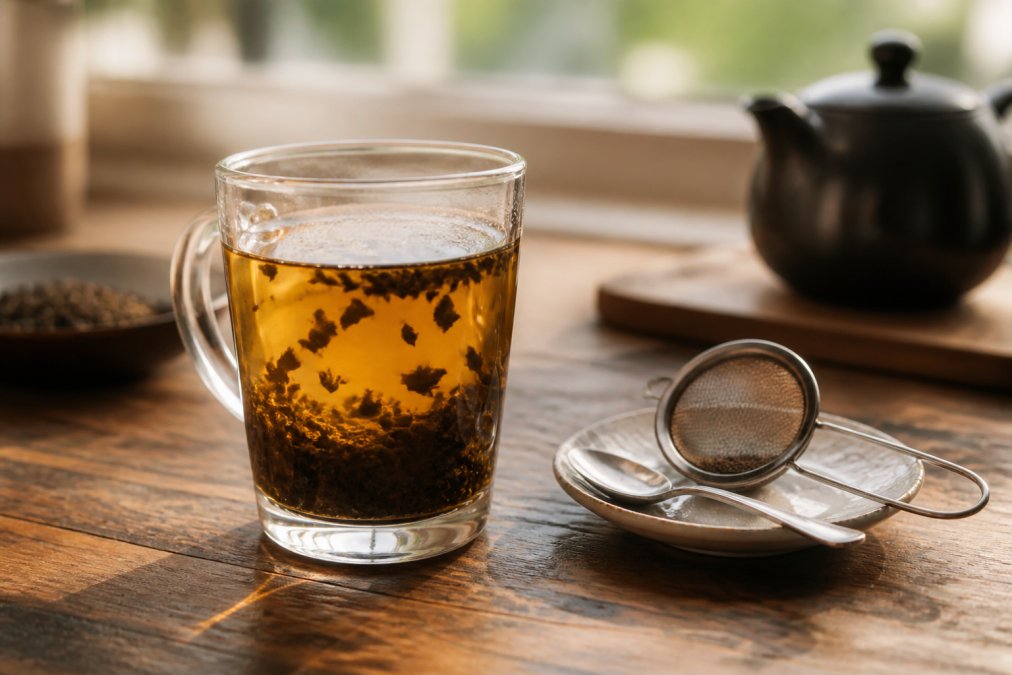
If you do not own an infuser, you can still brew loose leaf tea perfectly using the direct method. This is a common approach in tea houses and requires nothing more than your mug and a strainer.
- Heat your water to the right temperature for your tea type.
- Add your loose leaf tea directly to the bottom of your mug, about one teaspoon per 8 ounces.
- Pour the hot water over the leaves, filling the mug.
- Set a timer for the recommended steeping time.
- When the timer goes off, pour the tea through a fine mesh sieve or strainer into a second mug.
- Discard the spent leaves and enjoy.
The key is to pour the tea off the leaves when the timer ends. Leaving the leaves in the water will continue the extraction process and turn your cup bitter. A wide-mouth strainer that sits over your mug works well for this, catching the leaves as you pour. This method gives the leaves maximum room to expand and is often the easiest way to brew a single cup.
Troubleshooting: Why Your Tea Is Bitter or Weak
Bitter tea is almost always a timing or temperature problem, not a leaf problem. If your cup tastes harsh and astringent, you likely steeped it too long or used water that was too hot. Green tea brewed at a rolling boil will turn bitter in under a minute (peer-reviewed research). Weak tea, on the other hand, comes from too few leaves, water that was not hot enough, or an infuser that was too small for the leaves to expand.
The fix is to change one variable at a time. Start with the correct water temperature, then adjust your steep time down by 30 seconds if bitterness persists. For weak tea, add more leaf before you extend the steep, because longer steeps only add tannins, not sweetness. A balanced cup should have a pleasant aroma, a smooth mouthfeel, and no lingering harshness on the back of the tongue.
Re-Steeping Leaves and Storing Them for Freshness
Quality loose leaf tea is designed to be steeped multiple times, and each infusion reveals a different layer of the flavor profile. Most oolong, green, and white teas can be re-steeped two to three times (PubMed). Add about 30 seconds to the steeping time for each subsequent infusion. Black and herbal teas generally give up most of their flavor in the first steep, so they are less suited to re-steeping.
To store your leaves, keep them in an airtight container away from light, heat, and moisture. A sealed tin or glass jar in a cool, dark cabinet works well. Exposure to air and humidity is the enemy of freshness, so avoid keeping tea near the stove or above the dishwasher. Properly stored loose leaf tea holds its aroma and flavor for up to a year, though you will taste the difference when it is fresh (extension.psu.edu).
Conclusion: Your Perfect Cup Starts With Quality Leaves
Mastering how to brew loose leaf tea comes down to three things: the right ratio, the correct temperature, and a timer you actually use. Every other variable, from the brewing vessel to the strainer, is secondary to those fundamentals. Once you have those dialed in, you can start experimenting with re-steeping and different water sources to find your ideal cup.
The quality of your leaves matters just as much as your technique. At Crystal Coast Coffee Co., we source our teas to order, ensuring maximum freshness and aroma in every batch. Our loose leaf collection, from the citrus notes of Earl Grey to the silky smoothness of Jasmine, is crafted for people who value the ritual of a great cup. Get started with Crystal Coast Coffee Co. and taste the difference that fresh, whole leaves make in your daily brew.

Frequently Asked Questions
How much loose tea leaves for 1 cup of tea?
Use about 1 teaspoon of loose leaf tea for every 8 ounces (1 cup) of water. For denser teas like rolled oolongs or large-leaf varieties, use 1.5 teaspoons. A kitchen scale gives the most consistent results: aim for 2 to 3 grams of tea per cup. Adjust the amount based on how strong you like your tea and whether you plan to re-steep the leaves.
How to make loose leaf tea without an infuser?
The simplest method is the direct steep: put the tea leaves straight into your mug, pour hot water over them, and let it steep. When the time is up, pour the tea through a fine mesh sieve or strainer into another cup to catch the leaves. You can also use a clean French press or a paper coffee filter as an alternative to a dedicated tea infuser.
Does water temperature matter for different types of tea?
Yes, it changes the flavor completely. Black tea needs water at a full boil around 200-212°F to release its bold flavor and body. Green tea is more delicate and should be brewed at 160-180°F to avoid bitterness. White tea prefers 160-175°F, while herbal teas and oolong do well with a full boil. Water that is too hot will scorch delicate leaves and ruin the taste.
What are common mistakes when brewing loose leaf?
The most common mistake is using water that is too hot, which makes the tea bitter. Steeping too long is another frequent error: green tea needs only 1-3 minutes, while black tea takes 3-5 minutes. Using too few leaves results in weak, watery tea. Finally, using poor quality or stale leaves will dull the flavor, so store your tea in an airtight container away from light and moisture.