

The Best Way to Sample New Coffee: A 2026 Guide
Table of Contents
- Start With a Plan: How to Sample New Coffee Without Wasting Bags
- Set Up Your Home Cupping Station: A Coffee Cupping at Home Guide
- Why Sample Packs Beat Full Bags for Trying New Coffee
- Coffee Subscription Boxes for Beginners: How to Avoid Pantry Pileup
- How to Host a Coffee Tasting Party That People Actually Enjoy
- Storage, Water, and Grind: The Details That Make or Break a Sample
- Tracking What You Taste: Scorecards, Notes, and Palate Development
- Frequently Asked Questions
Last Updated: September 17, 2026
Start With a Plan: How to Sample New Coffee Without Wasting Bags
The best way to sample new coffee is to taste several coffees side by side in small, equal doses before you commit to a full bag. This guide from Crystal Coast Coffee Co. breaks the process into a repeatable routine: pick a theme, buy 2-ounce samples, cup them the same way every time, and write down what you taste. Most people who "don't like a coffee" simply brewed it once, at the wrong grind, and gave up.
Set Up Your Home Cupping Station: A Coffee Cupping at Home Guide
Coffee cupping is the standardized method roasters use to evaluate coffee: equal doses of grounds, equal water, equal time, then smell, slurp, and score. You do not need a lab. A kitchen counter, a kettle, and a few identical cups will do.
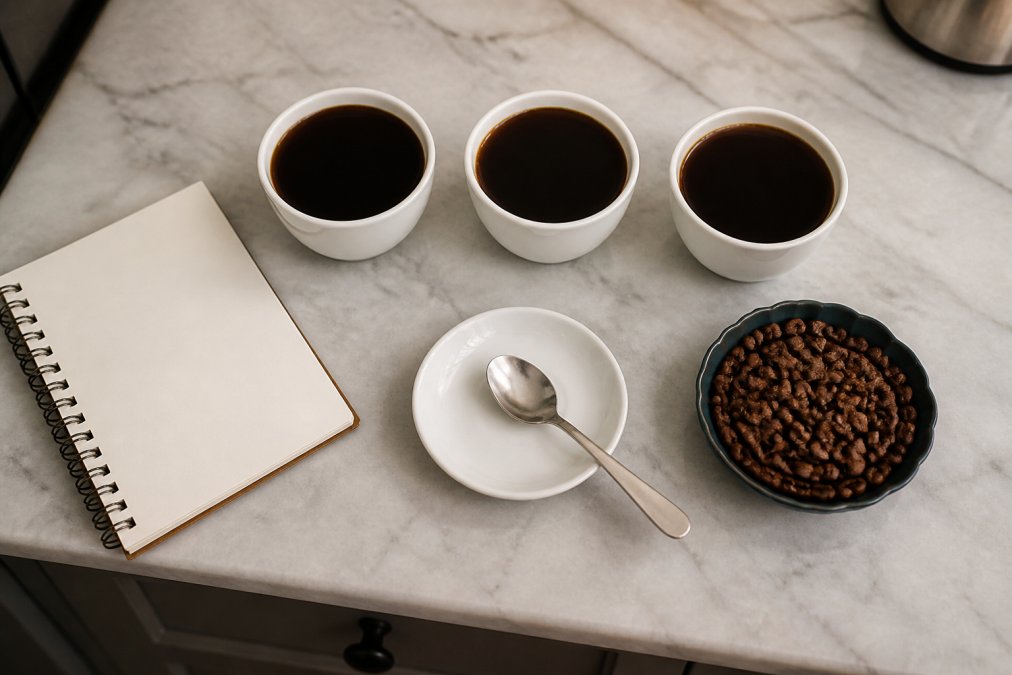
What You Need Before You Start
- Three to six identical cups, 6 to 8 ounces each
- A burr grinder set to a coarse grind
- A scale that reads in grams
- Water just off the boil, around 200°F
- A large spoon and a timer
The Slurp, the Spit, and the Scorecard
Weigh 8 grams of coffee per cup, add 150 milliliters of water, and wait four minutes. Break the crust with your spoon, smell the aroma, then slurp from the spoon so the coffee hits your whole palate. Score acidity, sweetness, body, and aftertaste on a simple 1-to-5 scale. Spit between cups. A common mistake is tasting too fast; give each cup a full minute before moving on.
Why Sample Packs Beat Full Bags for Trying New Coffee
A 12-ounce bag is a commitment. A sampler pack is a conversation. When you sample new coffee in 2-ounce portions, you can taste six different origins or roasts for less than the cost of two full bags, and you learn your own preferences before spending more.
What to Look For in a Sampler Pack
Look for roast dates within the last two weeks, whole beans rather than pre-ground, and a mix of roast levels and processing methods. Crystal Coast Coffee Co. roasts to order, so a Best Sellers Sample Pack at $24.99 gives you six 2-ounce packs, including Peru and Mexico single origins, without a full-bag commitment.

Coffee Subscription Boxes for Beginners: How to Avoid Pantry Pileup
Coffee subscription boxes for beginners fail for one reason: the cadence is set by the roaster's shipping schedule, not by your drinking speed. A 12-ounce bag holds roughly 24 single-cup brews at 14 grams per cup, or about 12 mugs at 28 grams. If you drink one cup a day, that bag lasts about three and a half weeks, so a weekly box piles up four bags for every one you finish.
| Your Pace | Daily Grounds Used | Best Cadence | Why |
|---|---|---|---|
| 1 cup per day | ~14 g | Every 4 weeks | Matches a 12-ounce bag with a few days of buffer |
| 2-3 cups per day | ~28-42 g | Every 2 weeks | Prevents running out mid-week |
| Occasional drinker | ~14 g, 2-3 days/week | One-time sample pack | No pileup risk, no recurring charge |
| Trying new origins | Varies | Rotating sampler every 6-8 weeks | Variety without waste |
The Freshness Clock Changes the Math
Roasted coffee peaks between roughly 4 and 14 days off roast for filter brewing, and most roasters ship within 1-3 days of roasting. That means a bag arriving on day 3 has about 11 days of peak window left. If your cadence delivers a new bag before you finish the last one, you are drinking stale coffee by the time the next shipment lands.
What to Check Before You Sign Up
- Roast date on the bag, not the ship date. A "roasted this week" claim means nothing if the bag sat in a warehouse.
- Pause and skip without a fee. Consumer Reports guidance on subscription services recommends confirming cancellation and pause terms before you sign up.
- Bag size options. A 12-ounce default forces waste for light drinkers; a 6-ounce or 8-ounce option lets you match cadence to consumption.
- Sample-first path. A one-time sample pack costs less than a single subscription cycle and tells you whether the roaster's roast style matches your palate before you commit to recurring shipments.
The Sample-Pack Bridge
For most beginners, the smartest sequence is: buy one sample pack, score every coffee, identify two or three favorites, then subscribe only to those. This avoids the classic mistake of subscribing to a rotating box, disliking half the coffees, and cancelling within two months. A sampler at $24.99 for six 2-ounce packs lets you taste six coffees for less than the cost of two full bags, and you enter the subscription with data instead of hope.
Brew-Method Consistency: The Variable Nobody Talks About
Here is the gap most subscription guides skip: if you change brew methods between bags, you cannot tell whether you dislike the coffee or the brew. A coffee that tastes thin in a drip machine may taste syrupy in a French press. When you are evaluating a subscription, lock one brew method for the first two cycles, same grinder setting, same water temperature, same ratio, so the only variable is the coffee itself.
How to Host a Coffee Tasting Party That People Actually Enjoy
A coffee tasting party works when the format is simple: four to six coffees, small cups, and a scorecard for each guest. Keep the pours tiny, about 2 ounces per coffee, so nobody overloads on caffeine, and set out water and plain crackers between rounds. But the difference between a party that people remember and one they forget is not the coffee list.
Best Sellers Sample Pack: 6Bean →
Storage and Freshness: The Step Every Host Skips
Most tasting guides tell you what to pour and ignore what happens before the pour. A 2-ounce sample exposed to air for a week before the party tastes flat, and your guests will blame the coffee, not the storage. Follow these protocols:
- Keep samples sealed until the morning of the event. Once a 2-ounce bag is opened, oxidation begins immediately. Transfer unused portions to a small airtight container, squeeze out excess air, and store away from light and heat.
- Use opened samples within 7-10 days. A 2-ounce sample is roughly four to six cups, so it is easy to finish, but only if you actually brew it. Label each container with the open date.
- Do not pre-grind. Grinding increases surface area and accelerates staling. Grind each coffee immediately before brewing, even if it means a few extra minutes between rounds.
- Serve at the right temperature. Coffee tastes best between 160°F and 180°F. Below 140°F, sweetness fades and acidity sharpens, which skews every scorecard in the room.
Building a Tasting Flight and Keeping It Fair
A tasting flight should move from light to dark roast, or from washed to natural process, so your palate is not overwhelmed. Label each cup with a number, not a name, and reveal the origins at the end. A blind tasting removes brand bias and makes the group compare flavor profiles honestly.
Water Chemistry: The Invisible Ingredient
Water is roughly 98% of your brewed coffee, and most hosts never think about it. Tap water with heavy chlorine or a strong mineral taste will flatten every coffee on the table. Distilled water is worse, it lacks the minerals that pull sweetness and acidity out of the grounds, so every cup tastes hollow. The practical middle ground is filtered water with some mineral content, which most home pitchers and refrigerator filters provide.
The Scorecard That Makes the Party Worth It
Hand every guest a printed scorecard with four fields, aroma, acidity, body, and aftertaste, each on a 1-to-5 scale, plus one line for "what it reminded me of." At the end, collect the cards and read the highest and lowest scores aloud. The disagreement is the fun part: one guest's "too sour" is another guest's "bright and citrusy." That conversation is what turns a tasting into a habit.
Storage, Water, and Grind: The Details That Make or Break a Sample
Most tasting guides skip the variables that actually change flavor. Water chemistry is the biggest one. If your tap water tastes like chlorine, your coffee will too. Filtered water with some mineral content extracts sweetness better than distilled water, which pulls almost nothing out of the grounds.
Tracking What You Taste: Scorecards, Notes, and Palate Development
A scorecard turns "I liked it" into usable data. Track four things per coffee: aroma, acidity, body, and aftertaste, each on a 1-to-5 scale, plus one sentence on what it reminded you of.
| Field | What to Record | Example |
|---|---|---|
| Aroma | First smell, dry and wet | Cocoa, citrus |
| Acidity | Brightness level | Medium, orange-like |
| Body | Weight on the tongue | Silky, full |
| Aftertaste | Length and character | Long, sweet |
| Notes | One memory or comparison | "Salted caramel" |
Frequently Asked Questions
What is the 15-15-15 rule for coffee?
The 15-15-15 rule is a simple guideline for brewing consistency: use a 15:1 water-to-coffee ratio, let the grounds bloom for 15 seconds, and aim for a total brew time of about 15 minutes for cold brew or 1.5 to 3 minutes for pour-over. It is not a universal standard, but it gives beginners a repeatable starting point. Adjust the ratio to taste once you know how you like your coffee.
What kind of coffee should I try first?
Start with a medium roast single origin from a well-known growing region. A medium roast Colombia or Peru gives you a balanced cup with clear tasting notes you can actually identify, like dried orange or salted caramel. Once you know what you like, branch into light roasts for more acidity or dark roasts for deeper cocoa and molasses flavors. A sampler pack makes this easy without committing to a full bag.
What is the best way to compare different coffee roasts?
Brew each roast using the same method, grind size, water temperature, and ratio. Taste them side by side in small cups, and write down what you notice about acidity, body, sweetness, and aftertaste. A blind tasting, where you do not know which cup is which, keeps your expectations from swaying your notes. Repeat the comparison a few days later to see if your preferences hold.
Are coffee sampler packs worth the investment?
Yes, if you want to find your preferred flavor profile without buying full bags you might not finish. A sampler pack with six 2-ounce portions lets you try a range of roasts and origins for about the price of one or two full bags. It also helps you learn which processing methods, like washed or natural, you enjoy most before committing to a subscription.