

Best Coffee Roasters for Flavor Variety: 2026 Guide
Table of Contents
- What Sets the Best Coffee Roasters Apart for Flavor Variety
- Quick Comparison: Flavor Variety Sample Packs
- Single-Origin vs. Blends: Which Delivers More Flavor Range
- How Roast Level and Dark Roast Coffee Beans Shape Flavor
- A Coffee Tasting Notes Guide for Comparing Roasters
- How to Brew Specialty Coffee at Home for Full Flavor
- Freshness, Sourcing, and Storage: What Flavor-Focused Roasters Do Differently
- Conclusion: Building Your Flavor Variety Rotation
- Frequently Asked Questions
Last Updated: September 17, 2026
What Sets the Best Coffee Roasters Apart for Flavor Variety
Flavor variety in coffee comes down to three things: where the beans grew, how they were processed, and how soon after roasting you brew them. The best coffee roasters for flavor variety control all three, then roast to order instead of sitting on warehouse inventory.
Crystal Coast Coffee Co. builds its lineup around that idea. The roaster sources from smallholder farms across Peru, Ethiopia, Tanzania, and Indonesia, then roasts each order to ensure maximum flavor, aroma, and character in every cup.
Here's what most "best of" lists get wrong: they rank roasters by brand recognition rather than by how wide a flavor spectrum they actually offer. A roaster with four dark blends gives you less range than one with a single-origin rotation spanning floral, fruity, and chocolatey profiles.
Quick Comparison: Flavor Variety Sample Packs
Sample packs are the fastest way to judge a roaster's range without buying full bags. Each Crystal Coast pack holds six 2-ounce portions.
| Sample Pack | Coffees Included | Roast Range | Best For |
|---|---|---|---|
| Best Sellers Sample Pack | 6Bean, Cowboy, Breakfast, Peru, Mexico, Bali | Dark to medium | Testing blends and single origins together |
| Single Origin Favorites | Brazil, Colombia, Costa Rica, Ethiopia, Honduras, Tanzania | Medium-light to medium-dark | Comparing growing regions side by side |
| Flavored Coffees Sample Pack | French Vanilla, Hazelnut, Cinnabun, Caramel, Mocha, Cinnamon Hazelnut | Medium | Flavored coffee drinkers |
Single-Origin vs. Blends: Which Delivers More Flavor Range
Single-origin coffees deliver more distinct flavor variety than blends, because each bag traces to one region, one harvest, and often one processing method. Blends trade that distinctiveness for consistency.

How Roast Level and Dark Roast Coffee Beans Shape Flavor
Roast level determines how much of a bean's origin character survives the roaster. Light roasts preserve acidity, fruit, and floral notes. Dark roasts replace those with caramelization and smoke. But roast level is only half the story, the other half is how the bean was processed before it ever hit the drum.

The roast spectrum, in practice:
-
Light roasts stop shortly after first crack, when the bean has expanded and moisture has escaped but oils have not yet reached the surface. Acidity, fruit, and floral notes stay intact. Think of a washed Ethiopian or a Kenyan: bright, tea-like, sometimes tart.
-
Medium-light roasts land just past first crack. They keep fruit and add a little caramel sweetness. The Tanzania carries pear, floral, jasmine, and strawberry notes at this level.
-
Medium roasts balance origin character against roast-developed sweetness. The Mexico Single Origin brings chocolate, cinnamon, and green apple at a medium roast, retaining fruit while adding warmth.
-
Medium-dark roasts push toward bittersweet chocolate and molasses. The Bali Blue is a good example: medium-dark, wet-hulled, and heavy on molasses.
-
Dark roasts reach second crack, where oils migrate to the surface and origin character largely gives way to roast flavor, dark chocolate, molasses, brown sugar, sometimes smoke.
-
Washed coffees have the fruit stripped before drying. The result is cleaner, brighter, and more origin-transparent, the roast and the terroir both come through clearly.
-
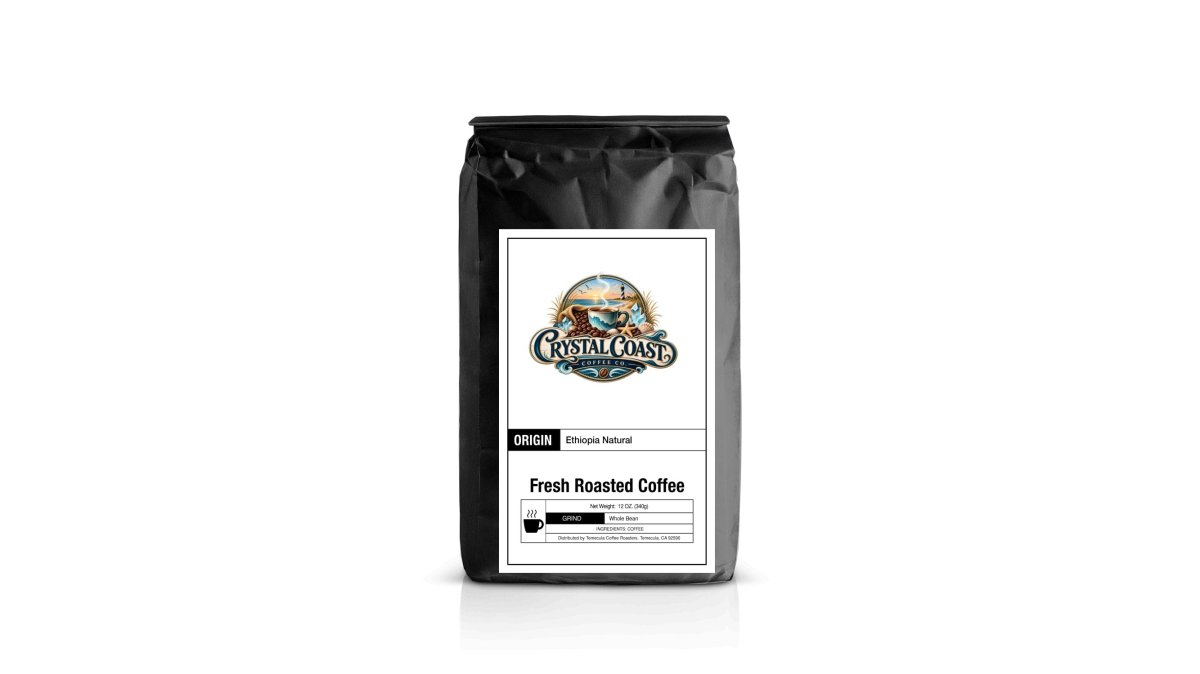
Natural coffees dry with the fruit still on the bean. Fermentation inside the fruit pushes strawberry, blueberry, and sometimes wine-like notes into the cup. The Ethiopia Natural lands at medium-light with milk chocolate, fruity, and caramel tones.
-
Wet-hulled coffees, common in Indonesia, are stripped of parchment while the bean is still soft. The result is earthy, heavy-bodied, and low-acid, the profile behind the Bali Blue's molasses weight.
-
Honey and anaerobic processes sit between washed and natural, using controlled mucilage or sealed fermentation to build sweetness and complexity without going fully fruity.
A Coffee Tasting Notes Guide for Comparing Roasters
A coffee tasting notes guide gives you shared vocabulary for comparing roasters. But vocabulary alone is not enough, you need a repeatable method, or every bag will taste "good" and you will never build a real preference map. This section covers both: the four markers most cuppers use, and a side-by-side protocol that turns those markers into a decision.
The four markers, and what actually causes them:

- Acidity: the bright, tangy sensation on the sides of your tongue. It comes from the organic acids, citric, malic, tartaric, that survive roasting. Kenya shows bright acidity with orange and lemon; a dark roast of the same bean would mute those acids into vague "brightness." Acidity is not the same as sourness; sourness is a defect, acidity is a feature.
- Body: the weight and texture on your tongue, driven mostly by dissolved solids and suspended oils. Bali Blue feels heavier than Tanzania because wet-hulling leaves more of the bean's structure intact through roasting. Body is the easiest marker to notice and the hardest to describe, reach for mouthfeel words: silky, syrupy, tea-like, watery.
- Sweetness: how much natural sugar comes through. Costa Rica reads as sweet apple and honey. Sweetness in coffee is not added sugar; it is the perception of sugars and caramelized compounds that survived the roast. A well-developed medium roast usually tastes sweeter than a very light one, because more of the bean's sugars have been converted into perceptible sweetness.
- Aftertaste: what lingers after you swallow. Ethiopia Natural leaves caramel and fruit. Aftertaste is where processing shows up most clearly, naturals tend to leave fruit, washed coffees tend to leave clean acidity, wet-hulled coffees tend to leave earth and spice.
- Pick three coffees that differ on one variable only. Same roaster, same roast level, different processing method, or same processing method, different origin. If you change two variables at once, you learn nothing.
- Use identical water, grind, dose, and temperature. A 1:16 ratio, water just off boil, and a medium grind work for cupping. Weigh everything; eyeballing defeats the purpose.
- Slurp from a spoon. Slurping aerates the coffee and spreads it across your palate, which is why professional cuppers do it. It looks odd and it works.
- Score each marker on a simple 1-5 scale before you read the bag. Write your numbers down. Comparing your impressions to the roaster's description trains your palate.
- Wait for the coffee to cool. Many of the most distinctive notes, fruit, floral, spice, only appear below about 140°F. A coffee that tastes flat when hot often opens up as it cools.
How to Brew Specialty Coffee at Home for Full Flavor
Brewing specialty coffee at home comes down to grind size, water temperature, and ratio. Get those three right and most beans taste close to what the roaster intended.
Match the method to the bean:
- Pour-over: best for light and medium-light roasts like Tanzania or Ethiopia
- French press: brings out body in medium-dark coffees like Bali Blue
- Espresso: suits the 6Bean Blend and other dark blends
- Drip: forgiving enough for daily medium roasts
Freshness, Sourcing, and Storage: What Flavor-Focused Roasters Do Differently
Freshness is the variable most roasters lose on. Coffee peaks roughly 4 to 14 days after roasting, then fades. A bag with no roast date tells you nothing.
Storage rules that actually matter:
- Keep beans whole until brewing
- Store in an airtight, opaque container at room temperature
- Skip the fridge; moisture and odors ruin beans
- Freeze only for long-term storage, in sealed portions
Conclusion: Building Your Flavor Variety Rotation
The best coffee roasters for flavor variety give you range without compromise: multiple origins, honest roast dates, and processing methods that create real differences in the cup. Build your rotation around that, not around a single favorite.
Frequently Asked Questions
Which roast of coffee has the most flavor?
Light and medium-light roasts typically preserve the most origin-specific flavor because the bean's natural sugars and acids haven't been roasted away. A medium-light Ethiopia Natural from a flavor-focused roaster, for example, shows milk chocolate, fruity, and caramel notes. Dark roasts trade some of that range for deeper cocoa, molasses, and caramelized sweetness, so the 'most flavor' depends on whether you want brightness or depth.
How do I identify a coffee roaster that specializes in flavor variety?
Look for roasters that publish detailed tasting notes, origin information, processing method, and roast level on every bag. A roaster serious about variety will carry multiple single-origin options across different regions, offer sample packs so you can compare side by side, and roast to order rather than holding inventory. If the only information on the label is 'medium roast,' that roaster isn't built around flavor exploration.
What is the difference between single-origin and blended coffee flavors?
Single-origin coffee comes from one region or farm, so it expresses that place's specific terroir, like the pear, floral, and jasmine notes of a Tanzania or the bright orange and lemon acidity of a Kenya. Blends combine beans from multiple origins to create a consistent, balanced cup, such as a house espresso blend. Single origins are better for exploring variety; blends are better for repeatable daily drinking.
How does roast level impact the flavor variety of coffee beans?
Roast level determines how much of the bean's original character survives the roasting process. Light roasts keep more acidity, fruit, and floral notes, which is why a medium-light Tanzania tastes like strawberry and jasmine. Dark roasts push toward chocolate, molasses, and brown sugar, as in a med-dark Bali Blue. Buying the same bean at different roast levels is one of the fastest ways to understand how roast changes flavor.
Are coffee subscriptions the best way to experience different flavor profiles?
Subscriptions work well if you drink steadily and want regular variety without reordering, but sample packs are a lower-commitment way to explore first. A 6-pack sampler at $24.99 lets you try six different coffees. Once you know which origins and roast levels you prefer, a flexible subscription keeps that rotation going without pantry pileup.