

Best Atlas Coffee Club Alternatives for 2026
Table of Contents
- Why Coffee Drinkers Look for Atlas Coffee Club Alternatives
- Best Coffee Roasters for Home Delivery: What to Compare
- How to Choose a Coffee Subscription That Fits Your Routine
- Sample Packs: The Smart Way to Test Alternatives
- Specialty Coffee Subscriptions With Free Shipping and Flexible Delivery
- Value Per Ounce: Comparing Coffee Subscription Costs
- Conclusion
- Frequently Asked Questions
Last Updated: September 29, 2026
Why Coffee Drinkers Look for Atlas Coffee Club Alternatives
Most coffee drinkers who leave a subscription behind aren't chasing a trend, they're chasing a roast date. This guide from Crystal Coast Coffee Co. covers the best Atlas Coffee Club alternatives for 2026, starting with what mass-market subscriptions rarely give you: proof of freshness.
So the search for alternatives usually comes down to three frustrations:
- Bags arrive with no roast date printed, or a date that's already weeks old
- The subscription is rigid, and pausing or cancelling takes an email chain
- Every shipment is a mystery, so you can't tell whether you'll like it before it arrives
Best Coffee Roasters for Home Delivery: What to Compare
The best coffee roasters for home delivery publish a roast date, ship within days of roasting, and let you adjust or cancel without a fight. Two specs separate a serious roaster from a reseller: freshness at shipping and how clearly flavor is described before you buy.
Roast Date and Freshness Guarantee
A freshness guarantee is a commitment to roast after you order and ship within a stated window. Ask any roaster when it was roasted and when it shipped; if either answer is vague, that's your answer. Fast shipping doesn't equal fresh coffee, a bag can arrive in two days after two months in a warehouse.
Roast Profiles and Tasting Notes
Roast profile describes how far the beans were developed and drives most of what you taste. Light roasts keep natural acidity and fruit; dark roasts trade brightness for cocoa, caramel, and smoke. Useful tasting notes name specifics like dried orange or jasmine; useless ones say "bold" and "smooth."
| Roast Profile | Flavor Tendency | Best Brew Methods | Example From Crystal Coast Coffee Co. |
|---|---|---|---|
| Light / medium-light | Floral, fruity, tea-like | Pour-over, drip | Ethiopia Natural, Tanzania |
| Medium | Balanced, sweet, cocoa | Drip, pour-over, French press | Colombia, Peru, Brazil Santos |
| Medium-dark / dark | Chocolate, molasses, brown sugar | Espresso, French press, cold brew | Bali Blue, 6Bean Blend |
How to Choose a Coffee Subscription That Fits Your Routine
Choosing a coffee subscription is a math problem, not a personality quiz. Start with how much you drink, then work backward to bag size and cadence. Most households go through half a pound to a pound weekly, so a 12-ounce bag lasts about two weeks for one daily drinker, a monthly two-pound shipment leaves a backlog.
Work through this checklist before you commit:
- Measure your weekly consumption in ounces for two weeks
- Match bag size to that number, not to the discount tier
- Confirm you can change subscription frequency without a phone call
- Check the cancellation policy and whether pausing is allowed
- Verify whole bean versus pre-ground options before ordering
- Note the delivery cadence options: weekly, biweekly, monthly
Sample Packs: The Smart Way to Test Alternatives
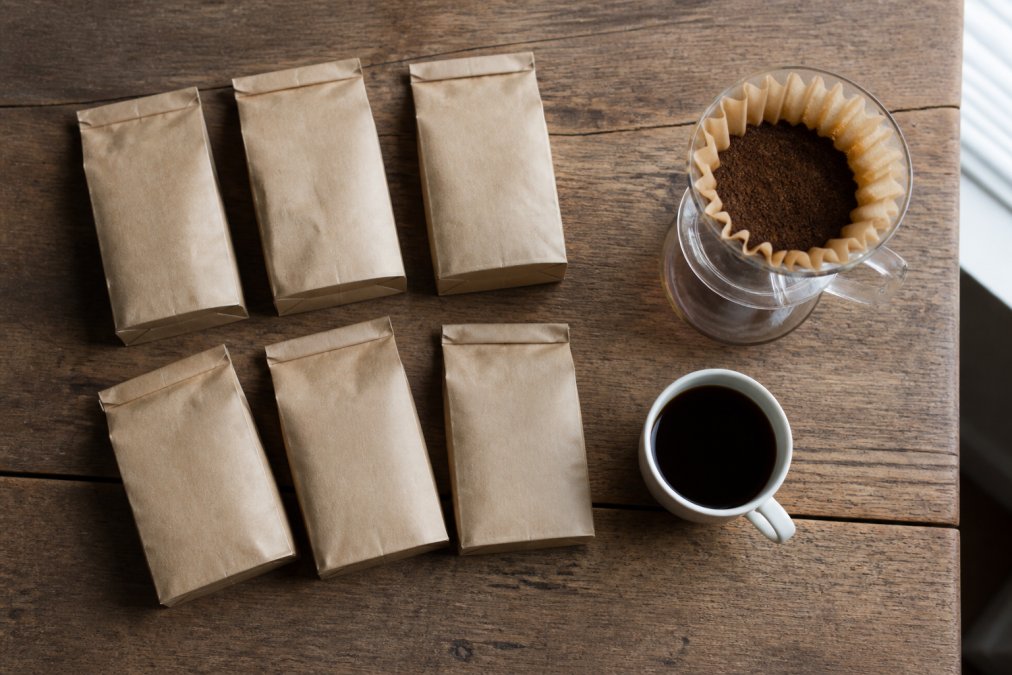
Sample packs are the lowest-risk way to test a roaster before committing to a full bag, small portions across several coffees teach you what you like.
Specialty Coffee Subscriptions With Free Shipping and Flexible Delivery
Specialty coffee subscriptions with free shipping and flexible delivery remove the two biggest reasons people quit: cost surprises and scheduling lock-in. But those are marketing words until tested against specifics. Here's what matters and how to verify each.
What "Free Shipping" Usually Means
Coffee is light, so shipping is a small share of the total, but the threshold structure reveals how the roaster wants you to buy:
- Flat free shipping on every order. Simplest to model. Best for single-bag subscribers who don't want to bulk up.
- Free above a dollar threshold. Effectively a nudge to add a second bag or a sample pack. If the threshold is $35 and your bag is $22, you're spending $13 more to save roughly $5-$8 in shipping, only a win if you'll drink the extra coffee before it fades.
- Flat-rate shipping regardless of order size. Predictable, but it penalizes small orders. If you drink one 12-ounce bag every three weeks, a flat rate can quietly add 15-25% to your true cost per ounce.
Delivery Cadence: Match It to Consumption, Not to Discounts
Most roasters offer weekly, biweekly, and monthly cadences, some with custom intervals. The trap is choosing the cadence that unlocks the best per-bag price rather than matching how fast you drink. One daily drinker goes through roughly 12 ounces every two weeks; a monthly two-bag shipment leaves a backlog, and the second bag is noticeably flatter.

Cancellation and Pause Friction: The Test Nobody Runs
This is where subscriptions fail users. Before subscribing, do a five-minute friction audit:
Single Origin Favorites Sample Pack →
- Find the cancel button before you sign up. If cancellation requires a phone call, a chat during business hours, or a slow email, note it.
- Check whether "pause" exists separately from "cancel." Pausing one or two cycles is what most people want when they travel or fall behind. Cancel-or-continue forces you to lose grandfathered pricing or your place in a rotating origin queue.
- Look for skip-a-shipment options. Skipping a single delivery is the lowest-friction flexibility feature and the one most likely to keep you subscribed.
- Read the fine print on reactivation. Some services let you cancel instantly but require a new signup, and a new-customer discount that no longer applies, to return.
Packaging and Environmental Trade-offs
Flexibility also shows up in how the coffee arrives:
- Fully recyclable kraft bags with a tin tie. Easy to recycle in most curbside programs, but the paper alone doesn't block oxygen well, so freshness depends on how fast you drink it.
- Bags with a recyclable outer and a compostable inner liner. Better oxygen barrier, but the liner often needs an industrial composting facility, not a backyard bin.
- Foil-lined bags with a one-way degassing valve. Best freshness protection and the industry standard for a reason, but the foil layer usually makes the bag non-recyclable in curbside programs.
If packaging matters, ask which stream each component goes into. "Recyclable" and "compostable" aren't interchangeable, and a bag claiming both without naming the facility usually delivers neither.
Value Per Ounce: Comparing Coffee Subscription Costs
Value per ounce is the only fair way to compare coffee subscriptions, since bag sizes vary wildly and a "cheaper" bag is often just smaller. But adjust for the two variables most guides ignore: bag size and brew method.
The Base Formula
Cost per ounce = Total price ÷ Ounces per bag
Why Brew Method Changes the Math
This is the gap most ranking articles skip: the same bag delivers a different number of cups depending on brew method, so cost per ounce isn't cost per cup.
- Drip and batch brew use roughly 1 to 2 tablespoons of ground coffee per 6 ounces of water. A 12-ounce bag yields roughly 20-30 cups depending on strength.
- Pour-over (V60, Chemex) typically uses a higher dose, often 1:15 to 1:17 coffee-to-water by weight. A 12-ounce bag yields fewer cups than drip at the same strength.
- French press uses a coarser grind and a similar or slightly higher dose than pour-over, but immersion extracts more oils, so many drinkers use less coffee per cup. Net yield is often comparable to pour-over.
- AeroPress is the wildcard. Recipes range from 1:4 (concentrate) to 1:16, so the same bag can yield a handful of strong shots or a full pot's worth of cups. If you brew AeroPress daily, your cost per cup swings more than any other method.
- Espresso uses a fine grind and a high dose per shot, often 18-20 grams for a double. A 12-ounce (340-gram) bag yields roughly 17-19 doubles. That's the most expensive per-cup method by a wide margin, which is why espresso drinkers should weight cost per ounce more heavily than drip drinkers.
Build a Real Comparison
To compare two subscriptions honestly, fill in this row for each:
| Field | What to enter |
|---|---|
| Bag size (oz) | The actual net weight, not the "serves X cups" claim |
| Price per bag | Include shipping if it isn't free |
| Cost per ounce | Price ÷ ounces |
| Roast date on arrival | Days between roast and delivery |
| Your brew method | Drip, pour-over, French press, AeroPress, or espresso |
| Estimated cups per bag | Based on your dose, not the roaster's marketing |
| Effective cost per cup | Cost per ounce × ounces per cup |
The Staleness Tax
Grocery store coffee often looks cheaper per ounce, but it's typically roasted months before it hits the shelf, you're paying less for coffee past its best window, and stale beans need a heavier dose to taste like anything. That extra dose erases the savings. A slightly higher cost per ounce with a two-day-old roast date beats a bargain bag roasted in the spring, every time.
Conclusion
The hardest part of leaving a coffee subscription isn't finding a replacement, it's finding one that prints a roast date, ships fast, and lets you walk away without a hassle. Most people settle for the first recognizable name and end up with the same stale bags.
Frequently Asked Questions
Is Atlas Coffee Club worth the money?
Atlas Coffee Club delivers curated international coffees, but value depends on what you prioritize. If you want a rotating global selection, it works. If you prefer single-origin transparency, a freshness guarantee, and the ability to order exactly what you like, a roaster that roasts to order may offer better value per ounce. Compare roast dates, shipping costs, and flexibility before committing.
How do I choose the right coffee subscription for my brewing method?
Start with grind size. If you brew with a drip machine, pre-ground works, but whole bean stays fresher longer. Espresso needs a finer grind, while French press and pour-over take medium-coarse and medium grinds. Also check roast profile: light roasts suit pour-over, while medium-dark roasts work well for espresso and milk drinks.
Are there coffee subscriptions that offer free shipping?
Some specialty coffee subscriptions include free shipping on orders above a certain amount or as part of a subscription tier. Free shipping can save $5 to $8 per delivery, which adds up. When comparing Atlas Coffee Club alternatives, factor shipping into the total cost per ounce. A roaster with free shipping and transparent pricing often delivers better long-term value.
What is the 15-15-15 coffee rule?
The 15-15-15 rule is a brewing guideline: use 15 grams of coffee per 15 ounces of water, and aim for a 15-minute window between grinding and brewing. While not a strict standard, it helps consistency. For subscription coffee, the rule reinforces buying whole bean and grinding fresh. The closer you grind to brew time, the more of those tasting notes you actually taste.