

Herbal Tea for Stress: Benefits of Drinking Daily
Table of Contents
- Why Herbal Tea Works for Stress Management
- Best Herbal Teas for Anxiety and Everyday Calm
- How to Brew Herbal Tea for Maximum Relaxation
- Herbal Tea vs Coffee for Stress: What to Choose
- When to Drink Herbal Tea for the Best Results
- Safety First: Drug Interactions and Side Effects
- Making Herbal Tea a Daily Ritual
- Frequently Asked Questions
Last Updated: October 1, 2026
Why Herbal Tea Works for Stress Management
Herbal tea is a caffeine-free infusion made from the leaves, flowers, roots, or spices of plants rather than the leaves of the tea bush. That single distinction matters more than most people realize. When your body is already running hot from a stressful day, adding a stimulant on top of it works against you.
The benefits of drinking herbal tea for stress management come down to chemistry and ritual at the same time. Many nervine herbs contain compounds that interact with the nervous system, while the simple act of steeping and sipping gives your mind a pause it rarely gets otherwise. This guide from Crystal Coast Coffee Co. walks through which herbs actually do something, how to brew them properly, and when to drink them for the best effect.
How Herbal Tea Affects the Nervous System and Cortisol
Cortisol is your body's primary stress hormone, released by the adrenal glands in response to perceived threat. In short bursts it is useful. Chronic elevation is where problems start: disrupted sleep, elevated blood pressure, and a nervous system stuck in a low-grade alarm state.
Certain botanicals appear to support the calming branch of the nervous system, sometimes called the parasympathetic response. Chamomile, lemon balm, and passionflower are the most studied in this category. The mechanism is not fully settled, but researchers point to compounds that interact with GABA receptors, the same pathway many anti-anxiety medications target, though far more gently.
What most guides miss is that the ritual itself carries measurable weight. Warm liquid, a slowed pace, a few minutes of quiet: these are all signals your body reads as safety.
L-Theanine and Other Calming Compounds in Tea
L-theanine is an amino acid found naturally in tea leaves, and it is the reason a cup of green tea feels different from a cup of coffee. It crosses into the brain and promotes a state of relaxed alertness rather than drowsiness.
Here is the nuance. True tea, from the Camellia sinensis plant, contains L-theanine. Most herbal infusions do not, because they come from entirely different plants. So if you are reaching for a caffeine-free herbal blend at night, you are getting calming compounds from other sources: apigenin in chamomile, rosmarinic acid in lemon balm, and various antioxidants across the board.
That does not make herbal tea weaker. It means the calming pathway is different, and often better suited to evening use because there is no stimulant to counteract it.
Best Herbal Teas for Anxiety and Everyday Calm
The best herbal teas for anxiety are the ones you will actually drink consistently, but a few stand out for their traditional use and modern research. Chamomile and valerian root sit at the top for sleep support. Lemon balm and passionflower are better for daytime tension. Lavender and peppermint round out the list for their effects on mood and physical tightness.
Chamomile, Valerian Root, and Passionflower
Chamomile is the most familiar of the three and the easiest starting point. Its mild anxiolytic properties make it a reasonable choice for winding down, and it is gentle enough for regular use. The flavor is soft and slightly floral, which makes it easy to drink without sweetener.
Valerian root is stronger and more targeted at sleep. It has a distinct earthy, almost medicinal taste, so many people blend it with something more palatable. Passionflower is the middle ground: calming without the heaviness of valerian, and often used for restlessness rather than full sleep support.
Lemon Balm, Lavender, and Peppermint
Lemon balm belongs to the mint family and has a bright, citrusy profile. It is a classic nervine herb, traditionally used to lift mood and settle an overactive mind during the day. This is the one to reach for at 2 p.m. when your focus is fraying.
Lavender is more often associated with scent than taste, but a small amount in an infusion adds a genuinely calming quality. Use it sparingly, since it turns soapy fast. Peppermint does less for anxiety directly and more for the physical side of stress: tension headaches, tight shoulders, an unsettled stomach.
If you want a single blend that covers several of these at once, Crystal Coast Coffee Co. offers caffeine-free options like Hibiscus Berry Tea, which combines hibiscus, rosehips, orange peel, and rooibos for a tart, refreshing cup that works hot or cold.

How to Brew Herbal Tea for Maximum Relaxation
Brewing herbal tea for maximum relaxation comes down to three variables: water temperature, steeping time, and quantity of plant material. Get these wrong and you either extract a bitter, tannic cup or a weak one that does almost nothing.
Most herbal infusions need water at a full boil, around 212 F, because the plant material is denser than tea leaves. Steeping time runs longer too, typically five to ten minutes. That is the opposite of what you would do with green tea, which scalds and turns bitter above 180 F.
Steeping Time, Water Temperature, and Potency
Here is a simple reference for the most common herbs:
| Herb | Water Temp | Steep Time | Best For |
|---|---|---|---|
| Chamomile | 212 F | 5-7 min | Evening wind-down |
| Valerian root | 212 F | 10-15 min | Sleep support |
| Lemon balm | 200-212 F | 5-7 min | Daytime tension |
| Passionflower | 212 F | 8-10 min | Restlessness |
| Peppermint | 212 F | 5-7 min | Physical tension |
| Lavender | 200 F | 3-5 min | Mood, aroma |
Three practical notes. First, use about one heaping teaspoon of dried herb per cup, or three grams per twelve ounces if you are weighing it. Second, cover the cup while it steeps. The volatile oils that carry both aroma and effect evaporate off if you leave it open.
Herbal Tea vs Coffee for Stress: What to Choose
Herbal tea and coffee do opposite things to a stressed body. Coffee contains caffeine, which blocks adenosine receptors and triggers a stress response: elevated heart rate, sharper cortisol release, and a jittery edge that many people mistake for focus.
| Factor | Coffee | Herbal Tea |
|---|---|---|
| Caffeine | 95-165 mg per cup | None |
| Best time | Morning, before noon | Afternoon and evening |
| Effect on cortisol | Raises it short-term | Neutral to calming |
| Sleep impact | Can delay onset if late | Generally supportive |
| Ritual value | High | High |
When to Drink Herbal Tea for the Best Results
Timing changes how much you get out of a cup. The body's cortisol curve peaks shortly after waking and declines through the day, which is why a calming infusion lands differently at 8 a.m. than at 9 p.m.
A workable schedule:
- Mid-morning (10-11 a.m.): lemon balm or peppermint to smooth the post-coffee dip
- Early afternoon (2-3 p.m.): passionflower or a fruity blend to replace a second coffee
- Evening (7-9 p.m.): chamomile or valerian root, roughly an hour before bed
- Wind-down (30 min before sleep): a light, unsweetened cup to close the day
Safety First: Drug Interactions and Side Effects
Herbal does not mean risk-free. Several common calming herbs interact with medications, and this is the section most tea articles skip entirely.
A few ground rules:
- Check with a pharmacist or physician before regular use if you take prescription medication
- Avoid combining multiple sedating herbs in one cup without guidance
- Start with one herb at a time so you can tell what is doing what
- Stop and seek advice if you notice unusual drowsiness or reactions
Making Herbal Tea a Daily Ritual
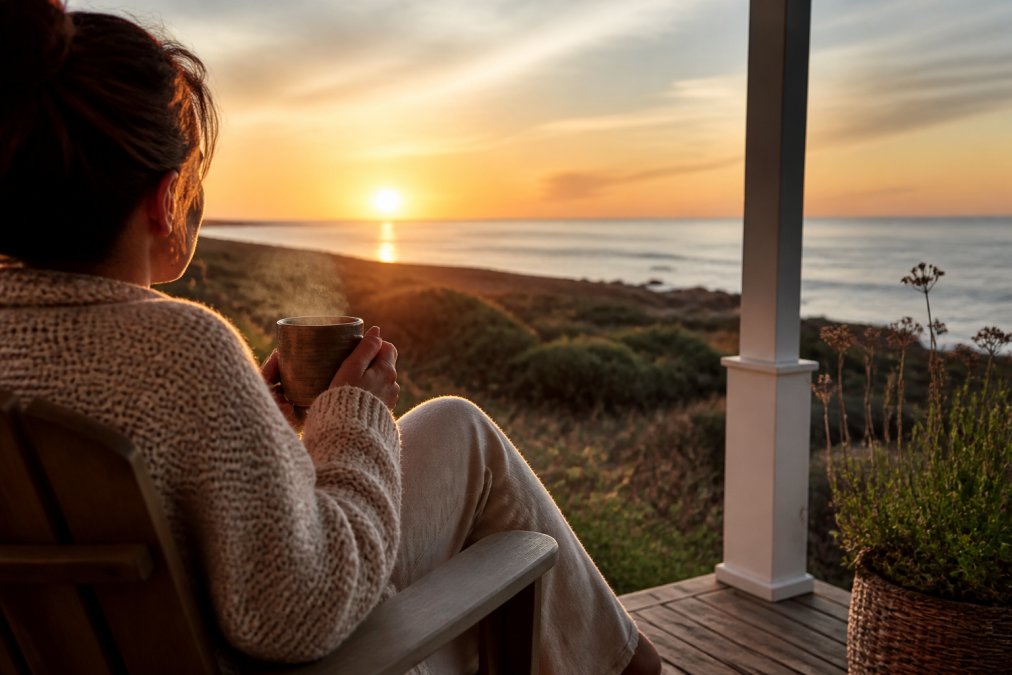
A calming ritual works best when it is easy enough to repeat without willpower. The mistake is building an elaborate ceremony you abandon by Thursday.
Frequently Asked Questions
What herbal tea can help reduce stress?
Chamomile, valerian root, passionflower, lemon balm, and lavender are among the most studied herbs for stress relief. Chamomile contains apigenin, an antioxidant that binds to brain receptors linked to calm. Valerian root has sedative effects that may improve sleep quality. Passionflower may help with anxiety by boosting GABA levels in the brain. Crystal Coast Coffee Co. offers caffeine-free blends like Apple Cider Rooibos and Hibiscus Berry Tea, both $20.99, that fit naturally into a calming routine.
When is the best time of day to drink herbal tea?
For stress management, the ideal windows are mid-afternoon and 30 to 60 minutes before bed. A mid-afternoon cup replaces the second coffee that can worsen evening anxiety. A pre-bed cup of chamomile or valerian root supports sleep hygiene and lets the calming ritual signal your body that the day is winding down. If you take medications, check with your doctor about timing, since some herbs interact with drugs.
Are there any side effects to drinking herbal tea for anxiety?
Most herbal teas are well tolerated, but some carry risks. Valerian root can cause drowsiness or headaches in higher doses. Passionflower may interact with sedatives and antidepressants. Chamomile can trigger allergic reactions in people sensitive to ragweed. If you take blood thinners, blood pressure medication, or anti-anxiety drugs, talk to your healthcare provider before adding nervine herbs to your routine. Stick to 1 to 3 cups daily unless a doctor says otherwise.
How does herbal tea affect the nervous system?
Herbal teas influence the nervous system through compounds like L-theanine, apigenin, and rosmarinic acid. These interact with neurotransmitters such as GABA and serotonin, which regulate mood and relaxation. The psychophysiological effect combines mild biochemical action with the calming ritual of steeping and sipping. Hydration also plays a role, since even mild dehydration can raise cortisol levels. The result is a subjective relaxation that builds over time with consistent use.